
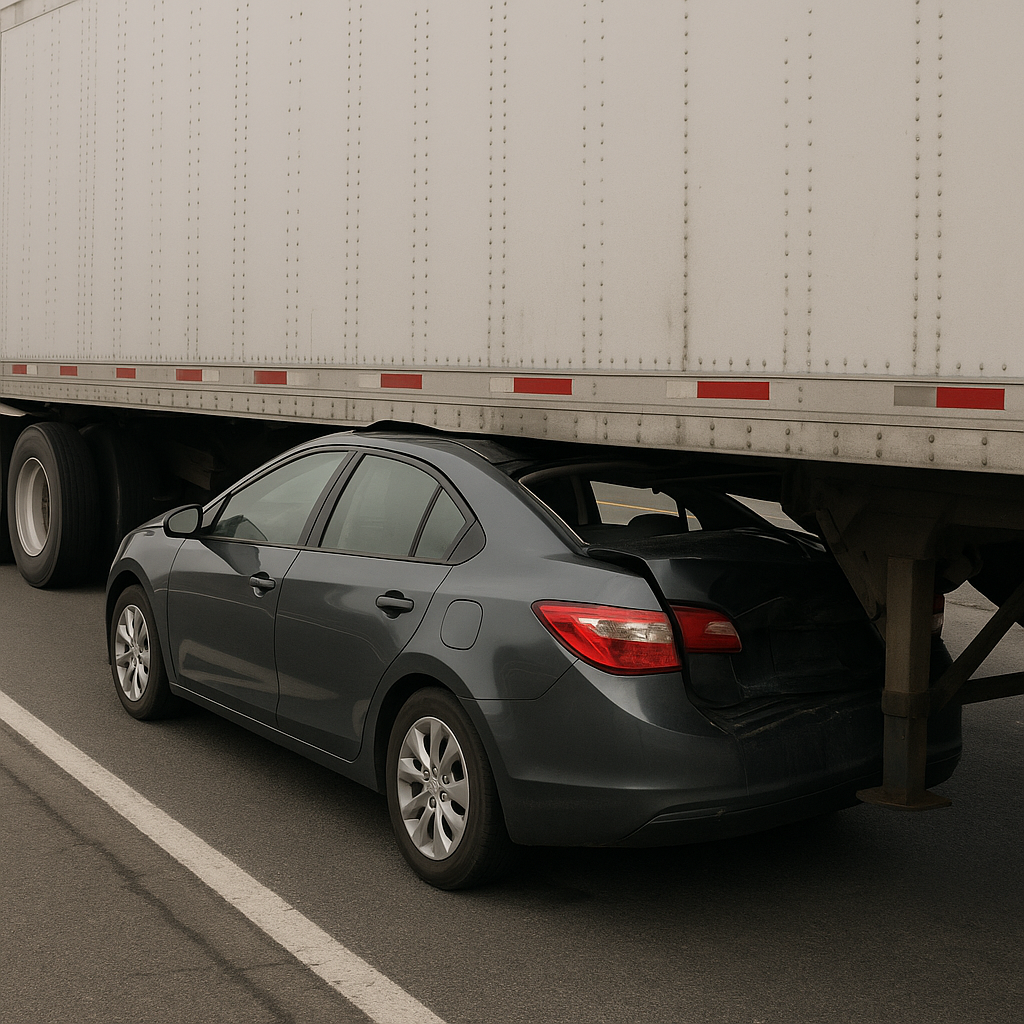
Car Slid Under a Semi Trailer on the Highway
A car sliding under a semi trailer on the highway—often referred to as a “truck underride”—is a rare but hazardous traffic incident. This situation usually involves a passenger vehicle losing traction, skidding uncontrollably, and ending up partially or fully beneath the raised side or rear of a large truck.
These occurrences typically unfold quickly, sometimes triggered by sudden braking, ice or rain making the surface slick, or abrupt maneuvers to avoid obstacles. While a variety of factors contribute, the results can be serious, drawing attention to roadway safety and driver awareness.
How a Truck Underride Happens
Slippery Roadways and High-Speed Conditions
Truck underride incidents are most likely during periods of poor visibility or slippery roads. Heavy rain, ice, or snow are common contributing factors. If a car is traveling at speed and suddenly loses grip, especially during attempts to slow down or swerve, it may slide toward large vehicles sharing the lane.
Height Differences Create Unique Risks
A fundamental reason these incidents occur is the structural height difference between passenger vehicles and trucks. Semi trailers are generally raised, with their cargo beds positioned well above car bumper height. This means that a standard car can fit underneath a trailer to some extent if involved in a collision.
What Is Usually Seen After a Car Slides Under a Semi Trailer
Immediate Physical Damage
In a typical truck underride scenario, significant front-end damage to the passenger vehicle is common. The crash may compromise vital systems at the front of the car, and the roof can become crushed. Side underrides, where the car slides alongside and under, can also damage doors and windows.
Occupants are often trapped by the intrusion, complicating rescue efforts. Emergency crews may need special equipment to reach those inside.
Traffic Disruption and Emergency Response
Such an event often blocks several lanes, requiring response from law enforcement and emergency services. Traffic may be backed up for extended periods as workers secure the scene and assess the situation.
Highway safety teams often assess whether conditions—like ice, construction, or poor signage—contributed to the incident. Cleanup can take longer than typical accidents due to the challenges of separating the vehicles and ensuring the area is safe before lanes reopen.
Common Questions After a Truck Underride
How Frequently Does This Happen?
While truck underride events are not everyday occurrences, they receive significant attention when they do occur due to their severity. Safety experts continue to study these incidents, collecting data on frequency and circumstances to inform future safety measures.
Can These Events Be Prevented?
There are ongoing improvements aimed at minimizing the risk of this type of accident. Some semi trailers are now equipped with underride guards designed to prevent vehicles from sliding underneath. Safe driving practices and maintaining greater distance in inclement weather are among the recommended precautions.
What Happens to Road Conditions Following Such an Incident?
Clean-up and inspection typically result in temporary lane closures or detours. Officials may review the conditions at the crash site closely, sometimes adapting future maintenance to prevent similar accidents under similar circumstances.
Ongoing Efforts to Improve Highway Safety
Efforts to reduce the risk of a car sliding under a semi trailer continue at multiple levels. Innovations in vehicle design, improved roadside barriers, and public awareness campaigns contribute to overall safety. As more is learned from these events, both car and truck manufacturers, along with public agencies, explore new safety measures to address the issue.
Highway users are reminded that understanding the risks and driving cautiously—especially in challenging conditions—can reduce the likelihood of a truck underride. While rare, the lessons learned from such incidents play an important role in ongoing improvements to roadway safety.