
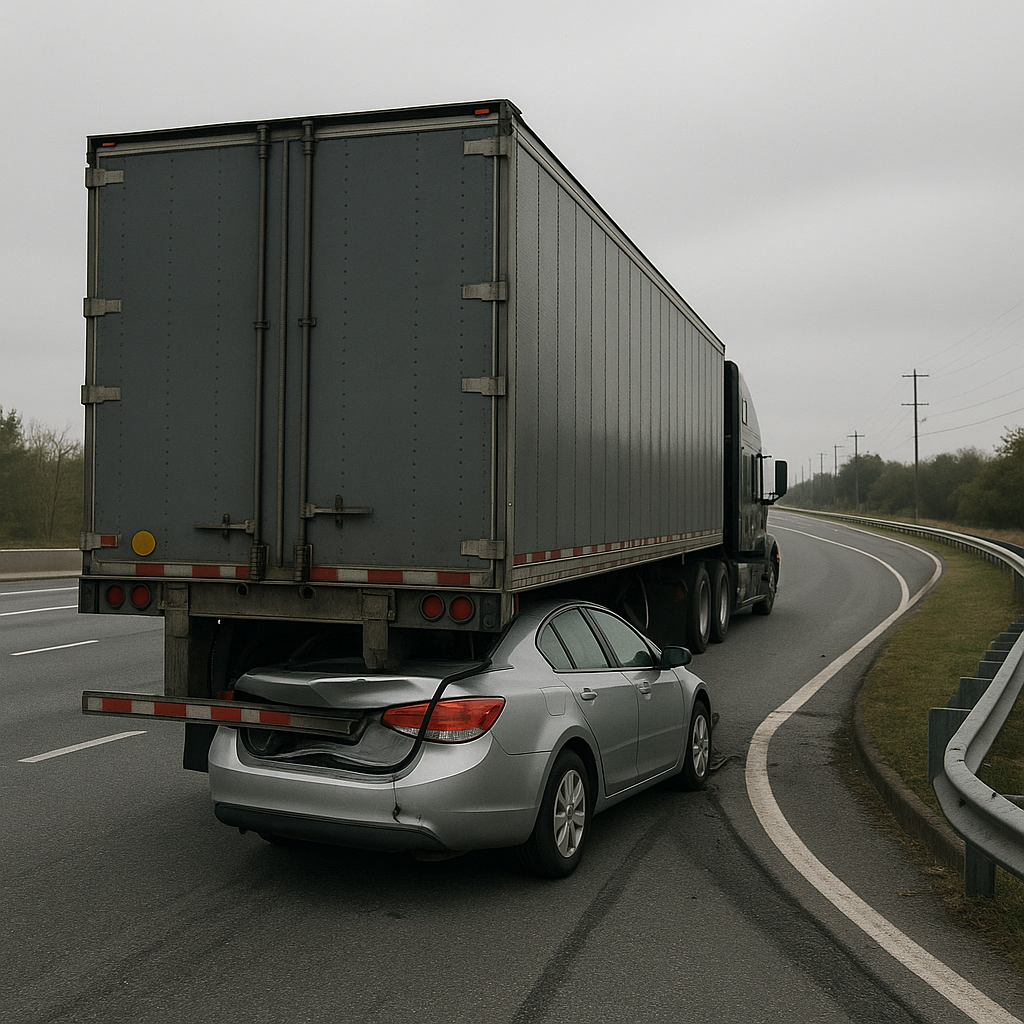
Rear Underride Collision During Highway Merge
A rear underride collision, often called a merge underride crash, is a type of traffic incident that can occur during lane changes or highway merges. In this situation, a smaller vehicle, such as a sedan or compact car, slides beneath the rear of a larger vehicle—typically a tractor-trailer or commercial truck—while merging onto a highway. These incidents present particular challenges distinct from other collision types.
Merging onto a busy highway involves rapid decision-making, speed adjustments, and awareness of surrounding vehicles. When a miscalculation happens, or when traffic flow is interrupted unexpectedly, the risk of a rear underride collision can increase.
How a Merge Underride Crash Unfolds
Sequence of Events in a Typical Incident
A rear underride collision during a highway merge often begins with a smaller vehicle entering the highway alongside faster-moving traffic. If the merging vehicle is unable to match the speed of traffic ahead or misjudges the available gap, it may end up directly behind a slow-moving or stopped trailer.
The driver of the smaller vehicle may have reduced visibility due to the size and height of the truck ahead. If the vehicle approaches the trailer at a higher speed than intended, and the trailer lacks protective underride guards, the car’s front end can travel underneath the trailer. This sequence leads to a merge underride crash, with the smaller vehicle’s roof and upper structure taking the brunt of the impact.
Conditions That Can Contribute
Situational factors such as heavy traffic, weather-related visibility issues, abrupt lane changes, or driver distraction can all play a role. Sometimes, inadequate highway merge lane length leaves drivers with limited opportunities to reach proper speed before joining the flow of traffic. In these conditions, quick decisions and reaction times are critical.
Immediate Outcomes and Vehicle Effects
Physical Consequences for the Vehicles
After a rear underride collision, the smaller vehicle typically sustains significant front-end and roof damage. The rear structure of the truck or trailer may also be impacted, although the extent is usually less severe than for the smaller vehicle. These crashes can sometimes compromise the vehicle’s passenger compartment, depending on speed and underride guard effectiveness.
Truck underride guards are designed to prevent some vehicles from becoming lodged underneath, but their performance varies based on design and the angle of collision. In many instances, the effectiveness of these guards becomes a point of public and regulatory interest.
Traffic Disruptions and Practical Effects
Following a rear underride incident, scenes often result in lane closures or slowed traffic as emergency services and highway personnel assess and clear the area. The damaged vehicles may block more than one lane, especially in high-speed merge zones where space is limited. Such blockages can create secondary delays for other motorists, sometimes leading to extended congestion.
Common Concerns and Uncertainties
Passenger Safety and Recovery
One frequent concern after a merge underride crash revolves around safety features and their performance. Questions such as the effectiveness of modern vehicle crash structures, side airbags, and restraint systems often arise. Observers and those involved may also wonder how quickly professional help can respond during periods of heavy traffic or limited road access.
Evaluating Roadway and Vehicle Design
Some people may question whether longer merge lanes, clearer road markings, or improved underride protection devices could help prevent similar incidents in the future. Others may think about how improved awareness and education on merging techniques could play a role.
Addressing Longer-Term Impacts
After the initial crash, attention sometimes shifts to the long-term implications for everyone affected. This may include evaluating the condition of the vehicles involved, potential repair or replacement logistics, and changes to future driving habits.
Reflecting on Merge Underride Collisions
Merge underride collisions highlight the importance of awareness, preparation, and visibility when entering highways. While these incidents are relatively uncommon compared to other crash types, understanding the scenario helps drivers recognize the value of caution and attention during merges. Discussion continues regarding advancements in safety features and road design that may further reduce the risks associated with highway merging.