
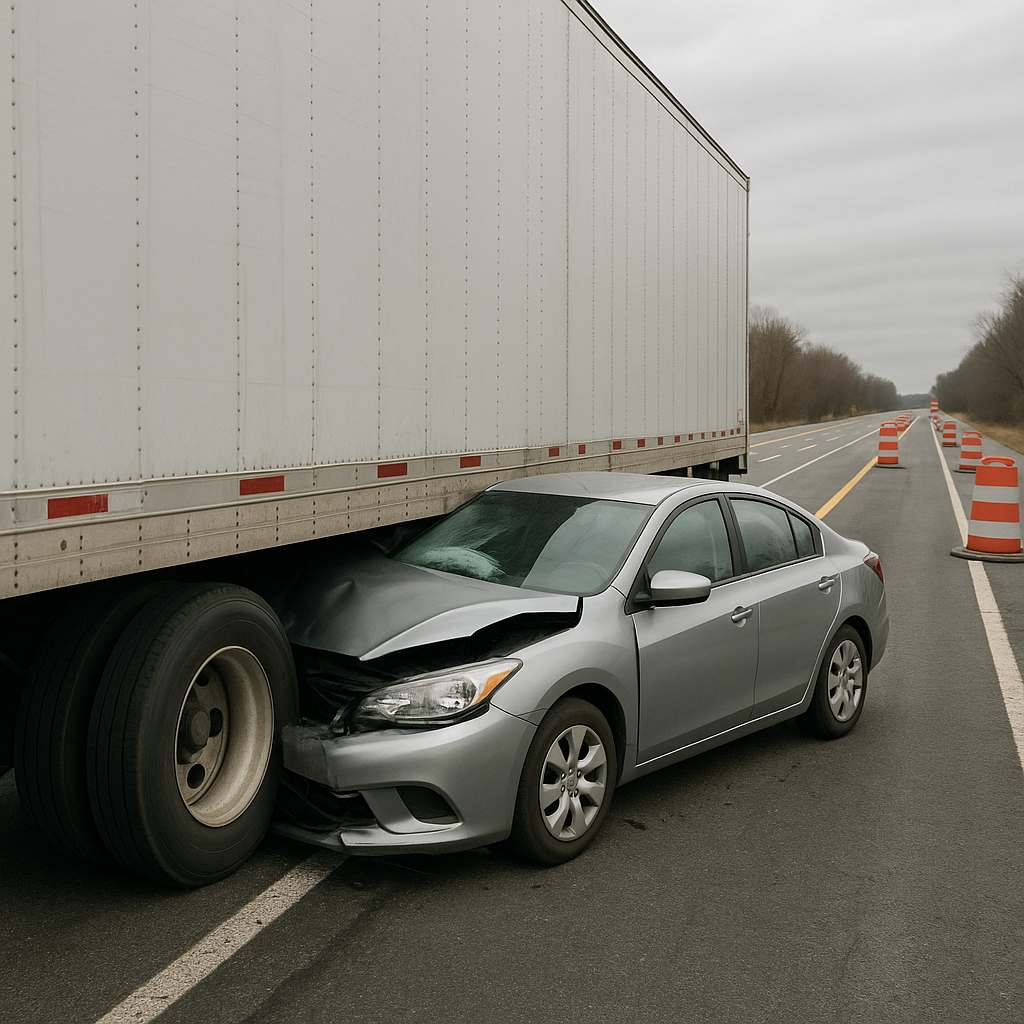
Car Slid Under Semi During Lane Reduction
A lane reduction can create sudden changes in traffic flow, especially on highways and multi-lane roads. When a car slid under a semi-truck during such a transition, it highlighted the unique risks associated with this type of incident, often referred to as a “lane reduction underride.” These scenarios are not common, but when they do occur, they can result in significant disruption and concern for everyone involved.
This article outlines what typically happens during a lane reduction underride, the immediate and longer-term outcomes, and addresses common questions people may have after witnessing or learning about such events.
How Lane Reductions Can Lead to Collisions
When lanes merge or reduce, it often requires drivers to adjust their speed and position quickly. Heavy vehicles, such as semi-trucks, may have limited visibility and slower reaction times compared to smaller cars. This environment can create a setting where cars and trucks end up in close proximity with limited maneuvering space.
Merging Traffic and Reduced Escape Options
In lane reductions, merging traffic is frequently a source of congestion. Smaller vehicles may attempt to move into gaps or avoid being blocked, sometimes misjudging distances or the movement of larger trucks. If the road surface is slick or if speeds are inconsistent, a car may lose traction or fail to slow down in time.
Underride Risk Factors
When a car slides under the side or rear of a semi, it is commonly called an underride accident. The underride risk is elevated during sudden stops or unexpected obstacles in lane reductions, particularly if barriers or underride guards on trucks are absent or not positioned to prevent a car from going beneath the trailer.
What Happens During a Lane Reduction Underride
A car sliding beneath a semi-trailer can happen within seconds, often before either driver can respond effectively. The most common scenarios involve a car failing to brake in time or losing control on slick pavement. Because of the difference in ride height between most cars and semi-trailers, the leading edge of the trailer may override the car’s front end.
Vehicle Damage and Road Conditions
After such an incident, significant damage usually occurs to the car’s front and roof areas. The semi-truck may show little initial damage, but an inspection is often needed. Roadway conditions, including weather and visibility, often influence severity.
Disruption to Traffic Flow
An underride in a lane reduction typically leads to lane closures and significant delays while emergency services respond and the vehicles are removed. This can further complicate nearby traffic and may require detours.
Subsequent Outcomes After the Initial Incident
After the immediate aftermath, investigating the causes and effects of the underride is common. Road authorities may review signage, lane markings, and any crash-prevention infrastructure in the area.
Emergency Response and Scene Management
Emergency crews tend to manage the situation by stabilizing vehicles and directing other drivers around the scene. Clean-up and recovery operations may take several hours, depending on the severity.
Evaluating Preventive Measures
Agencies sometimes assess whether improved warnings or additional underride protection on trucks could reduce the chance of such occurrences in the future.
Common Public Concerns and Questions
People often wonder how frequently these events occur and what factors are involved. Understanding the mechanics of a lane reduction underride can help clarify these concerns.
Are Lane Reductions Usually a Problem?
Lane reductions are not inherently dangerous, but risks increase when visibility is poor, lanes are narrow, or traffic volumes are high.
Can Technology Reduce the Risk?
Some newer semi-trucks are equipped with underride guards or advanced warning systems, while cars may have emergency braking capabilities. The effectiveness of these tools is still being studied in real-world merging traffic.
##### How Is the Area Made Safer Afterward?
Often, additional signs or markings may be added. In some cases, authorities review data from the incident to make recommendations.
Final Thoughts on Lane Reduction Underride Incidents
Lane reduction underride incidents are rare, but they draw attention to the importance of cautious driving, road design, and safe vehicle equipment during merging situations. Through continued evaluation and adaptation, both public and private sectors work to minimize the risk and impact of these incidents, aiming to keep roadways safer for everyone.