
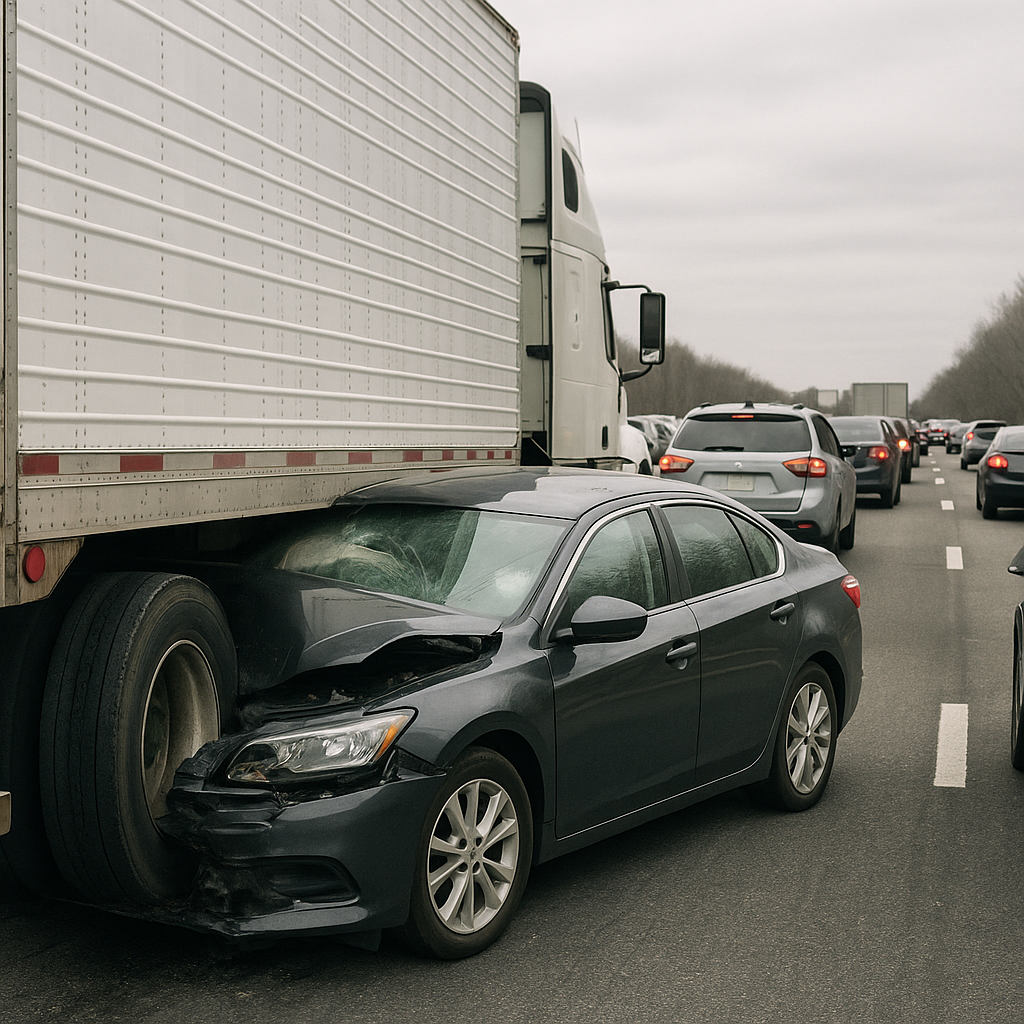
Underride Collision During Traffic Compression
An underride collision during traffic compression is a specific type of roadway incident involving large vehicles and smaller passenger cars. In this scenario, traffic slows or stalls due to congestion, and a smaller vehicle becomes trapped beneath the rear or side of a larger truck or trailer. These instances can develop rapidly, particularly in dense or stop-and-go traffic conditions.
Underride collisions present unique challenges and risks due to their mechanics and the types of vehicles often involved. Understanding how these collisions typically unfold and the immediate consequences can help provide clarity on this complex subject.
Typical Sequence of an Underride Collision in Compressed Traffic
Factors Leading to the Incident
Traffic compression refers to situations where vehicles are forced into close proximity, often during congestion, sudden slowdowns, or in construction zones. Visibility is frequently reduced during these times, and reaction time for all drivers is diminished. A common contributing factor is the shorter distance between vehicles, leaving little margin for error if the lead vehicle—often a truck—suddenly brakes.
How the Collisions Usually Occur
Smaller cars may not be immediately visible in a truck’s rearview mirrors, particularly in heavy traffic. When a truck brakes or slows unexpectedly, the trailing vehicle may not have enough time or space to stop. In some cases, the front of the smaller vehicle can slide beneath the rear or side of the truck. This is referred to as an underride collision, and it is particularly associated with traffic compression situations.
Immediate Physical and Situational Outcomes
Damage Patterns and Vehicle Impact
In underride scenarios, the point of impact is often below the truck’s rear underride guard or along its side. The upper portion of the passenger vehicle absorbs much of the force, and the vehicle’s roof can be severely compromised. Large trucks can remain largely intact, while the smaller vehicle sustains significant structural damage to the front and upper cabin.
Roadway Disruption
After the collision, traffic flow is commonly disrupted. Emergency services may block additional lanes to attend to the scene. Congestion can worsen, sometimes extending for significant distances behind the original collision site. Clearing the involved vehicles can take substantial time, particularly if one vehicle is lodged under the other.
Emergency Response Considerations
First responders often face difficulty accessing occupants in the smaller vehicle, especially if the underride is severe. Specialized rescue equipment may be required, extending response times. The presence of multiple vehicles in a confined space complicates recovery and containment efforts.
Points of Concern and Frequently Raised Questions
Driver Awareness and Prevention
Observers often wonder how such collisions might be prevented in the future. Questions typically revolve around driver attentiveness, the visibility of trucks and passenger vehicles in heavy traffic, and safety features such as underride guards. Both drivers and safety experts discuss whether existing measures are sufficient in compressed traffic scenarios.
Road Design and Safety Measures
Another area of ongoing interest involves infrastructure. Some individuals query if better lane design, increased signage, or traffic control technologies could lessen the risk of an underride event. There is continued examination of how urban planning and road engineering may play a role in reducing these incidents.
##### Vehicle Safety Standards
Modern vehicles and trailers are subject to evolving standards. People often inquire about regulations for underride guards and other safety devices, and whether additional improvements might further decrease the risk during traffic compression incidents.
A Look Toward Safety in Compressed Traffic
While underride collisions during traffic compression present clear challenges and risks, awareness of their characteristics supports ongoing improvements in highway safety measures and vehicle design. As congestion remains a familiar aspect of many roadways, staying informed about these incidents can help both drivers and industry professionals continue to adapt and prioritize safety measures in the roadway environment.