
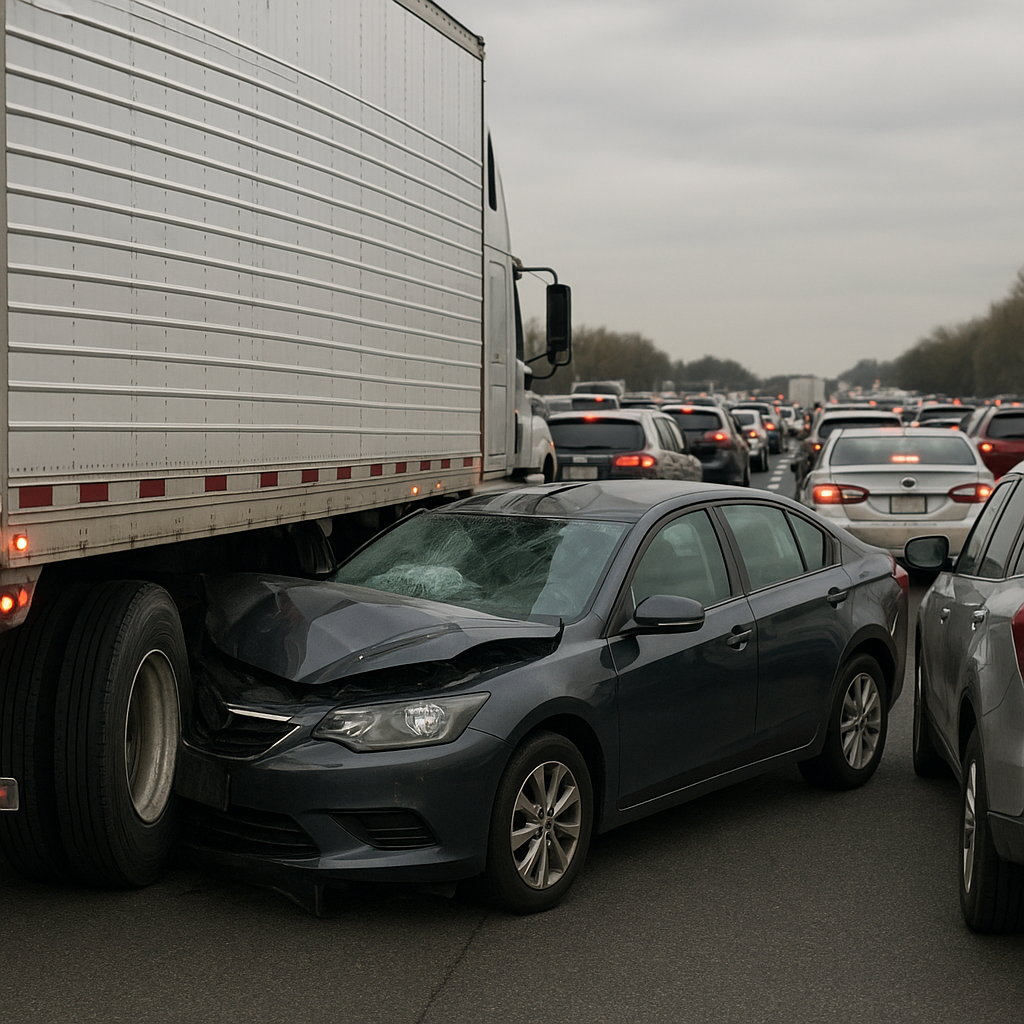
Underride Crash During Bumper to Bumper Traffic
An underride crash can occur unexpectedly, especially in slow-moving, congested conditions. When bumper to bumper traffic brings vehicles nearly to a standstill, a small passenger car can sometimes slide or become trapped beneath the rear of a larger truck or trailer, resulting in what is known as an underride collision.
These incidents often develop with little warning. Traffic that seems to crawl one moment may suddenly stop completely in the next. In such dense situations, limited visibility, short reaction times, and minimal space to maneuver increase the chance of an underride event, especially when a commercial vehicle is nearby.
How Underride Crashes Happen When Traffic is Heavy
The Dynamics Behind the Incident
During bumper traffic underride situations, passenger vehicles and commercial trucks frequently share very close quarters. Sudden stops are common. If the trailing car is unable to halt in time, it can slide under the higher chassis of a truck. Unlike fender-bender collisions, the low front end of a car positions itself below the elevated rear of the truck, rather than colliding bumper to bumper.
Typical Contributing Factors
Reduced visibility in thick traffic can play a role in underride events. The rear area of a truck may fall into a driver’s blind spot just as speeds slow and traffic clusters together. Some trucks may lack underride guards or have guards that are too high or weak to prevent a car from going underneath. The combination of reduced stopping distances and obstructed sightlines sets up a challenging environment for safe driving.
What Often Happens After an Underride Collision in Congested Traffic
Physical Consequences at the Scene
In the immediate aftermath, traffic congestion can quickly intensify. Lanes may become partially or fully blocked as vehicles remain in position or are difficult to move. Emergency services may need extended time to access the crash area, given the congestion.
Even at lower traffic speeds, underride crashes may result in significant damage to passenger cars. The hood, windshield, and roof can become compromised, as the car’s front end slides beneath the truck rather than absorbs the force through its crumple zones.
Response and Practical Complications
Removing vehicles from the scene often requires coordination. Towing services may need specialized equipment to separate the car from the rear of the truck. Traffic delays may extend significantly, affecting both those involved and other drivers. Road cleanup can take additional time, as debris and fluids are cleared to make the route safe for passage.
Common Questions and Concerns Afterward
Is This a Frequent Type of Collision?
Many drivers wonder about the frequency of bumper traffic underride scenarios. While less common than rear-end impacts among passenger vehicles, underride crashes remain a persistent concern, particularly in areas where trucks and cars frequently intermingle in slow-moving patterns.
Safety Features and Prevention
People might question what measures help minimize underride risk. Some modern trucks feature underride guards designed to prevent cars from sliding underneath. Awareness and defensive driving are helpful, as is maintaining a safe following distance, even in slow traffic. However, congestion itself can sometimes make prevention difficult.
Next Steps Following the Event
Drivers involved or witnessing an underride crash may focus on immediate physical safety. Emergency crews typically assess and support anyone present, as occupying vehicles under a trailer may require extra caution before extrication.
Vehicle Condition and Roadway Impact
Another concern relates to vehicle damage and impact on overall traffic flow. Underride events can render vehicles inoperative, complicating the process of clearing the roadway. This, combined with the dense traffic, often leads to extended delays and potential detours.
Looking Forward: Understanding the Risks in Heavy Traffic
Bumper traffic underride scenarios illustrate how slow-moving or stopped traffic does not eliminate collision risks. The interaction of trucks and smaller vehicles, reduced space, and limited visibility can all contribute to this unique type of crash. While safety equipment and careful driving may reduce the likelihood, recognizing the possibility remains important for drivers navigating congested roadways.