
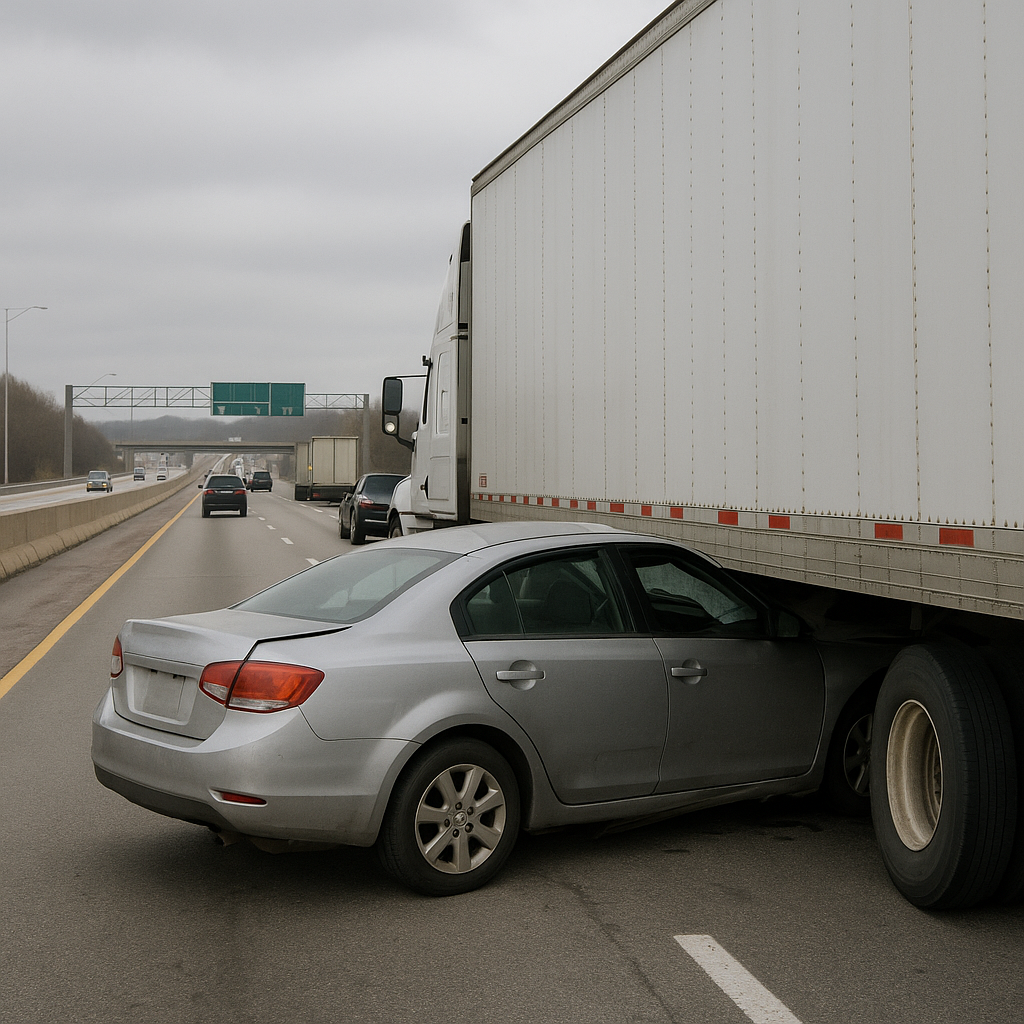
Underride Collision Near Highway Bottleneck
Underride collisions can be particularly serious events on highways, especially when they occur near congested areas known as bottlenecks. In a typical bottleneck underride, a smaller vehicle slides under the rear or side of a larger commercial truck, often as traffic slows or stops unexpectedly. These incidents raise questions about traffic patterns, safety features, and road infrastructure.
How Bottlenecks Contribute to Underride Scenarios
Highway bottlenecks are common sites of congestion where traffic is forced to slow down unexpectedly due to lane reductions, construction, or merging vehicles. In these locations, vehicles are often tightly spaced. If a large commercial truck comes to a sudden stop, following vehicles may have little time to react.
The Dynamics of an Underride Collision
When a smaller vehicle cannot stop in time, it may slide underneath a truck’s trailer, rather than stopping against its bumper. This often occurs because trailer undercarriages sit higher than the hoods of many passenger vehicles, offering insufficient resistance during a rear-end impact.
Speed and Visibility Factors
Reduced visibility in bottleneck traffic can make it harder for drivers to detect slowing trucks ahead. Speeds are often irregular, with abrupt stops and starts that increase collision risk.
Immediate Outcomes After a Bottleneck Underride
The aftermath of a bottleneck underride can affect several aspects of the surrounding area.
Impact on Traffic Flow
A collision at a bottleneck can intensify delays. Emergency services, once alerted, may need to block several lanes to provide assistance and carry out necessary work, further restricting traffic.
Efforts to Clear the Scene
Specialized equipment may be needed to separate vehicles involved in an underride, often leading to longer clearing times than standard collisions.
Effects on Nearby Drivers and Road Network
Adjacent motorists may experience significant delays or be rerouted. Extended congestion can ripple outward, causing backups on nearby roads and increasing commute times for many drivers.
Safety Measures and Preventative Questions
Bottleneck underrides often prompt consideration of protective measures on highways and commercial trailers.
Trailer Guard Effectiveness
One area of focus concerns the design and condition of underride guards on trucks. These safety features are intended to prevent smaller vehicles from passing under trailers but vary in effectiveness depending on speed, placement, and maintenance.
Roadway Design in Bottleneck Areas
Some people question whether improved roadway signage, lighting, or warning systems could reduce the frequency of bottleneck underride events. Adjustments to road layouts or advanced notification systems are sometimes considered in response to such incidents.
##### Technology and Future Developments
Discussions often include emerging technologies in vehicle safety, such as automatic emergency braking, and their potential role in diminishing underride risks.
Common Considerations for Motorists
Drivers frequently wonder how to reduce their own risk in bottleneck situations.
Following Distance and Awareness
Maintaining prudent following distances and remaining alert are commonly cited as practical ways to minimize risk, especially in areas known for frequent slowdowns.
Understanding Highway Hazard Zones
Awareness of common bottleneck locations, such as on-ramps and construction zones, may help individuals anticipate sudden stops and adjust their driving accordingly.
Looking Ahead After a Bottleneck Underride
Bottleneck underride collisions highlight the interaction between vehicle design, infrastructure, and driver behavior. Ongoing discussions around safety technology, roadway improvements, and education aim to reduce the frequency and severity of these events. Continued focus on addressing bottleneck hazards supports safer outcomes for all highway users.