
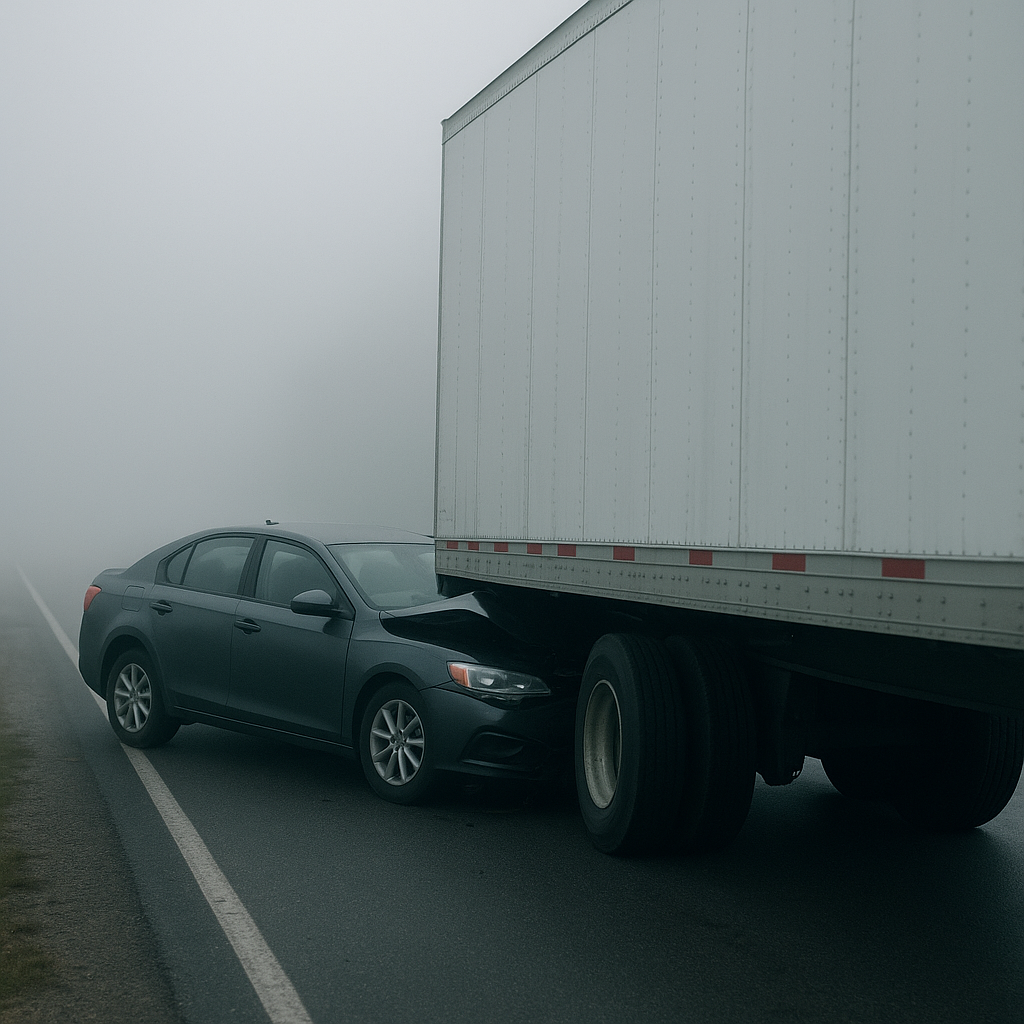
Underride Accident Involving Low Visibility
An underride accident occurs when a smaller vehicle slides underneath a larger one, such as a tractor-trailer. These incidents can be especially dangerous. When low visibility is a factor—such as during heavy fog, rain, or nighttime conditions—the risk of an underride accident can increase significantly.
Low visibility underride accidents often happen suddenly, leaving little time for drivers to react. Understanding what typically takes place and what might follow can help people better prepare for these situations.
How Low Visibility Contributes to Underride Accidents
Low visibility conditions can arise from weather, inadequate road lighting, or obscured vehicle markings. Drivers may have difficulty seeing the outline of a large truck or trailer ahead, especially if reflective markings are worn or lights are dim. Under these circumstances, it becomes harder for drivers of smaller vehicles to judge distances, detect stopped traffic, or notice slow-moving or turning trucks.
Typical Sequence of Events in Reduced Visibility
In many cases, a passenger vehicle approaches from behind at normal speed. The driver may not recognize the presence of a truck or trailer until it is too late to stop or change lanes. If the truck is stationary or moving much slower than the flow of traffic, an underride can occur when the car’s front end goes beneath the rear or side of the trailer.
Contributing Factors at Night or During Adverse Weather
Fog, snow, heavy rain, or darkness can all make it harder to see truck trailers. The reflectivity of a trailer’s markings and the brightness of its tail lights play an important role. If these are compromised, the risk of a low visibility underride rises noticeably.
What Often Happens Immediately After
When an underride accident takes place, the roof of a passenger vehicle may be severely damaged. Emergency responders are typically called to assist those involved, which may require specialized extraction procedures due to the position of the vehicles.
Disruption to Traffic and Regular Activities
The aftermath usually brings lane closures or traffic diversion, sometimes for an extended period. Authorities and cleanup crews focus on securing the location and managing safety concerns for other road users. The scene is typically investigated to understand how the accident occurred, which can take additional time.
Mechanical and Structural Effects on Vehicles
Vehicles involved in underride accidents, particularly the smaller car, often sustain significant structural damage. This can complicate vehicle recovery and cleanup efforts. Trailers may also be assessed for lighting and safety compliance to determine any contributing issues with visibility.
Questions and Considerations After an Incident
Many people wonder how to prevent future incidents in similar conditions. Issues related to vehicle equipment, road lighting, and reflective technologies often come up in discussions around prevention strategies.
Vehicle Safety Features and Visibility
Advancements in automotive safety, such as underride guards and enhanced visibility features, may reduce the chances or severity of such collisions. Proper maintenance of reflective tape, lights, and warning devices is critical for large vehicles operating in low light or adverse weather.
Awareness of Weather and Traffic Conditions
Drivers are encouraged to stay updated about weather conditions and make adjustments, such as reducing speed and increasing following distances, during periods of reduced visibility. General public awareness campaigns often highlight the importance of road safety in poor conditions.
Summary of Key Points
Low visibility underride accidents often result from limited sight caused by environmental factors, insufficient vehicle markings, or poor lighting. The immediate aftermath involves emergency response and temporary changes to roadways. Discussions surrounding these incidents commonly address improvements in vehicle safety and public education to reduce the likelihood of recurrence. By recognizing the risks associated with low visibility, road users can take steps to enhance safety for everyone on the road.