
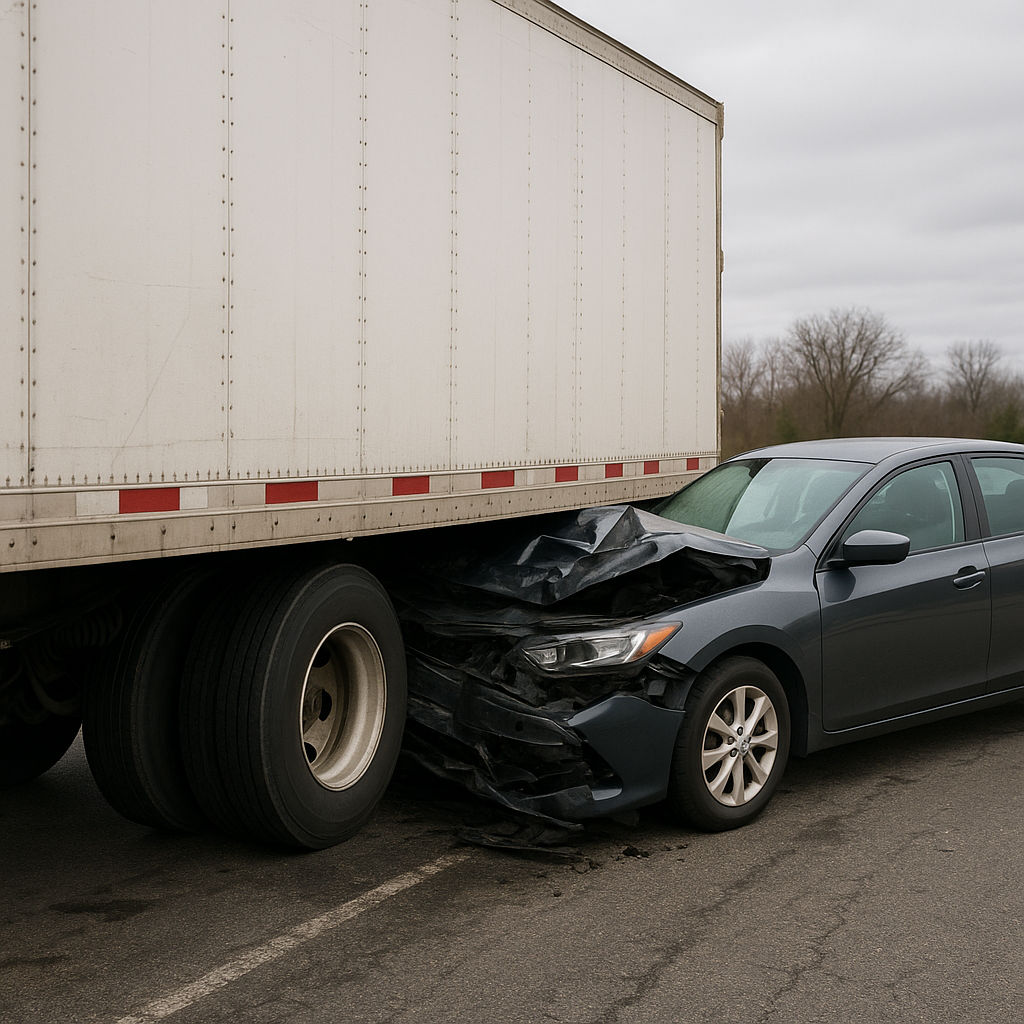
Underride Crash Involving Trailer Overhang
A trailer overhang refers to the portion of a trailer that extends past its rear wheels. When a smaller vehicle collides with the underside of this overhanging section, the result is known as a trailer overhang underride crash. Such incidents are recognized for their potential to cause significant hazards, especially on roads where visibility or spacing can be limited.
Understanding the factors leading to these crashes and their aftermath can be helpful for anyone interested in road safety or the mechanics of vehicle collisions. This article explains what typically unfolds during an underride incident related to trailer overhang, and explores the practical concerns and questions that can arise afterward.
How a Trailer Overhang Underride Occurs
A Closer Look at the Sequence of Events
In most cases, a trailer overhang underride begins when a passenger vehicle approaches and impacts the rear or side of a trailer’s overhanging section. Factors like low visibility, sudden braking, or misjudgment of distances often play a role. The smaller vehicle may slide beneath the trailer’s overhang if underride protection—such as guards or barriers—is absent or insufficient.
Contributing Factors on the Road
Visibility is an important element in these situations. Poor lighting, weather conditions, and inadequate reflective markings on the trailer can increase the risk. Truck positioning, particularly when the trailer is stopped, parked, or maneuvering in low-speed environments, may also contribute to these incidents.
Outcomes Following a Trailer Overhang Underride Crash
Vehicle and Infrastructure Damage
Physical damage to the vehicles involved is typical. The front section of the passenger vehicle often sustains substantial impact while the trailer itself may show damage beneath the overhang. Sometimes, roadway features such as curbs, barriers, or signage can be affected depending on the location and severity of the incident.
Impact on Traffic Flow
Underride incidents may temporarily interrupt traffic in the immediate area. Authorities and response teams may need to block lanes for inspection and site management. These delays can range from brief slowdowns to more prolonged closures, especially if additional assessment or equipment removal is required.
Possible Need for Roadway Improvements
In certain locations where underride crashes have taken place, transportation officials may consider updating road designs, improving signage, or adjusting lighting systems. The goal is often to enhance safety and visibility and reduce opportunities for similar circumstances to develop in the future.
Common Questions and Concerns
What Preventive Measures Exist for Underride Crashes?
Physical guards or reinforced bumpers may be installed beneath the overhangs of trailers. Some trucks feature highly visible reflective tape and lighting for increased recognition by motorists. Decisions about which safety features to apply are influenced by regulations and evolving industry standards.
Driver Education and Awareness
Drivers are often reminded, through educational materials or campaigns, to observe greater following distances near large trailers. Recognizing the risks associated with trailer overhangs, especially at night or in adverse weather, is also emphasized in many road safety resources.
Are There Broader Implications for Transportation Safety?
These incidents bring attention to broader discussions about infrastructure standards, vehicle design, and operational protocols. Policymakers and industry professionals may use such events as case studies to evaluate the effectiveness of existing measures or to explore novel solutions aimed at improving safety on roads shared by trucks and smaller vehicles.
Moving Forward After a Trailer Overhang Underride
Awareness of the factors contributing to trailer overhang underride crashes and their typical outcomes can provide valuable context for anyone assessing road safety practices. Regular attention to vehicle maintenance, road conditions, and clear communication among drivers all play important roles in minimizing risk. As research and innovation continue to address transportation safety, both vehicle operators and the public remain key participants in making roadways safer for everyone.