
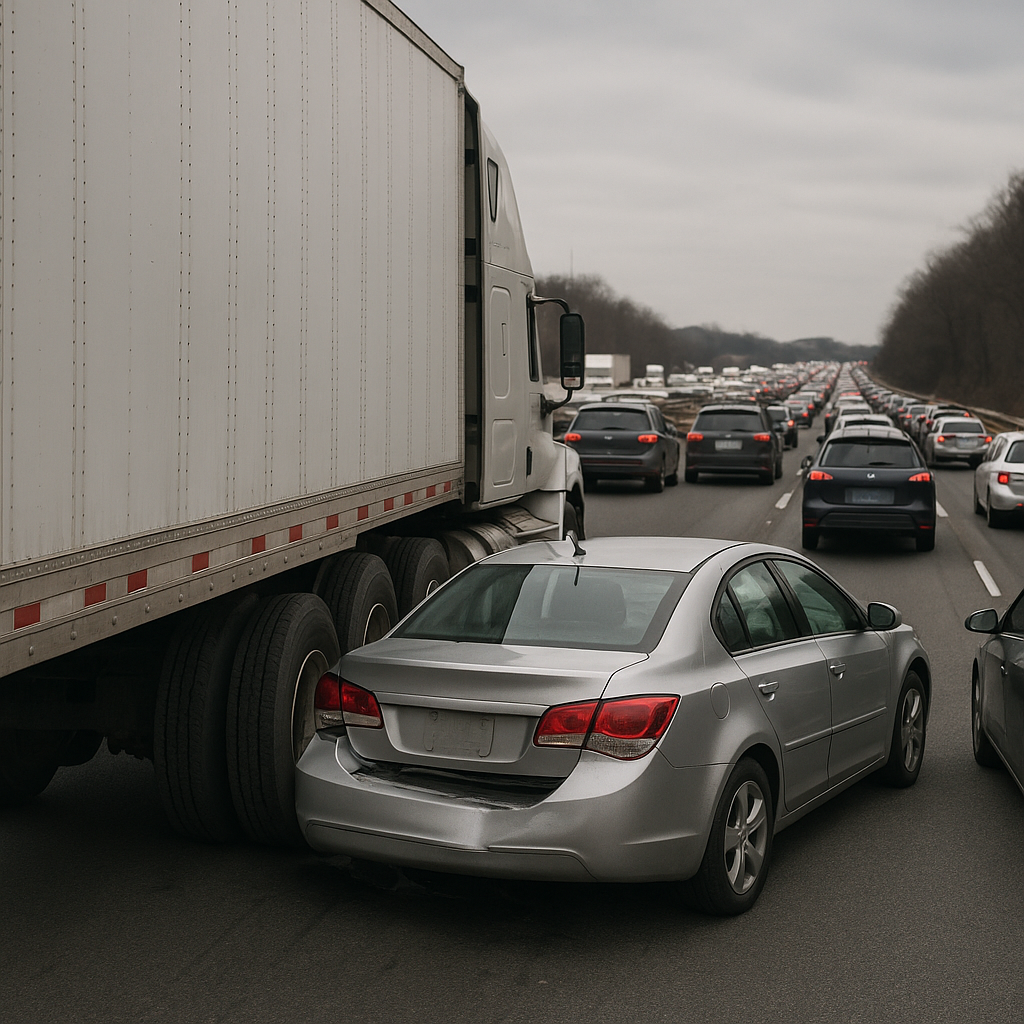
Underride Collision During Highway Congestion
Underride collisions, particularly during highway congestion, present a serious challenge for motorists. These incidents occur when a smaller vehicle collides with and becomes lodged beneath the rear or side of a larger truck or trailer. This scenario can unfold quickly on congested roadways where traffic conditions, vehicle speeds, and driver decisions all intersect.
During periods of heavy traffic on highways, vehicles often stop and start unexpectedly. In such conditions, the risk of an underride collision increases, especially if a passenger car follows a commercial truck too closely or if sudden braking occurs.
Understanding How Underride Collisions Occur
Dynamics of Congested Traffic
Heavy highway congestion typically leads to reduced travel speeds and frequent braking. Drivers may struggle to maintain consistent following distances, particularly in stop-and-go traffic. If a large commercial truck slows or stops suddenly, trailing vehicles may not have sufficient time or distance to react.
Contributing Factors in These Situations
Several factors often combine during congested periods. Visibility is sometimes limited by the size of trucks, making it difficult for car drivers to see brake lights or obstacles ahead. In addition, distraction or fatigue may affect reaction times, compounding the risk of an underride event.
Immediate Outcomes Following an Underride Event
Vehicle Damage and Traffic Disruption
One immediate result is significant damage to the involved vehicles. The front end of the smaller vehicle typically sustains heavy impact, and the larger truck or trailer may experience structural stress. Such collisions frequently block traffic lanes, leading to further congestion and creating logistical challenges as responders work to clear the scene.
Emergency Response and Roadway Safety
Responders arriving on the scene must manage both the safety of individuals and the stability of the vehicles involved. Ensuring the flow of traffic and directing vehicles around the area becomes a priority. Cleanup and investigation can take considerable time, extending disruptions for other motorists.
Frequently Raised Questions About Underride Collisions
Why Do Underride Collisions Occur Most Often in Congestion?
Highway congestion underride incidents are more common because reduced speeds and constant lane changes increase the risk of last-minute braking. With less room to maneuver, minor spacing errors have greater consequences.
Could Safety Devices Reduce These Occurrences?
Researchers and transportation agencies have studied the potential of underguard systems attached to trucks as a means to reduce the frequency or severity of these collisions. These devices may help prevent vehicles from traveling completely under a trailer in the event of an impact.
Concerns About Vehicle Design and Visibility
Another topic of ongoing discussion is the role of vehicle design. Trucks are generally much taller than standard passenger cars, resulting in height mismatches that contribute to underride scenarios. Some manufacturers are exploring enhancements to lighting and visibility to provide more advanced warnings to trailing drivers.
How Congestion Patterns Influence Risk
Roadway layout and traffic control measures during periods of congestion also influence the likelihood of underride collisions. Short entrance and exit ramps, bottlenecks, and visibility around curves may all heighten the danger.
Steps Drivers Can Consider for Safer Roadways
Awareness and caution in congested conditions are often emphasized by traffic safety organizations. Maintaining safe following distances, remaining alert, and adjusting speed appropriately are key considerations recommended by experts focused on reducing highway congestion underride incidents.
Conclusion: Recognizing the Complexities of Highway Congestion Underride Collisions
Underride collisions on crowded highways illustrate the importance of vigilance and safety in challenging traffic environments. Understanding how these incidents develop, the immediate impacts, and ongoing concerns can help guide safer navigation during heavy traffic. As technology and roadway design continue to evolve, efforts to minimize these occurrences remain a focus for transportation safety professionals.