
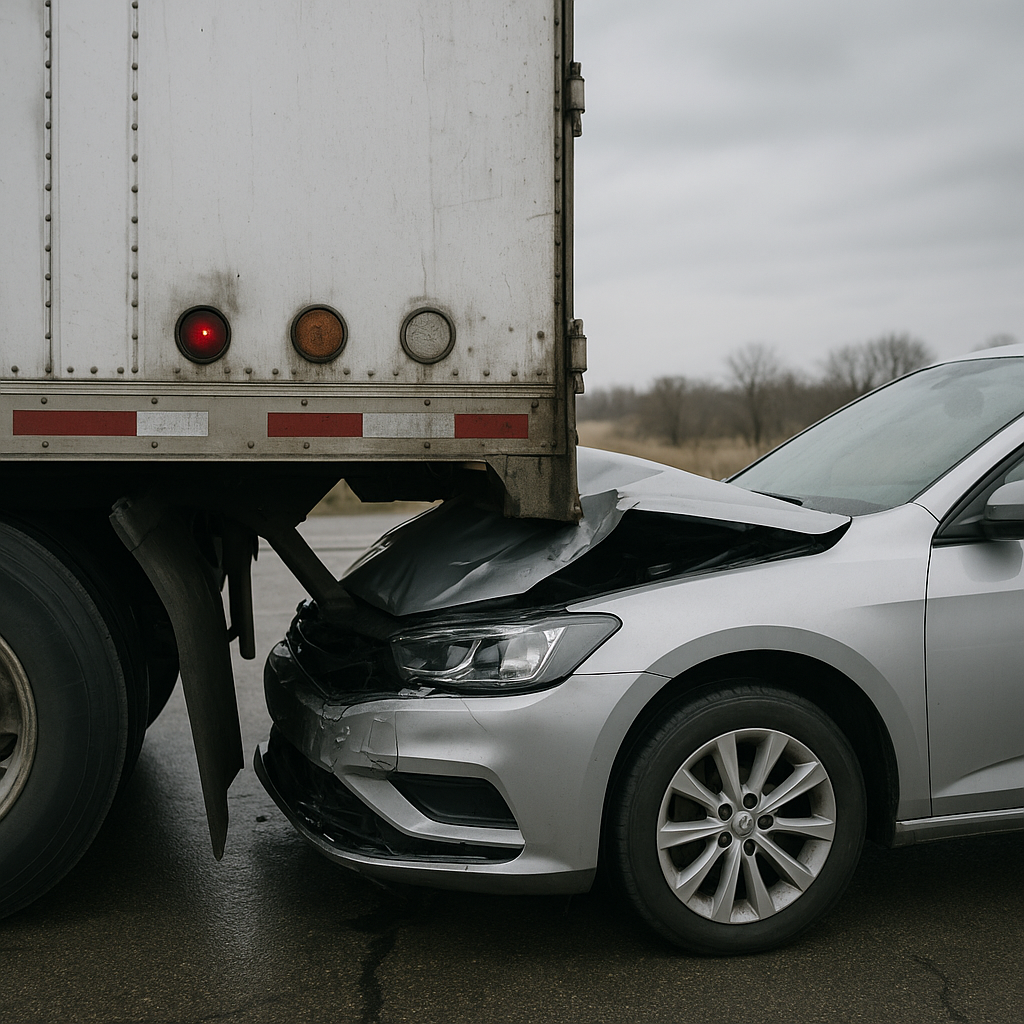
Underride Crash Involving Trailer Lighting Failure
Collisions between passenger vehicles and large trailers can have serious consequences under certain conditions. One scenario that receives close attention is the underride crash, which occurs when a smaller vehicle slides beneath the rear or side of a trailer. A common contributing factor in these cases is lighting failure, where trailer lights such as tail lamps or side marker lamps are not functioning correctly. The resulting crash can be severe and raises important questions about visibility, safety, and what can follow after such an event.
How Lighting Failure Plays a Role in Underride Incidents
Visibility is critical for preventing collisions, especially during low-light conditions or at night. When trailer lighting fails—whether due to malfunction, broken bulbs, or wiring issues—it reduces the ability of approaching drivers to detect the trailer’s presence and outline. In some cases, drivers may not realize a trailer is stopped or moving slowly, creating a situation where they may be unable to recognize potential hazards in time.
Sequence of Events Leading to an Underride Crash
A typical sequence starts when a trailer’s lights are not functioning properly, making the rear or sides of the trailer difficult to see. A car traveling behind the trailer at night or in poor weather might fail to identify the trailer’s location. By the time the driver sees the trailer, there is often not enough time to react, resulting in the front end of the car sliding underneath the trailer body. The impact is often most severe at the windshield level, which can result in significant vehicle damage and serious risks for the occupants.
Factors That Increase the Likelihood
Various external elements can make these incidents more likely. Heavy rain, fog, or darkness further reduce visibility. Rural or poorly lit roads may have fewer additional cues to warn drivers of stationary or slow-moving trailers. Positioning of the trailer—such as parking on the shoulder or across a lane—can also affect the outcome.
Aftereffects Common to Lighting Failure Underride Crashes
The moments following such a collision typically involve significant disruption to traffic, emergency response needs, and investigation into the incident’s causes. Observers may notice damaged vehicles, delays, and a focus on restoring roadway safety for other motorists.
Physical Outcomes for Vehicles and Roads
After an underride event, the involved passenger car often sustains extensive front-end and roof damage. Trailers may also exhibit signs of impact, especially at the undercarriage and bumper level. Roadways may require cleanup and temporary traffic management to clear debris and restore the normal flow of vehicles.
Practical Considerations for Drivers and Witnesses
Those who experience or witness such an incident may need to safely distance themselves from the vehicles involved, allowing emergency responders to access the scene without interference. Nearby drivers may encounter detours or be required to follow instructions from traffic officials to prevent secondary collisions.
##### Potential Long-Term Roadway Impacts
In some situations, repeated incidents at a particular site can prompt authorities to implement additional safety measures, such as improved roadway markings or enhanced signage to alert drivers about the presence of large trailers.
Common Questions Following a Lighting Failure Underride Incident
Insights Into Why Lighting Systems Fail
Curiosity may arise regarding the maintenance and inspection of trailer lighting systems. These systems can fail for a variety of reasons, including electrical issues, exposure to elements, or aging equipment. Regular inspection routines are designed to help catch problems early, but issues can still occur.
Preventive Efforts and Safety Technology
Questions often come up about advancements that might prevent underride events. Developments in reflective tape, underride guards, and improved lighting are continually evaluated to provide better visibility and enhanced protection for vehicle occupants.
Looking Ahead: Preventing Similar Occurrences
Understanding underride crashes caused by trailer lighting failure highlights the value of early detection, routine maintenance, and awareness of changing driving conditions. Ongoing efforts in vehicle design, lighting protocols, and roadway safety share a common goal: reducing the frequency of these incidents and helping keep road users safer.