
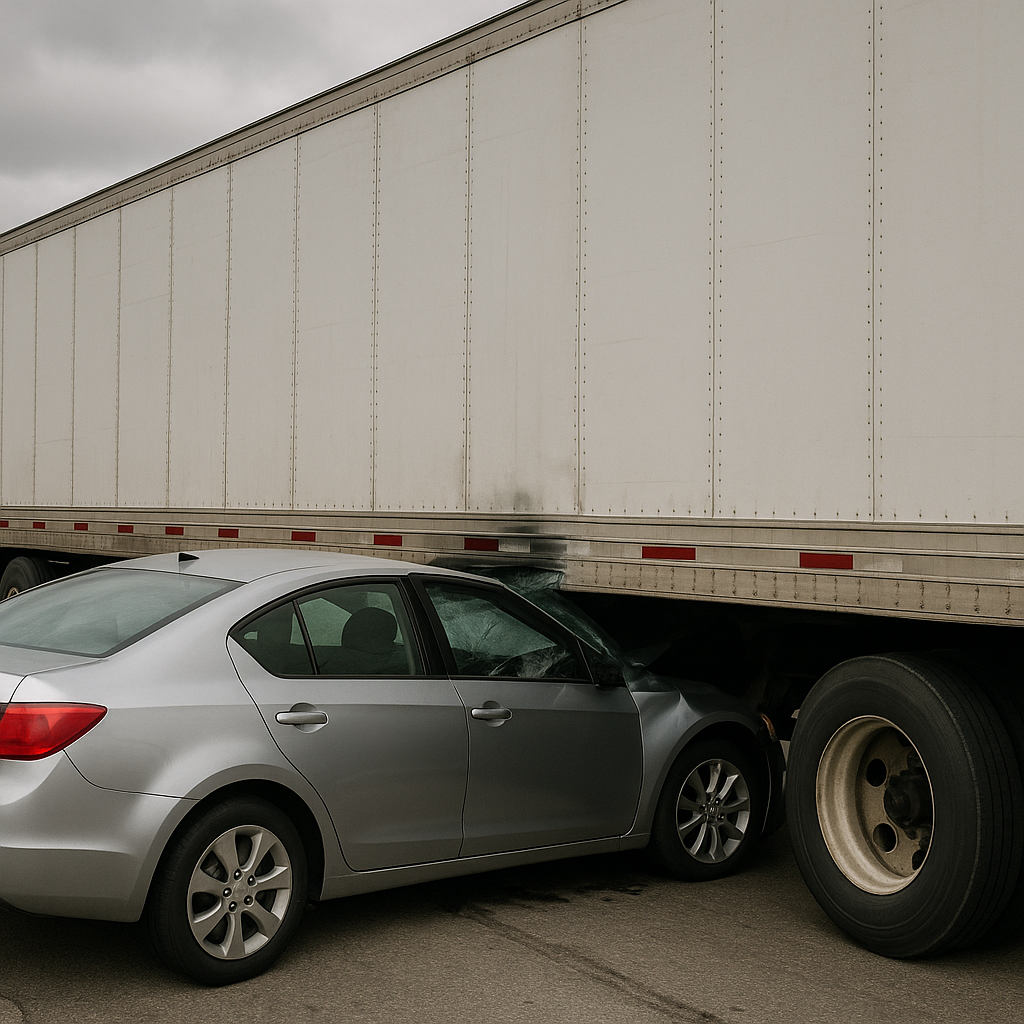
Underride Accident Involving Trailer Shadowing
Underride accidents are incidents where a smaller vehicle slides underneath the side or rear of a trailer. A particular type known as “trailer shadow underride” can occur when an approaching driver fails to see a trailer clearly, often due to low visibility and the way the trailer casts a shadow across the road.
This article explores the key aspects of underride accidents involving trailer shadowing, illustrating what typically happens, the aftermath, and common concerns that may arise.
How Trailer Shadow Underride Typically Occurs
Visibility Challenges at Different Times of Day
Underride accidents involving a trailer’s shadow most often occur at dusk, dawn, or during overcast conditions. The lighting at these times can cause the side or rear of a trailer to blend into the roadway or surroundings. When the sun is low, the shadow cast by the trailer may obscure its outline, making it less visible to nearby motorists.
Roadway Configurations and Traffic Flow
Trailers that are stopped or moving slowly across multiple lanes can become hard to detect when their shadow merges with the pavement. This situation is particularly common at intersections, during turns, or if a trailer is crossing wide roads. If there are no reflective markings or side underride guards, approaching drivers may misjudge the trailer’s presence until it is too late to react.
Limited Time to Respond
When drivers cannot clearly see a trailer blocking the roadway, they may have only seconds to recognize the hazard. By the time the shadowed trailer becomes visible, the opportunity to brake or steer away safely is often greatly reduced. This rapid progression can lead to the front of a smaller vehicle sliding underneath the trailer’s frame.
Common Physical and Practical Results
Impact Forces and Immediate Aftermath
When an underride occurs, the top of the smaller vehicle may be crushed by the solid underside of the trailer. Depending upon vehicle speed and angle of impact, serious damage can result. Frequently, emergency services are called to the scene, and traffic delays follow as responders assess and clear the area.
Effects on Traffic and Bystanders
Nearby drivers may be required to detour or stop while the incident is managed. The scene can create confusion, especially if the accident happens in low-light conditions and visibility is further reduced by shadows.
Vehicle and Equipment Factors
Many trailers are equipped with retroreflective tape or underride protection, but these safeguards are not always present or effective. In some cases, equipment design, cleanliness, or maintenance influences how visible the trailer is, playing a role in the likelihood and severity of an underride incident.
Considerations After a Trailer Shadow Underride Event
Questions About Road and Vehicle Safety
Observers often wonder how future accidents of this type might be prevented. Concerns about the effectiveness of trailer lighting, reflective materials, and physical barriers come up frequently. People may also ask if certain lighting conditions or weather patterns contribute more to these situations.
H4: Awareness and Prevention
Discussions may focus on ways to increase awareness of this accident type among both truck drivers and motorists. Conversations sometimes touch on driver education regarding stopping distances and recognition of potential shadow hazards.
Impacts on Travel and Future Road Use
Following an underride event, traffic in the area may experience delays as the road is cleared and authorities review what happened. Individuals who witnessed the event or travel the same route may temporarily alter their driving behavior or pay extra attention near large trailers, particularly at times when visibility is lower.
Approaching the Issue with Careful Observation
Incidents involving trailer shadow underride demonstrate the importance of visibility, awareness, and equipment design on road safety. By understanding how shadows and environmental conditions can obscure large vehicles, drivers and those responsible for vehicle design can consider ways to minimize risk. Observing these situations with a neutral and informed perspective allows for ongoing discussion and improvement of safety measures for all road users.