
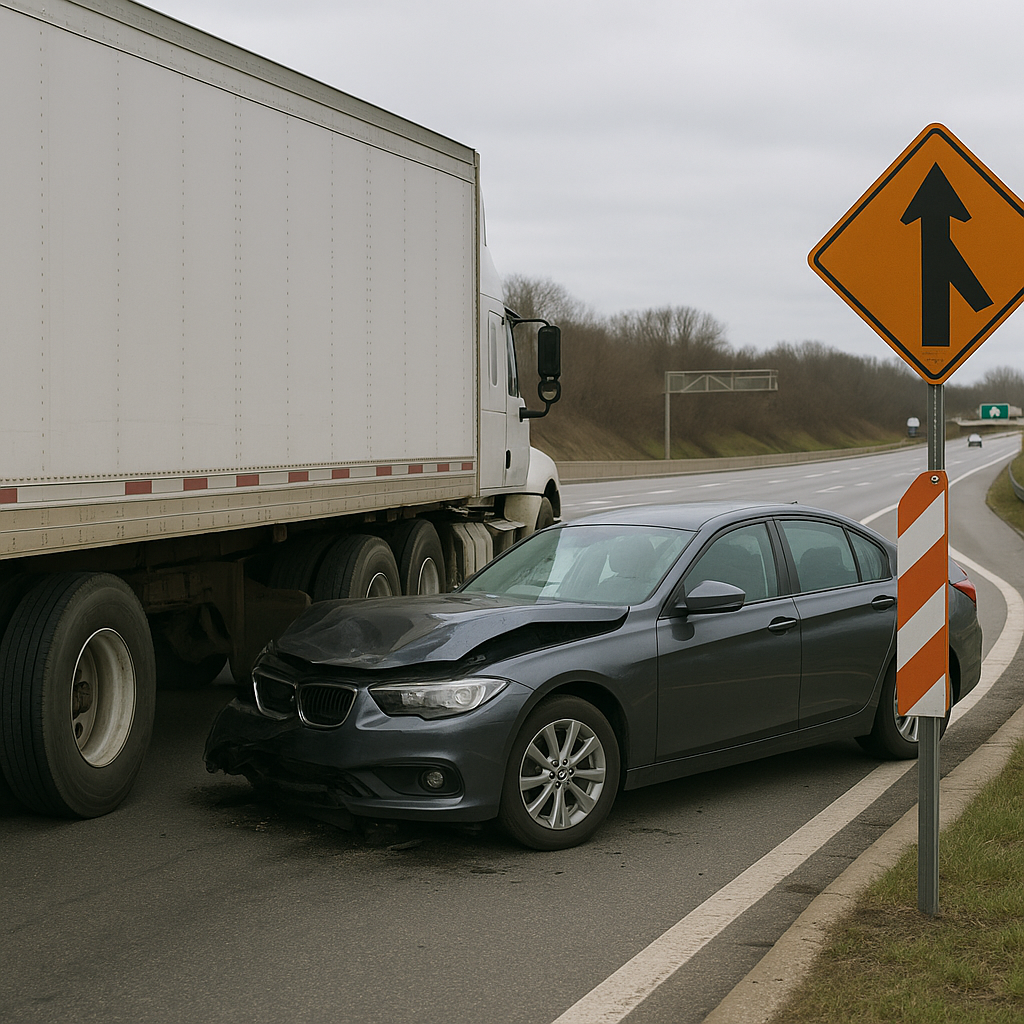
Underride Collision Near Traffic Merge Point
An underride collision near a traffic merge point is a type of roadway incident where a smaller vehicle slides or is forced underneath a larger vehicle—often a truck or trailer—during a merging maneuver. These collisions typically occur where two traffic lanes converge, sometimes unexpectedly, introducing unique risks for vehicles involved.
Such incidents can transpire within seconds, as vehicles shift lanes or merge into busy traffic. An underride collision at a merge point is particularly challenging due to the compact space, shifting speeds, and frequent driver uncertainty about right-of-way.
Understanding the Incident Dynamics
How Underride Collisions Can Occur at Merge Points
Merging points on highways, ramps, or junctions concentrate vehicles into limited space. If a smaller vehicle misjudges the distance or speed of a truck, or if the larger vehicle accelerates or changes lanes abruptly, the smaller vehicle may inadvertently travel beneath the trailer or cargo area. Reduced visibility, blind spots, and rapid lane changes can all contribute.
Environmental Factors at Play
Weather, lighting conditions, or road surface issues—like rain or poor pavement markings—can make merge point underride incidents more likely. These factors may limit reaction time or make it more difficult to maintain safe following distances.
Typical Outcomes Following a Merge Point Underride Collision
Vehicle Damage and Disruption
Significant structural damage usually results from such collisions as the front of the smaller vehicle becomes wedged under the higher frame of the larger one. The force may also dislodge cargo, causing secondary hazards. Traffic is frequently disrupted as emergency responders clear the scene and assess the aftermath.
Impact on Nearby Traffic
Following an underride incident near a merge, surrounding vehicles may need to stop suddenly or navigate around debris and emergency vehicles. Traffic congestion and delays are typical, especially if multiple lanes are blocked during the response.
Immediate Response and Assessment
On-scene, responders focus on stabilizing both vehicles and checking for any potential hazards. Assessments often determine if hazardous materials are involved, and ensure other motorists remain safe during the cleanup effort.
Issues and Considerations After a Merge Point Underride
Vehicle Safety Mechanisms
People often wonder about the effectiveness of underride guards, which are designed to prevent vehicles from sliding under a larger vehicle in these scenarios. Not all trucks or trailers are equipped with guards meeting modern standards, prompting questions on their widespread implementation and maintenance.
Driver Awareness and Roadway Design
Questions may arise regarding the role of driver education or roadway engineering in preventing future collisions. Merge points with improved signage, better road markings, and clear speed guidance may help reduce the risk of merge point underride events.
Road Closures and Commute Impact
Commuters may be concerned about how long a roadway remains closed after an underride collision. The complexity of extracting vehicles, evaluating the situation, and ensuring safety before reopening lanes can result in extended road closures.
Concerns About Vehicle Visibility
Visibility is a recurring topic after these incidents. Steps such as increased use of reflective tape, better lighting, and driver vigilance are often considered important for reducing the likelihood of such collisions at merge points.
Moving Forward After an Underride Collision Event
Incidents involving merge point underride collisions highlight the importance of awareness and safety around merging areas, especially with mixed traffic involving large and small vehicles. Understanding the dynamics of these events, the factors that contribute, and the common challenges faced during responses can help inform efforts to improve road safety. As roadway design and vehicle safety measures evolve, an ongoing focus on prevention and practical awareness remains key in addressing merge point underride scenarios.