
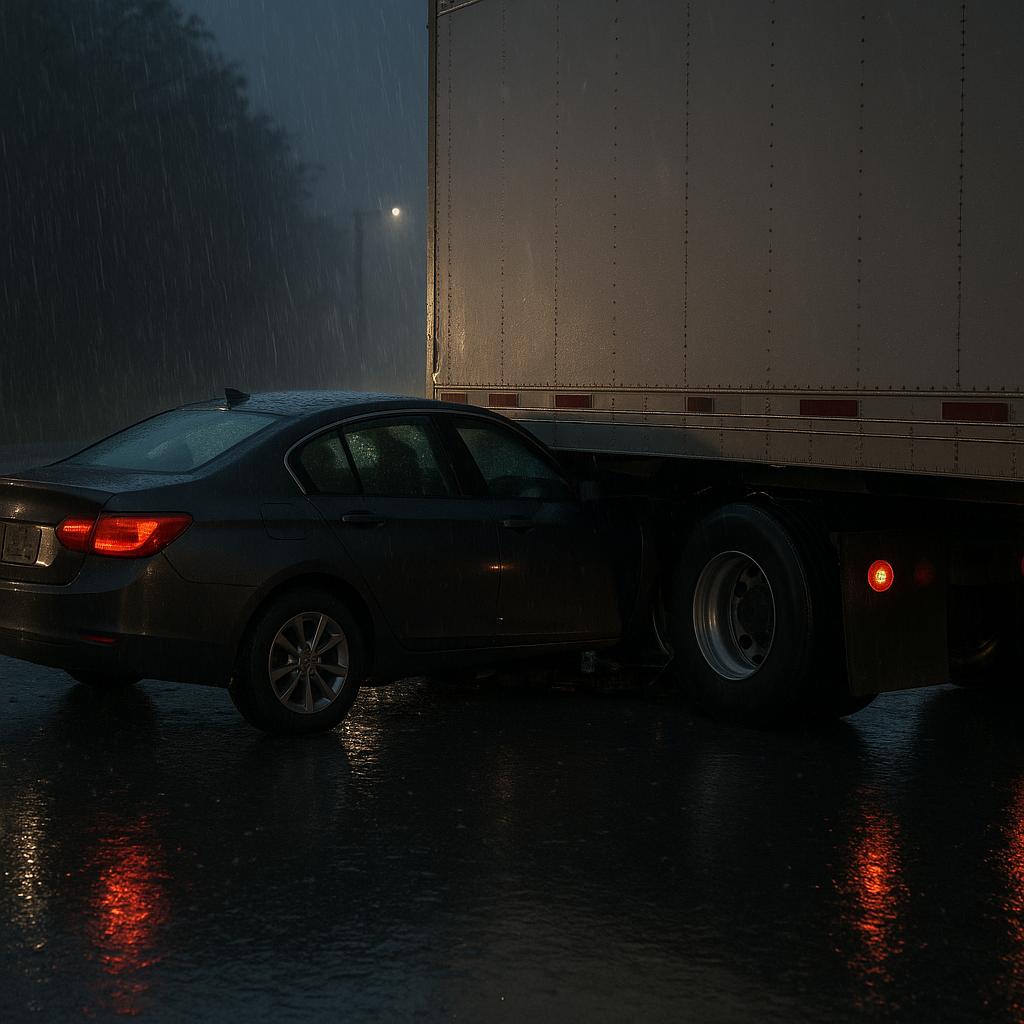
Underride Collision During Night Rain Conditions
An underride collision, especially during nighttime rain, presents a hazardous scenario on roadways. These incidents often involve a smaller vehicle sliding beneath a larger truck or trailer, primarily under challenging visibility and slick surface conditions. Understanding the contributing factors and potential outcomes can provide important context for this type of road event.
Examining the Circumstances of Night Rain Underride Events
Rainfall during nighttime hours reduces overall visibility for drivers. Streetlights may appear blurred, headlights can reflect off wet surfaces, and distinguishing lane markings becomes more difficult. On highways and major roads, this creates an environment where the presence of large trucks or trailers may not be recognized until a vehicle is dangerously close.
How Reduced Visibility and Road Conditions Play a Role
Nighttime rain not only makes it harder to see but also affects reaction times. Brake lights and reflective markings can be more difficult to detect through raindrops or spray generated by other vehicles. The distance between vehicles decreases rapidly if a vehicle loses traction or brakes suddenly. These conditions increase the risk that a smaller car will slide into and underneath the rear or side of a commercial truck or similar large vehicle.
The Mechanics of an Underride Collision
In a typical night rain underride, a car traveling at speed may encounter a slower or stopped truck ahead. The visibility challenges combined with wet pavement can slow the driver’s response. When the car fails to stop in time, the lower front end can wedge beneath the higher undercarriage of the truck. This scenario is markedly different from a standard rear-end collision, leading to distinctive vehicle damage and risks.
Immediate Physical and Practical Outcomes After the Incident
After an underride collision, the vehicles involved often sustain significant structural impact. The car’s front section absorbs the force, and its roof may be crushed or severely compromised. Occupant movement and deployment of safety systems, such as airbags, will differ from collisions involving only similarly sized vehicles.
Impact on Traffic Flow and Emergency Response
Such incidents can lead to lane blockages, especially if they occur on multilane highways or in rural areas where emergency access may be delayed by wet, slippery surfaces. Visibility challenges may persist, complicating the work of first responders. Road closures or diversions are common until the scene is cleared.
Considerations for Weather and Continuing Rainfall
Ongoing rain may affect efforts to clear vehicles, tow equipment, and support involved passengers. Slick roads and darkness require additional caution for those managing the aftermath. Reflective safety apparel, lighting, and traffic management become heightened concerns at the scene.
Common Questions and Concerns Afterward
Can Underride Collisions Be Prevented in Rainy Night Conditions?
This type of collision is influenced by several factors, including driver awareness, vehicle lighting, road maintenance, and weather-appropriate speeds. Improved reflective markings on trailers and properly functioning taillights may help with visibility, although not all risks can be eliminated.
How Are Vehicles Evaluated Post-Collision?
After an underride event, both the car and truck typically undergo detailed examinations. Professionals assess structural integrity, check safety system deployments, and review the environmental conditions at the time. Data from vehicle recording systems may also be reviewed to understand the incident timeline.
What Are the Usual Effects on Occupants?
The severity of an underride collision in wet nighttime conditions may differ significantly from other crash types. Injuries can be more extensive due to intrusion into the passenger compartment. First responder protocols often focus on rapid assessment and careful extraction due to possible roof or door deformation.
Continued Awareness During Wet Nighttime Travel
Night rain underride collisions highlight the importance of heightened awareness and cautious driving when visibility and road traction are compromised. Understanding the mechanical, environmental, and situational aspects of these incidents helps inform both drivers and responders. Responsible vehicle operation and attention to changing conditions remain key factors in reducing such occurrences.