
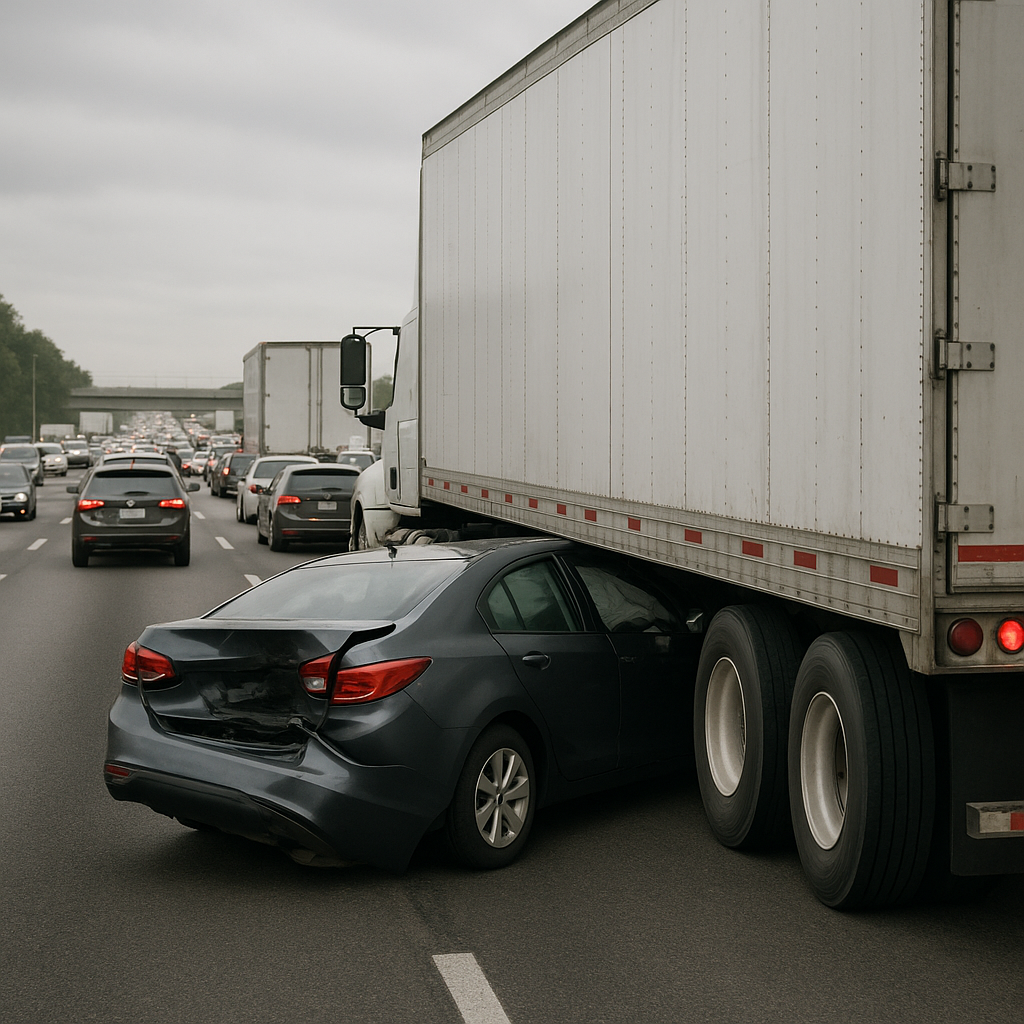
Underride Collision During Heavy Freeway Traffic
An underride collision in the midst of heavy freeway traffic is a rare, but potentially severe, roadway incident. This scenario typically involves a smaller passenger vehicle sliding or being forced beneath the rear or side of a larger truck or trailer. With the crowded and slow-moving conditions common in heavy freeway jams, several specific factors come into play.
In these situations, limited space, reduced speed variability, and sudden braking often raise risks. Awareness of how such collisions unfold and their possible results can help drivers and the public better understand what may follow.
How an Underride Can Occur in Congested Traffic
Heavy freeway traffic underride collisions often stem from unpredictable vehicle movements. In dense conditions, trucks and passenger vehicles share close quarters with limited reaction time.
Chain Reactions and Stopping Distance
When traffic stalls or slows abruptly, smaller vehicles following larger trucks can have difficulty stopping in time. The difference in height between a typical sedan’s hood and a trailer’s bed increases the chances that the smaller vehicle’s front end can slide under the larger one if a sudden stop or swerve occurs.
Reduced Visibility as a Contributing Factor
It’s common in congested traffic for drivers to have obstructed sight lines. A car following closely behind a truck may not see hazards ahead, leading to a delayed reaction and heightening the risk of underride.
Immediate Aftermath on the Roadway
The moments following a heavy freeway traffic underride event tend to be marked by confusion or sudden standstill. Traffic behind the involved vehicles often comes to a stop, adding to congestion.
Response by Emergency Services
First responders typically face challenges reaching the scene due to blocked lanes. Initial priorities often center on ensuring that vehicles are secure and checking for possible injuries. High visibility and safety measures are implemented to manage the crowded conditions.
Vehicle Assessment and Recovery
Special equipment is sometimes necessary to separate a car that has lodged beneath a truck. The process may take substantial time, leading to prolonged delays for others on the freeway.
Questions After an Underride Crash
Heavy freeway traffic underride incidents spark concern and curiosity among bystanders and those involved.
Can Such Incidents Be Prevented?
People often wonder about prevention. Some trucks feature underride guards to limit the severity of these collisions. Safe following distances and attentive driving can also serve as key safety practices, though heavy traffic sometimes undermines these measures.
How Are Others Affected?
Surrounding drivers may encounter prolonged traffic jams, rerouting, or delays while the impacted area is assessed and cleared. Witnesses commonly experience confusion or frustration, but most highway authorities focus on restoring flow as quickly and safely as possible.
##### How Do Traffic Patterns Recover?
Restoring normal movement relies on safely removing the vehicles and addressing any hazards. In some cases, cleanup and investigation activities mean affected freeway lanes remain closed for a significant period afterward.
Reflecting on Heavy Freeway Traffic Underride Collisions
Incidents involving underride collisions in heavy freeway traffic illustrate the complex dynamics of modern roadways. Understanding how these events develop, unfold, and are managed helps foster realistic expectations regarding roadway safety and post-accident processes. Ongoing efforts to improve vehicle technology and road awareness aim to reduce the likelihood and impact of such occurrences.