
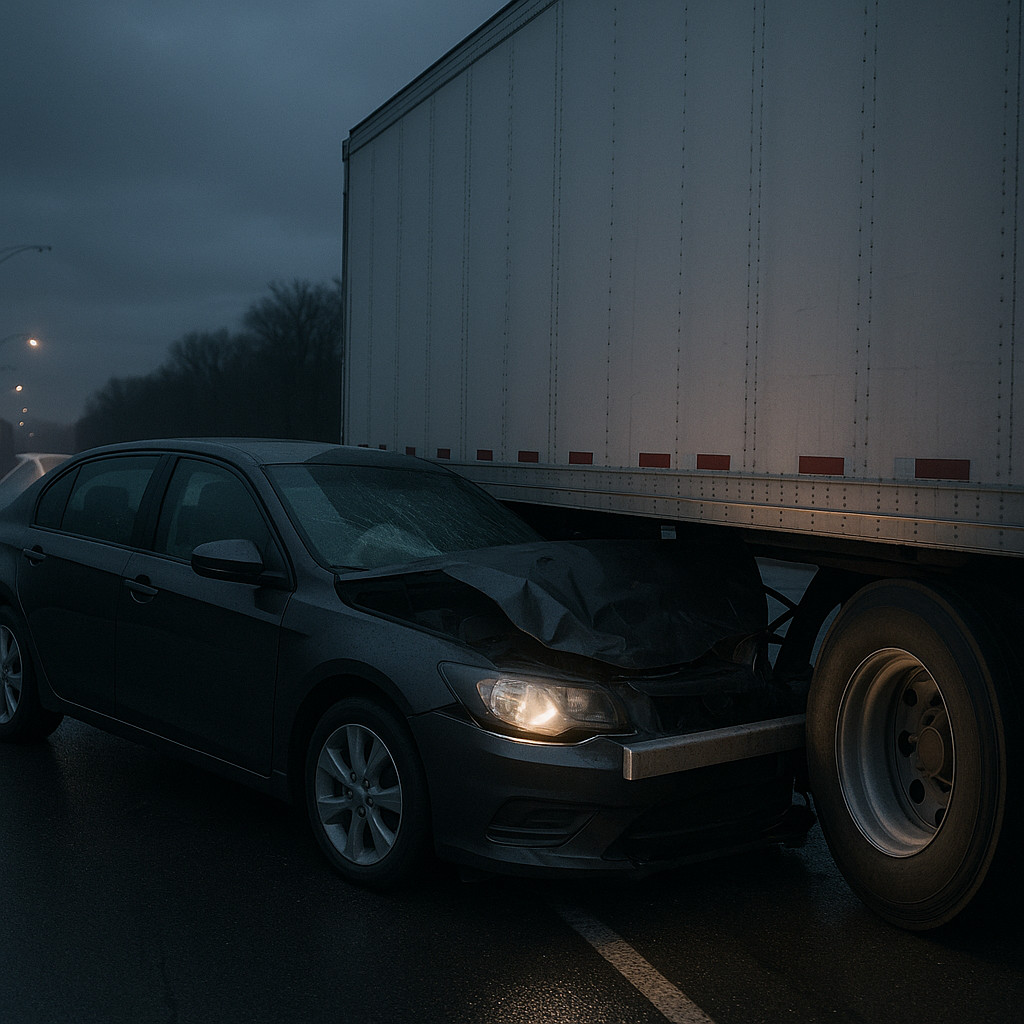
Underride Accident During Late Night Driving
Late night underride accidents can occur when visibility is low and drivers are more likely to be fatigued or distracted. An underride accident typically involves a passenger vehicle sliding under the side or rear of a large truck or trailer. This scenario is especially dangerous in reduced lighting conditions, contributing to a particular type of crash that has unique outcomes and concerns.
Most late night underride incidents happen on highways or rural roads with limited street lights. The circumstances are often complicated, as both road environment and human factors play significant roles.
How Late Night Underride Accidents Occur
An underride crash late at night generally begins with reduced visibility. Headlights from approaching vehicles may not clearly illuminate the back of a truck, particularly if reflective markings or guards are missing or obscured. A passenger vehicle traveling at speed may not perceive the truck’s presence until it’s too late to stop.
Contributing Factors in Late Hours
Fatigue is a common factor at night, leading to slower reaction times and occasional lapses in attention. Low traffic volume can also give drivers a false sense of security, encouraging higher speeds or lowered vigilance. Trailers parked by the roadside or moving slowly can pose unseen hazards until the very last moment.
Vehicle Design Considerations
Underride risks are higher when trucks or trailers have high ground clearance and inadequate rear or side protection devices. Night conditions further magnify this risk. Modern advancements such as underride guards and enhanced reflectors are not present on all vehicles, which can affect outcomes.
Physical Outcomes Following an Underride Collision
When a car becomes wedged beneath a larger vehicle, structural deformation is likely to be severe. The car’s roof and windshield area can sustain significant compression, especially when collision speeds are high.
The Role of Emergency Response
Prompt recognition of the situation by passing motorists or authorities is often crucial in late night underride incidents. Emergency responders may face challenges in extricating occupants, as the damage tends to trap passengers inside the vehicle. Darkness and remote locations can complicate rescue operations.
Common Issues for Occupants
In crash scenarios where limited lighting is a factor, safety outcomes can depend on seatbelt use, airbag deployment, and the angle of impact. Occupants may become disoriented after the event due to both physical and environmental factors such as noise, darkness, and confusion.
Situational Aftermath and Response
After an underride accident at night, various practical issues typically emerge. The isolation and time of day can mean fewer witnesses and longer waits for help. Even after emergency response, vehicles may block lanes and cause prolonged closures during recovery and cleanup.
Concerns Over Roadway Safety
Events like late night underride accidents often prompt consideration of roadway infrastructure, including lighting, signage, and truck safety equipment. These questions may lead authorities to review accident patterns and identify preventive measures.
Personal Questions After a Nighttime Incident
Individuals involved or nearby may wonder about the causes of poor visibility, as well as the effectiveness of available safety features. Concerns about ongoing safety on nighttime roads may become more common after witnessing or hearing about such incidents.
##### Addressing Worries About Repeat Occurrences
Discussions about late night underride risks sometimes lead to talks about technological solutions, such as better detection systems for both trucks and passenger vehicles. The idea of shared responsibility between drivers, fleet operators, and infrastructure planners also surfaces in public conversations.
Reflecting on Late Night Underride Scenarios
Late night underride accidents are shaped by a combination of environmental conditions, vehicle characteristics, and human factors. Understanding these elements helps clarify why such crashes occur and highlights the importance of continually improving road safety features and awareness for nighttime travel. As awareness grows, so too does the discussion on how to better prevent similar incidents in the future.