
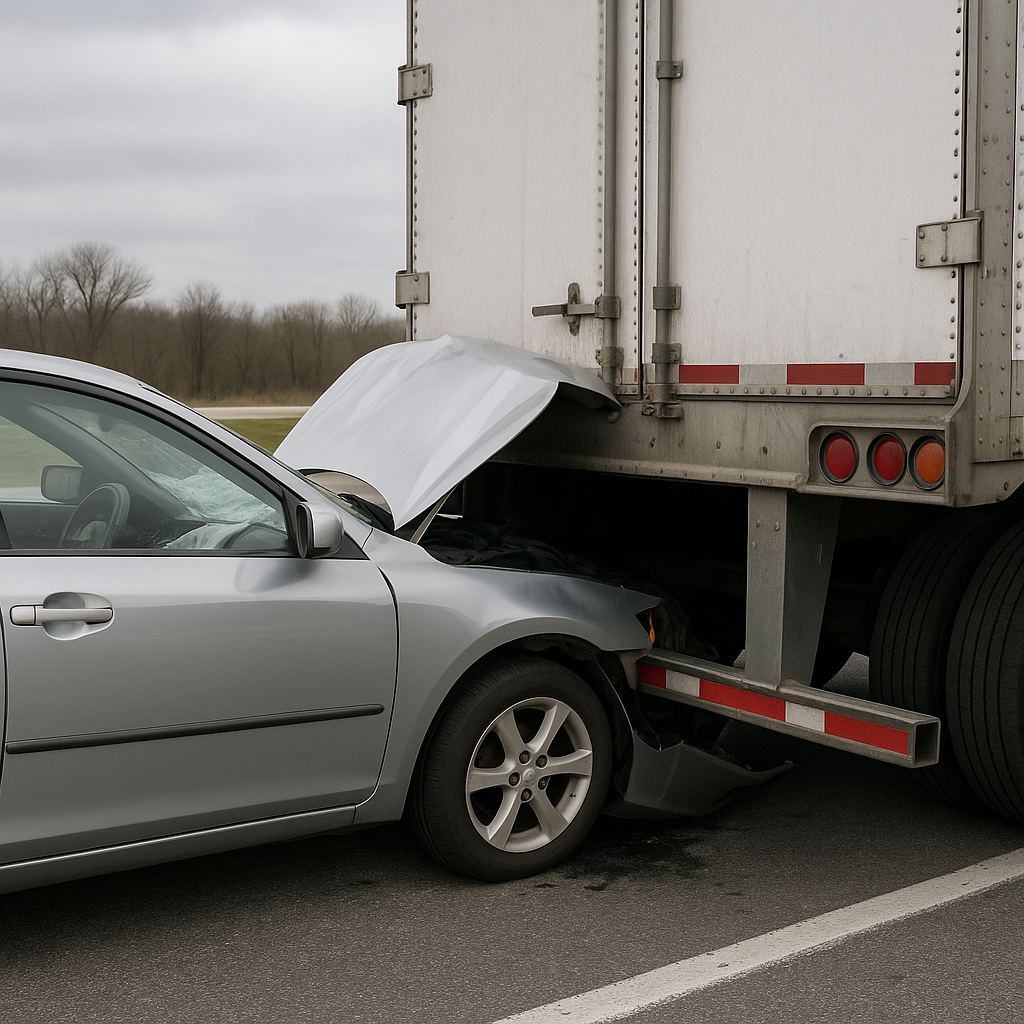
Underride Crash Involving Trailer Rear Structure
Underride collisions involving trailer rear structures are incidents where a smaller vehicle travels under the back of a larger truck’s trailer. These events are often sudden and can have significant consequences due to the mismatch in vehicle sizes.
In such scenarios, the rear structure of the trailer plays a crucial role in both the crash dynamics and the outcomes for those involved. Understanding what typically happens during these crashes, along with their practical effects and common follow-up concerns, is important for anyone interested in road safety.
What Happens in a Rear Structure Underride Collision
When a car makes contact with the rear of a trailer, its front end may slide underneath, while the trailer itself impacts the upper part of the vehicle. This occurs because the car’s lower bumper is often no match for the height and construction of the trailer’s rear structure.
Mechanical Interactions During Impact
The moment a rear structure underride occurs, the smaller vehicle can be significantly compressed beneath the trailer. Passenger compartments may come into direct contact with rigid components of the trailer, sometimes bypassing many of the car’s built-in safety systems. The trailer’s underride guard, if present and structurally sound, is designed to limit how far a car can travel beneath the trailer, but its effectiveness depends on many factors, including the angle and speed of the impact.
The Role of Underride Guards
Modern trailers are often equipped with underride guards—metal barriers positioned at the rear. Their main function is to provide a stopping surface lower down, ideally preventing vehicles from sliding fully underneath. However, not all guards perform equally well, and some may become deformed or detached in certain conditions.
Outcomes Observed After Underride Incidents
The aftermath of a rear structure underride collision can vary greatly, depending on vehicle speed, guard strength, and other circumstances.
Typical Vehicle and Roadway Conditions
Vehicles involved in underride crashes may sustain extreme damage to the front end and roof. The larger the overlap with the trailer, the more likely the car will be caught beneath rather than rebounding away. Roadways can be partially or fully blocked following the incident, as emergency services assess and clear the area. Debris and vehicle fluids are commonly present near the scene, and traffic delays can persist as a result.
Trailer and Cargo Considerations
Trailers may sustain damage to their underride guard, rear lights, and sometimes cargo areas depending on the severity of the impact. Occasionally, the collision can shift the trailer or its load, which could require further management and inspection.
Common Questions and Points of Focus
After a rear structure underride crash, several issues often come to mind for bystanders, emergency responders, and others.
Concerns About Vehicle Safety Features
People often wonder whether advanced safety features in cars, such as airbags or crumple zones, are adequate for these types of impacts. The unique nature of underride collisions sometimes means these systems cannot provide the level of protection seen in standard rear-end incidents.
Road Design and Driving Practices
It is frequently asked whether changes to road layouts, speed limits, or signage could help reduce underride crash risks. Additionally, how drivers perceive following distances and reaction times around large trucks is a focus in safety discussions.
Technology and Future Prevention
There is ongoing interest in how technology improvements—both in trailer guard design and in vehicle sensing systems—might further reduce the occurrence or severity of rear structure underride incidents. Research and regulatory considerations continue to evolve in response to data from such events.
Looking Ahead
Rear structure underride incidents serve as a reminder of the complexities involved in mixed-vehicle road safety. Developments in vehicle engineering, trailer guard performance, and public awareness all play a part in shaping safer transportation environments. Continuing to analyze these incidents helps inform strategies for risk reduction and improved design standards.