
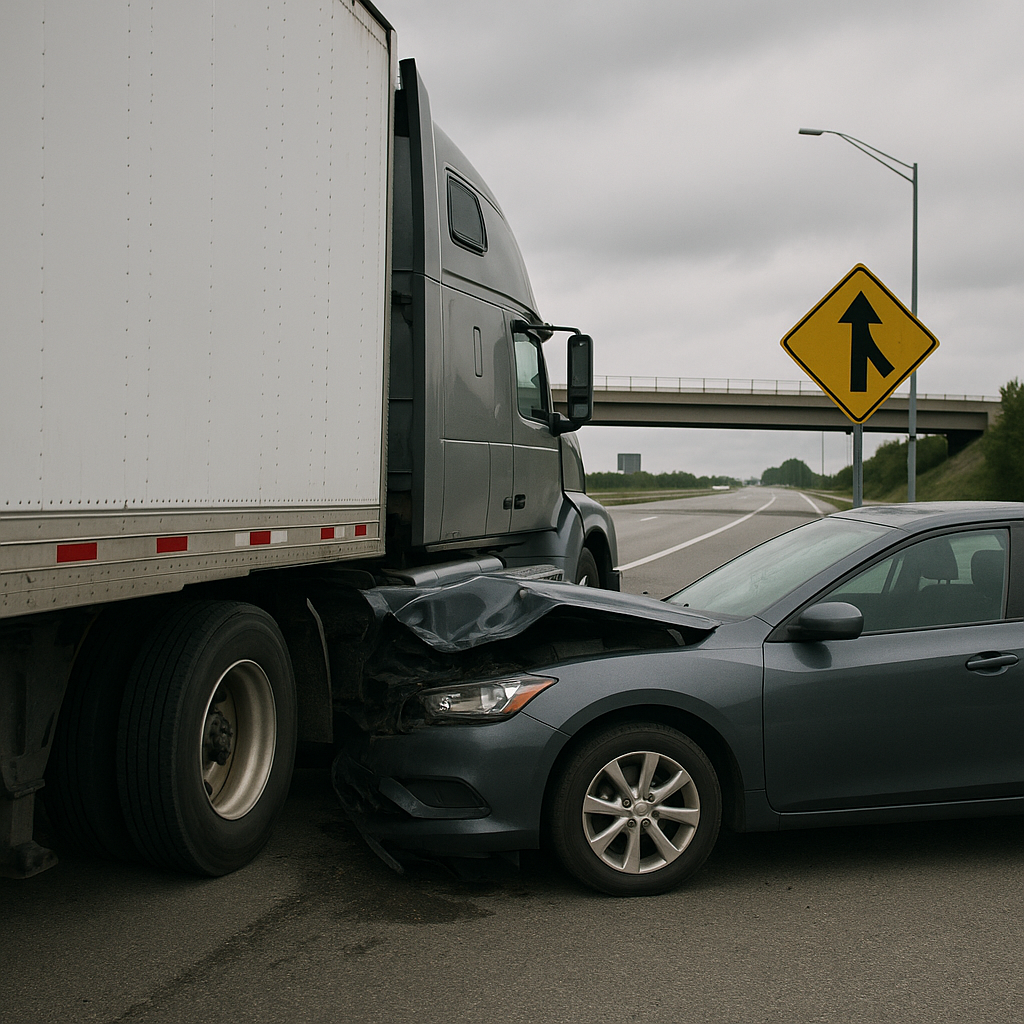
Underride Collision Near Highway Merge Area
An underride collision near a highway merge area is a specific type of roadway incident where a smaller vehicle slides beneath the rear or side of a larger transport truck or trailer. These events are most common near merge zones, where vehicles enter or exit at varying speeds and lane positioning can quickly shift.
This scenario presents unique challenges due to the mix of driver expectations, speed changes, and the geometry of trucks and trailers involved in highway merges. Understanding what typically occurs during these collisions and what frequently happens afterward is important for anyone who drives or regularly travels on highways.
Events Leading Up to an Underride Collison
How a Merge Zone Increases Risk
Highway merge areas are designed to help vehicles enter or exit a faster-moving roadway. However, these zones often create a gap in traffic flow, leading some vehicles to rapidly accelerate or decelerate. Trucks traveling at a consistent highway speed may slow down for merging traffic, while smaller vehicles may accelerate to join the flow. Changes in speed and merging vehicles can lead to moments where following drivers misjudge distance or speed differences.
The Sequence of a Highway Merge Underride
An underride collision generally happens if a smaller automobile fails to slow down in time and strikes a truck’s trailer. Instead of a simple rear-end impact, the smaller vehicle may become wedged under the trailer, especially if underride guards are absent or ineffective. Side underride collisions at merge areas can also occur if a vehicle tries to switch lanes while a truck is moving laterally, entering the same lane at a similar time.
Outcomes After an Underride Collision in a Merge Area
Immediate Physical Environment
After a highway merge underride incident, both vehicles typically come to a halt within or near the merge zone. Traffic quickly backs up as the blocked lanes prevent vehicles from passing safely. First responders, including emergency services and traffic officers, are often required to manage the scene.
Practical Impacts for Other Drivers
Drivers approaching the area may experience delays or detours. Merge areas are particularly sensitive to slowdowns, so backup and congestion often extend down the exit or entrance ramps. In some cases, only one lane remains open until the situation is addressed, causing longer wait times.
Considerations for Freight and Goods Movement
Trucks involved in underride collisions may lose part of their load security or experience cargo shifts. This can sometimes require cleanup or additional safety inspections before the affected lane can fully reopen.
Vehicle Condition Following a Collision
The smaller vehicle may experience extensive damage to its front end, windshield, or roof structure if it becomes trapped under the trailer. The truck or trailer, while structurally robust, can still sustain damage to its rear or side areas and to any underride protection devices.
Common Questions and Concerns Afterward
Are Merge Areas Particularly Susceptible to This Kind of Incident?
Highway merge zones combine fast-moving traffic, rapid speed adjustments, and changes in lane position, making them more prone to underride collisions compared to standard highway lanes. Reduced visibility, especially at night or in poor weather, can increase these risks.
H5: What Factors Influence the Severity?
The speed at which the collision occurs, the dimensions and load of the truck, and the presence or absence of underride guards all contribute to how severe the incident is. Road surface conditions and traffic density can further affect the situation’s outcome.
Safety Features and Infrastructure
Modern trucks are increasingly equipped with underride guards, but their effectiveness can vary. Merge area signage and roadway design may influence how well drivers anticipate changing traffic flows.
Concluding Thoughts on Highway Merge Underride Scenarios
Incidents involving underride collisions near highway merge areas are influenced by multiple factors unique to these transition zones. Traffic patterns, vehicle design, and road conditions all play significant roles. By understanding the dynamics of these scenarios, drivers and road planners can better anticipate potential outcomes and look for ongoing ways to reduce risks and disruptions on high-speed routes.