
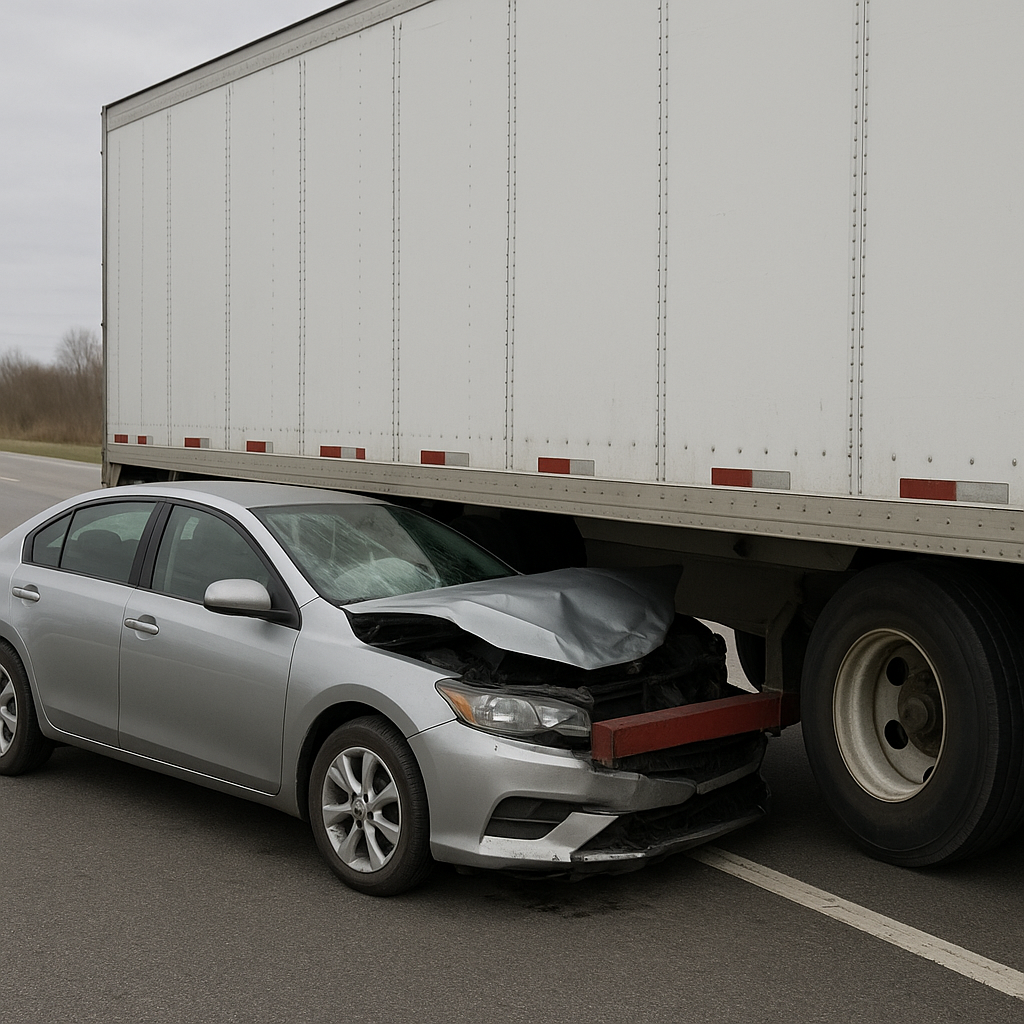
Underride Crash Involving Trailer Height Mismatch
An underride crash can occur when a smaller vehicle collides with the rear or side of a large trailer. In these incidents, “height mismatch underride” refers to situations where the trailer’s underside is higher than the smaller vehicle’s hood or safety features are designed for. This can result in the smaller vehicle sliding underneath the trailer, rather than stopping against it.
These events tend to raise important questions about road safety, vehicle design, and everyday driving risks. Here, the focus is on understanding what typically happens during such a scenario, and what follows physically and situationally afterward.
How a Height Mismatch Can Lead to an Underride
When trailers and passenger vehicles share the road, differences in their structure are noticeable. Most passenger cars are built with crumple zones and bumpers designed to operate against similar-sized vehicles. A trailer with a ground clearance above these safety features poses unique challenges.
Events at the Moment of Collision
During an underride involving height mismatch, the front of the car may align below the trailer’s rear frame. Instead of hitting a solid barrier, the car’s structure slides beneath the trailer. This often leads to the upper part of the passenger compartment coming into direct contact with the underside of the trailer.
Immediate Vehicle Dynamics
Once contact occurs, deceleration happens rapidly. The mismatched heights can allow the trailer to intrude into the cabin area of the vehicle, bypassing many safety designs. Crash prevention systems such as airbags and seatbelts may be less effective due to the unusual direction and location of impact.
What Commonly Happens After the Crash
Following the collision, first responders and other road users may witness a complex scene. The smaller vehicle is often lodged under the trailer, making it more difficult to assess the condition of the occupants and proceed with safety measures.
Physical Effects on Vehicles
Passenger vehicles involved in a height mismatch underride usually sustain significant frontal and upper-structure damage. In some cases, the structural integrity of the passenger compartment is compromised, which can affect the ability to open doors or safely remove occupants. The trailer itself may show little damage compared to the car.
Challenges in Response and Recovery
Removing a vehicle that has underridden a trailer may require specialized equipment or techniques. Emergency services may face additional steps in order to safely extricate those inside. Scene clearance also tends to take longer than in standard rear-end collisions, leading to extended road closures or traffic delays.
Issues and Concerns That Often Arise
Incidents involving a height mismatch underride bring several topics to the forefront of conversations among the community, transport professionals, and vehicle designers.
Questions About Preventive Measures
A frequent concern involves what can be done to reduce the risk of underride in the first place. Discussions may focus on the use of rear underride guards, improvements in trailer design, or changes to passenger car standards. The height at which trailers are built and licensed to operate may also become a point of debate.
Technological Solutions and Research
Ongoing developments in vehicle technology aim to address underride risks. Research continues into sensor systems that alert drivers to obstacles and automatic emergency braking, along with stronger and lower trailer guards that can match the crash protection zones of smaller vehicles.
Moving Forward After a Height Mismatch Underride Incident
Height mismatch underride crashes highlight the importance of ongoing attention to vehicle compatibility and road safety innovations. While these scenarios are challenging, each incident contributes valuable data that can shape improvements in both regulations and technologies.
Understanding what happens during and after these crashes offers perspective on their real-world impacts, supporting continued work toward prevention and safer roadways for all users.