
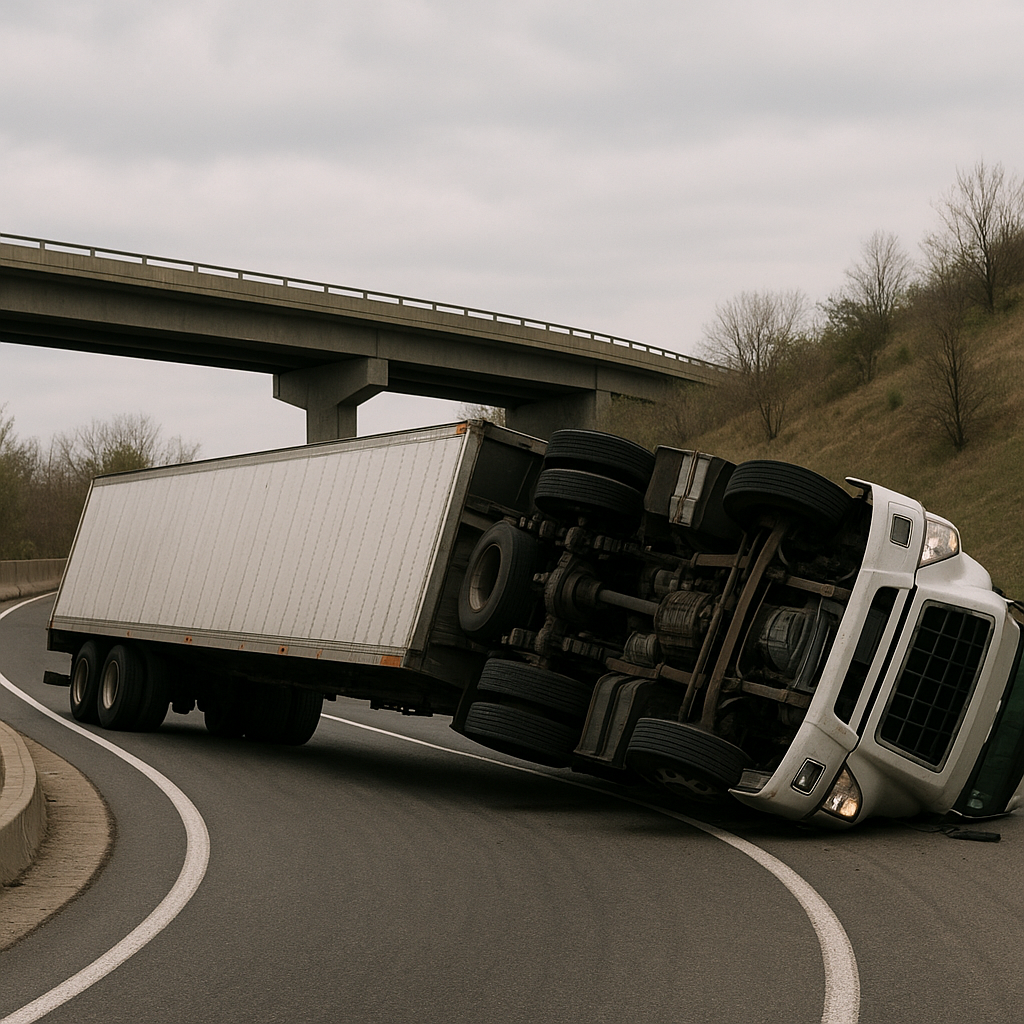
Semi Truck Rollover on Highway Ramp
Reasons for Frequent Concern About Highway Ramp Rollovers
Questions about semi truck rollovers on highway ramps are common for several reasons. Drivers and passengers often pass by large trucks and see signs warning of steep grades or sharp curves, wondering about the risks involved. Local communities become especially curious when incidents occur nearby, drawing attention to the factors that lead to these events. The larger size and weight of semi trucks compared to regular vehicles make these incidents more noticeable and concerning. News headlines often highlight rollovers, prompting people to seek clearer understanding and reassurance about safety on highways and ramps.
Curiosity also grows from witnessing emergency responses after a rollover, and from questions about how frequently these accidents happen. People want to know if they are at risk when navigating the same highway features or sharing the road with long-haul trucks. The interest is not only about immediate safety but about understanding broader patterns and preventative measures.
Mechanisms Behind Semi Truck Ramp Rollovers
A ramp rollover involving a semi truck often results from a combination of design, speed, and physics. Highway ramps, especially on-ramps and off-ramps, are engineered with curves designed for safe travel at specific speeds. Semi trucks, given their height, length, and heavy cargo, are at greater risk of instability when negotiating these curves.
The center of gravity in a loaded tractor-trailer can shift rapidly if a curve is taken too quickly. Excessive speed is a key factor. Even speeds that seem modest in a car may be too high for a tractor-trailer with a full load. During a curve, centrifugal force pushes the trailer outward, potentially causing tires on one side to lift. If that force exceeds the grip of the tires and the stability of the load, the semi may roll onto its side.
Variables such as weather conditions can intensify the risk. Wet, icy, or otherwise slippery surfaces further reduce traction, making it harder for the driver to control the vehicle’s momentum through a curve. An improperly loaded trailer, where cargo shifts or is unbalanced, can create additional instability even if the truck is traveling at a recommended speed.
Lesser-Known Aspects of Ramp Rollover Incidents
One detail often overlooked is how the design of the ramp itself can play a significant role. Not all highway ramps are created equal. Some have sharper angles or shorter merging distances than others, both of which can challenge the stability of large vehicles. Ramps with higher degrees of banking or abrupt curvature may pose greater risks, particularly if signage about speed limits is missing or unclear.
Another factor not always immediately recognized involves the training and experience of the semi truck driver. Even with significant experience, unfamiliarity with a specific ramp or road conditions may cause miscalculations. It is not always possible for a driver to anticipate subtle changes in pavement grip, incline, or even wind gusts, all of which may make split-second differences in whether a truck remains upright.
Cargo types also quietly contribute to rollover frequency. Liquid loads, for instance, can slosh inside containers, shifting weight unpredictably. Flatbed semis hauling uneven or unsecured cargo face their own set of risks. The way a load is packed—whether balanced correctly over the axles or not—impacts how the entire rig responds to lateral forces on a ramp.
Highway rollovers rarely impact only the truck involved. These incidents can temporarily close ramps and highways, creating congestion and delays that ripple through the area. Cleanup may require specialized equipment, especially if hazardous materials are being hauled, though not every event involves dangerous cargo.
Navigating Questions About Semi Truck Rollovers
Understanding semi truck rollovers on highway ramps requires awareness of several interconnected factors, from vehicle physics to ramp engineering and loading practices. These incidents are influenced by a combination of speed, vehicle size, road design, cargo, and sometimes environmental conditions. While they capture public attention and prompt questions about safety, they are carefully studied by transportation agencies and trucking organizations.
Most rollovers are preventable with careful adherence to speed recommendations, proper loading, and attentive driving. Ramps are also routinely reviewed and updated for safety, considering insights gathered from past incidents. By appreciating the unique challenges faced by large vehicles on curved ramps, drivers and the public can better understand the complexity behind these events and the ongoing efforts to improve safety and reduce rollover likelihood.