
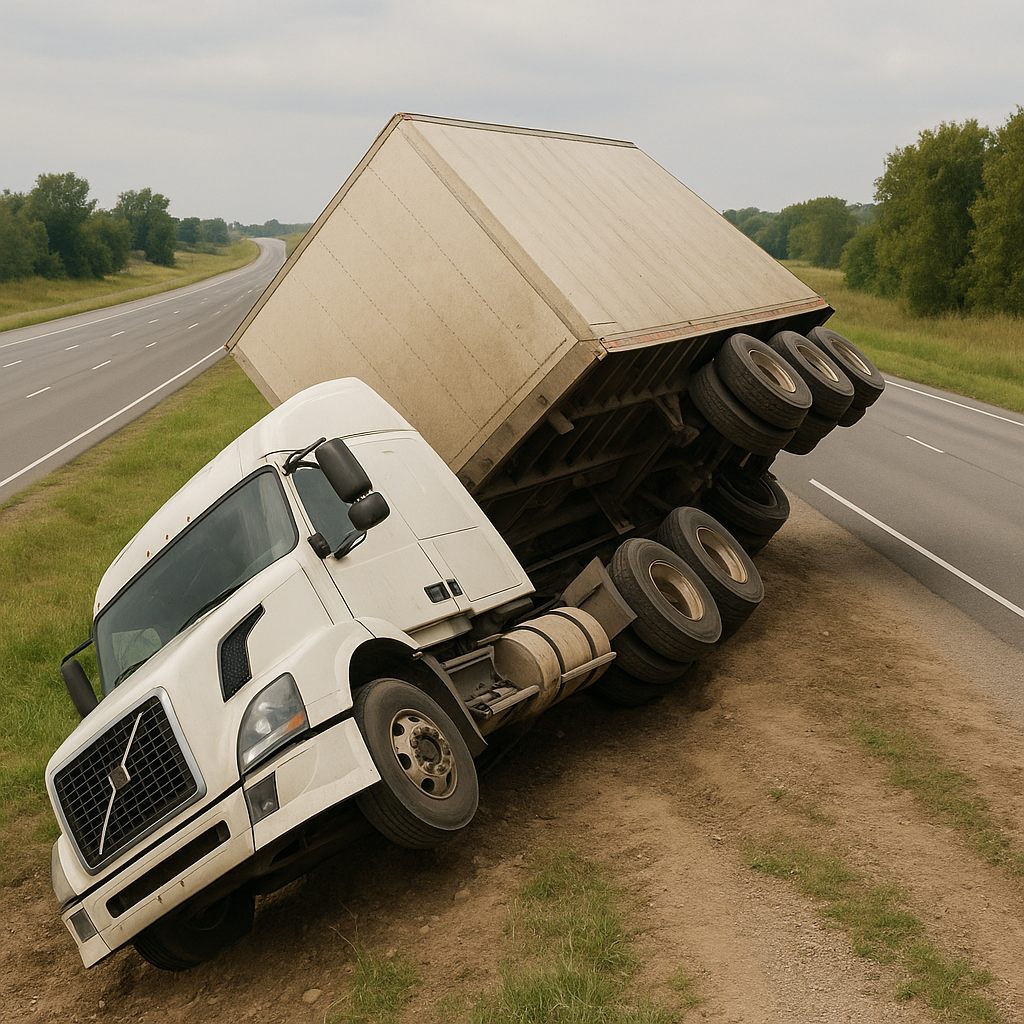
Semi Rollover Caused by High Center of Gravity
Exploring the Curiosity Around High Center Gravity Rollovers
People frequently ask about semi rollovers caused by a high center of gravity because these incidents occur more often than many realize. News of a tractor-trailer tipping over on a curve or ramp routinely sparks questions about why such heavy vehicles are apparently unstable. Drivers who share the road with large trucks may wonder what makes these towering vehicles susceptible to rolling onto their sides, especially since they appear secure rolling down the highway. New commercial drivers, cargo operators, and even seasoned transportation professionals often want to understand what specific risks are associated with a semi’s high center of gravity.
Curiosity is heightened by the dramatic nature of rollovers and the rarity with which most passenger vehicles experience similar incidents. Reports about freight spills or hazardous material releases further prompt questions from a safety and logistics perspective. In everyday conversations and driver training, the phrase “high center gravity rollover” is a key concern and topic of discussion.
Unpacking the High Center of Gravity Issue in Semis
The term “high center of gravity” refers to the vertical point in a vehicle where its mass is centered. In semi trucks, especially those loaded with cargo, this point can be far higher off the ground than that of a car or smaller truck. When a heavy object, such as a commercial tractor-trailer, has its weight distributed higher up, it becomes less stable when subjected to lateral forces, such as during sharp turns or sudden changes in direction.
Stability is directly linked to how far the center of mass is from the road surface. A lower center of gravity means a vehicle is less likely to tip, while a higher one increases the chance of losing balance. For semis, this can make even routine maneuvers risky under the wrong circumstances. This difference becomes notable on curved freeway ramps, uneven shoulders, or during emergency evasive actions.
How a High Center of Gravity Leads to Semi Rollovers
Semis with a high center of gravity are more prone to rollovers due to their design and cargo configuration. When a turn is taken too quickly, sideways forces, known as lateral acceleration, act on the entire rig. If these forces exceed the vehicle’s ability to resist tipping, the truck will roll toward the outside of the curve. The higher that center of gravity, the less force it takes to start the tipping process.
Shifting cargo plays a key role as well. If a load is not properly balanced or secured, it can move during transit, further raising or shifting the center of gravity. This means that a vehicle which may have started its journey relatively stable can become dangerously unstable after a few bumps or hard stops. This challenge is amplified with loads like tankers carrying liquids, which can slosh and shift rapidly.
Trailer type, cargo weight, and load height all determine just how vulnerable a semi is to high center gravity rollover incidents. Tall stacked loads, partial loads, and certain tanker designs force the truck’s center of gravity upwards, increasing risk. Experienced drivers learn to reduce speed appropriately, avoid sudden steering, and check cargo security to combat these risks, but even small miscalculations can lead to a rollover, particularly in tricky driving conditions.
Important Considerations Beyond the Obvious Risks
Many people may not realize that high center of gravity rollovers happen even at relatively slow speeds, especially on exit ramps and during turning maneuvers. The vast weight of semis gives a false impression of invulnerability, but physics dictates that mass and height together can create a tipping hazard.
Other less apparent factors include uneven road surfaces, wind gusts, and uneven tire inflation, all of which can further compromise stability. Fatigue and driver distraction also contribute, as delayed reactions can cause steering adjustments that might otherwise have been avoided. The challenges posed by a high center of gravity are not limited to over-the-road settings—loading docks, inclined parking lots, and construction zones can all prove problematic.
Technology now plays a role as well, with electronic stability control systems helping some newer semis by detecting rollover risks and adjusting braking or reducing engine power. However, not all trucks are equipped with these features, particularly older models in active fleets.
Understanding Stability Challenges for Peace of Mind
High center gravity rollover risks remain a significant factor in trucking operations and roadway safety. Recognizing how vehicle design, loading practices, and driving behavior intersect provides useful perspective on why rollovers happen and how frequently they’re determined by physical laws more than driving skill alone.
The complexities behind semi rollovers serve as a testament to the importance of training, maintenance, and awareness on the part of all drivers and fleet operators. With a clear understanding of how a high center of gravity affects stability, it becomes easier to appreciate the many factors at play whenever a semi truck is on the road.