
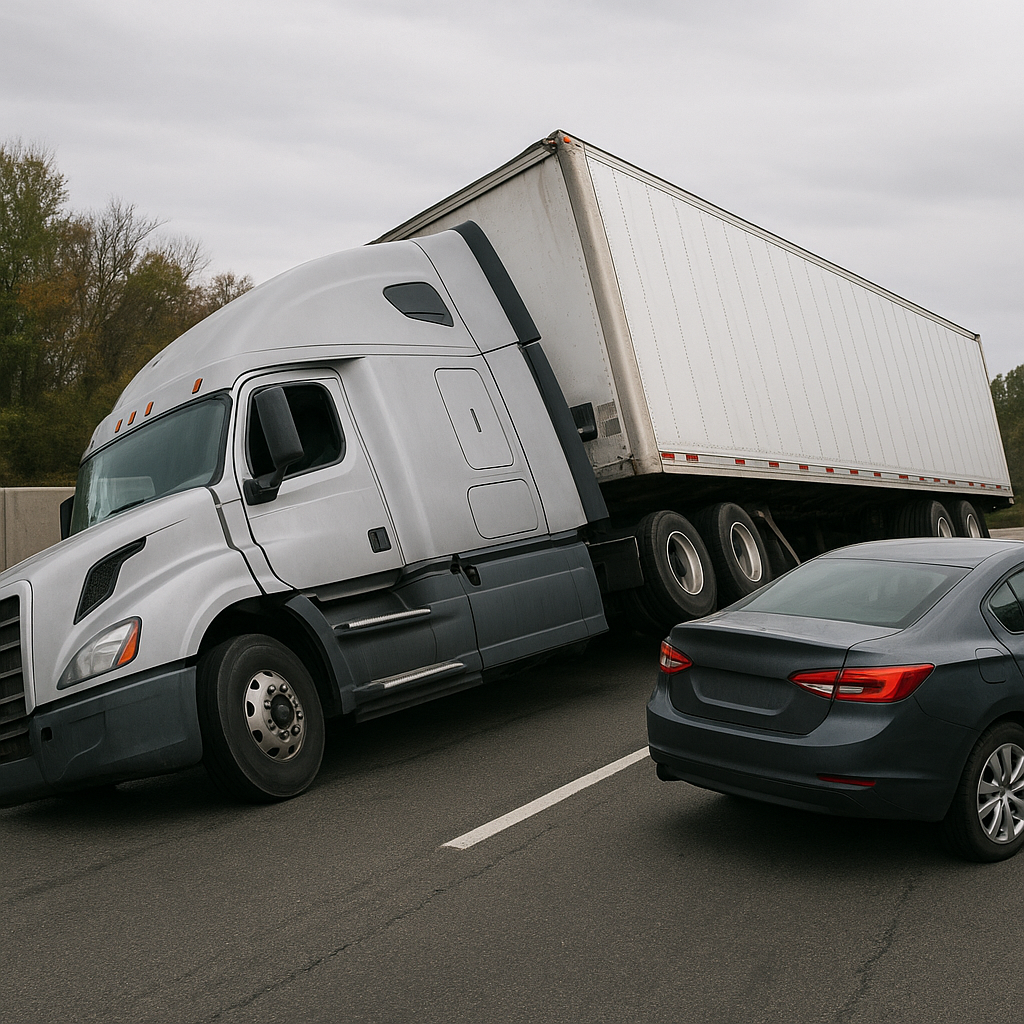
Semi Rolled Over After Avoiding Collision
Common Reasons Behind Curiosity About Semi Truck Rollover Incidents
Incidents involving large commercial trucks often draw attention, especially when a semi truck rolls over after trying to avoid a crash. Many people are naturally curious about how such incidents happen, frequently asking questions to better understand what leads up to these events. Commercial vehicles like semis operate on the same roads as smaller passenger cars, but their size and handling characteristics are vastly different.
A question surrounding a “semi rolled over after avoiding collision” reflects a broader concern for road safety and a desire to understand the mechanics behind these frightening events. People often want to know whether rollovers are a frequent consequence when a driver takes evasive action, and what can be done to minimize these occurrences.
This curiosity also stems from the visibility of such accidents in news coverage and on highways. When the aftermath of a rollover is seen—traffic backed up, cargo spilled, emergency response in action—drivers and passengers alike wonder how quickly a routine drive can change for a semi truck operator and everyone else on the road.
Understanding How Semis Respond When Avoiding a Crash
A commercial semi truck faces unique challenges when its driver needs to act quickly to avoid a collision. Unlike passenger cars, semis are far heavier and taller, with a higher center of gravity. When a semi driver swerves sharply or brakes suddenly to avoid hitting another vehicle or obstacle, the forces acting on the trailer can become unbalanced.
The act of steering away from a hazard may put too much lateral force on the trailer, leading it to tip. Even maneuvers that seem minor at slower speeds in a passenger car can translate into dramatic rollovers for semis with their multi-ton loads and articulated frames.
Freight carried by semis can shift rapidly during sudden or sharp moves, which magnifies the risk. If a load is not fully secured, the shifting weight can act almost like a lever, causing the trailer to roll over. Road conditions such as slick surfaces, uneven pavement, or abrupt curves may also play a role. Even with advanced driver training and safety technology, avoiding collisions in a semi comes with trade-offs that passenger vehicle drivers may not face.
Sometimes, the only way to prevent an immediate collision might mean risking a rollover. This is a split-second decision for drivers, reflecting the unpredictable and complex situations on highways and roads.
Hidden Factors in Avoiding Collision Rollover Events
Several less obvious factors influence how and why rollovers can happen during avoidance maneuvers. One is the underlying design of the truck and trailer, including their suspension systems and the load’s distribution.
Roadway layout can be another subtle but important factor. Inclines, declines, sharp on-ramps, or off-camber curves can contribute to instability during sharp corrections. A maneuver that might be safe on a level, straight road can become hazardous when those conditions change.
Weather is an additional element that often goes unnoticed by other drivers sharing the road. Rain, snow, ice, or even just a wet patch can reduce traction significantly. With so much mass riding high above the axle, a small slip during an avoidance maneuver can quickly lead to a loss of balance and a potential rollover.
Traffic congestion and unpredictable behavior from other drivers are complex realities for semi operators. Lane changes without signaling, sudden stops, or entry into the truck’s blind spots can necessitate quick moves on the truck driver’s part, sometimes leaving no good options.
H4: Technology’s Role in Minimizing Rollover Risks
Modern trucking does benefit from evolving technology such as electronic stability control, which can help manage the dynamics of a moving truck during abrupt actions. However, these systems have their limits. They can’t fully compensate for basic laws of physics when a massive vehicle is forced to move in ways it’s not designed for.
Driver fatigue and workload are also contributing factors that may not be obvious to those outside the freight industry. Daily schedules and long hours can affect reaction time and judgment, increasing the odds of rapid but risky avoidance maneuvers.
What to Take Away About Avoiding Collision Rollover Incidents
Semi trucks rolling over after trying to avoid a collision represent a complex intersection of vehicle physics, driver skill, and unpredictable road scenarios. Understanding that these are not simply the result of reckless driving, but rather the outcome of difficult split-second decisions, offers perspective on the risks faced by commercial drivers every day.
Greater awareness of how heavy vehicles respond to emergencies, the impact of road and weather conditions, and the unseen factors influencing rollovers helps everyone share the road more safely. Recognizing the unique challenges faced by semi drivers provides a more complete understanding of these incidents when they occur, and highlights the importance of caution and attention for all travelers.