
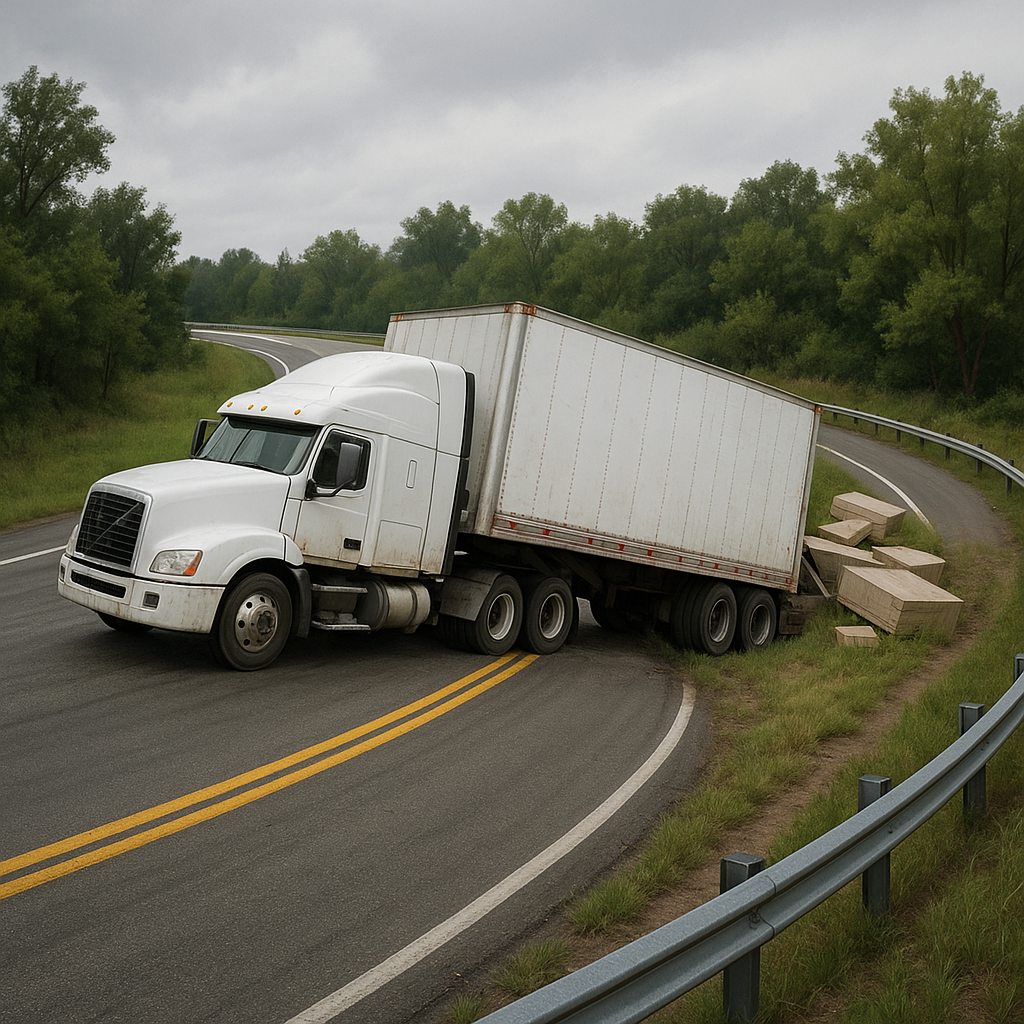
Semi Rollover Caused by Load Shift on Curve
A Frequent Question about Load Shift and Curve Rollover
Questions about semi rollovers linked to load shift on a curve are common among drivers, fleet managers, and those working around large commercial vehicles. This curiosity often comes from witnessing cargo trucks on their sides near bends or curves, reported in local news or seen on the highway. Concerns naturally arise about what exactly causes these rollovers and how they can be prevented. People may also wonder about potential risks, given the increasing number of trucks sharing the roads with other vehicles. Understanding what happens during a rollover caused by shifting cargo on a curve helps ease confusion and supports a safer environment for everyone on the road.
Unpacking the Issue: Load Shift and Rollover Events
A semi rollover resulting from a load shift when negotiating a curve involves specific physical dynamics and transportation realities. When a tractor-trailer enters a curved section of road, centrifugal force acts outward on both the truck and its cargo. The truck’s stability depends heavily on how its load is arranged and secured. If cargo begins to shift due to insufficient restraint or improper weight distribution, the center of gravity inside the trailer moves unexpectedly.
Even a small shift can have significant effects when navigating a curve. As the load moves, the balance of the truck becomes compromised, causing one side to become heavier. This imbalance, combined with speed, traction, and the curvature of the road, may result in the trailer tipping over. Truck drivers are taught to take curves at reduced speeds, especially when hauling heavy or tall loads, precisely because of these dynamics.
Unlike smaller vehicles, semi-trailers have high centers of gravity and wide, flat surfaces that make them more vulnerable to forces acting from the side. Improperly secured loads or overweight trailers can push this vulnerability further, making curves especially risky.
The Hidden Factors Behind Curve-Related Load Shifts
There are more subtle elements that contribute to the risk of rollovers due to load shift on curves. One factor is the variation in cargo type. Liquid loads, sometimes called “live loads,” are highly mobile and can slosh dramatically during turns, amplifying instability. Even solid goods can move if not chocked or strapped down correctly, particularly if the trailer flooring is slick or the cargo is stacked incorrectly.
Weather and road conditions play an important role too. Wet, icy, or uneven pavement can reduce tire traction, making it easier for a shifting load to tip the trailer. Additionally, drivers sometimes underestimate the sharpness of a curve when visibility is low, further increasing the risks involved when the cargo is not uniformly balanced.
Another aspect often overlooked is the impact of scheduled delivery pressures or route familiarity. Drivers may feel compelled to maintain higher speeds or may become accustomed to certain routes and take corners faster, leading to overconfidence. Combined with a shifted or poorly secured load, this can quickly escalate into a rollover situation on curves.
It is also relevant to consider the role of equipment maintenance and trailer design. Older trailers with worn suspension systems may not handle dynamic forces as well as newer models. Some modern trailers are fitted with load monitoring technology or stability control features, but many on the road today do not have these systems, making vigilance in securing cargo even more important.
A Broader Perspective on Prevention and Awareness
Understanding what leads to a semi rollover caused by load shift on a curve highlights a mix of physical principles, cargo security, driver training, and equipment condition. The combined effect of these factors shows that rollover events rarely result from a single error, but instead from the intersection of several circumstances.
Greater awareness around proper loading, securement practices, and safe driving techniques on curves can help reduce the frequency of rollovers. Regular cargo checks, attention to speed when approaching curves, and respect for the limits imposed by load and road conditions all contribute to safer trucking operations.
Awareness of how curve rollover events can happen can support an informed approach to trucking safety. Whether driving a commercial vehicle, managing a fleet, or sharing the road, understanding the underlying causes of semi rollover from load shift on curves fosters a culture of improved caution and responsibility. Transporting goods safely remains a complex task, shaped by many factors working together to keep both cargo and communities secure.