
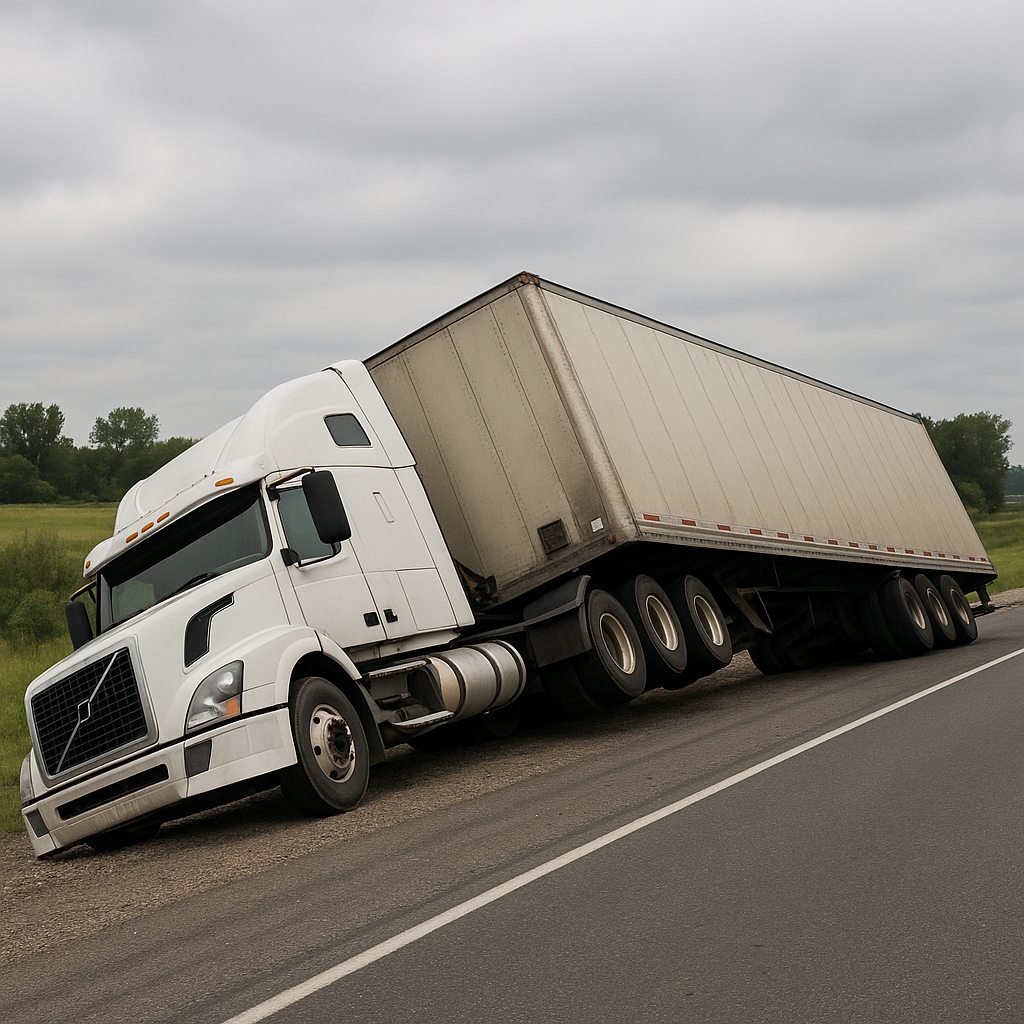
Semi Rollover After Jackknife Event
Why This Scenario Draws Attention
Questions surrounding a semi rollover after a jackknife event often arise from those witnessing dramatic scenes on highways, truck drivers seeking information, and individuals concerned about road safety. Discussions about “jackknife rollover” incidents are also prevalent in industry training, news reports, and safety meetings due to their potential consequences. Curiosity about how these complex accidents unfold and their impacts prompts a closer look. Many people want to understand what a jackknife rollover involves, what makes them so dangerous, and how such events develop.
Unpacking the Mechanics of Semi Rollover After Jackknife
A jackknife event occurs when the cab and trailer of a semi-truck fold at the coupling point, forming an angle similar to a folding knife. This loss of alignment between the cab and trailer is often triggered by a sudden loss of traction, abrupt braking, or swerving on slippery surfaces.
A semi rollover that follows a jackknife event takes the danger one step further. As the trailer swings out and forms an angle with the cab, momentum and instability can lead to the entire vehicle tipping over onto its side or roof. The force of the trailer moving sideways combined with any load shifts may overwhelm the truck’s center of gravity. When this happens, rollover becomes a very real risk, especially at highway speeds or on curves.
Semi-truck rollovers after a jackknife are particularly hazardous because of their unpredictability. Not only can the large vehicle block multiple lanes, but cargo may spill, and nearby vehicles can be caught in the chaos. The sheer size and weight of a semi amplify the consequences compared to other vehicles.
Factors Influencing the Risk of Rollover After Jackknife
Several interconnected factors can make a jackknife event more likely to end in a rollover. The road and weather conditions play substantial roles; icy, wet, or poorly maintained roads diminish traction, increasing both initial jackknife risk and subsequent instability. The weight and balance of the truck’s cargo also matter; improperly secured or shifting loads contribute significantly to rollover potential.
Driver reactions during a jackknife event are crucial. Overcorrecting steering or braking can destabilize the vehicle further. Experience and driver training are essential components in minimizing roll risk, as certain maneuvers can exacerbate an already precarious situation.
In addition, the design of the road itself—such as sharp curves, narrow lanes, and elevated edges—may influence whether a jackknife leads directly to a rollover. The combination of lateral forces and gravitational pull becomes more pronounced as the truck’s orientation changes, making the roll threshold easier to cross.
Broader Implications and Lesser-Known Aspects
Jackknife rollovers can happen to both loaded and empty trailers, but the outcome may vary. Loaded trailers can exert greater force in a skid, while empty ones may be more prone to dramatic swings due to less friction and stability. Emergency response teams encountering such incidents face unique challenges due to the size of the vehicles and potential hazardous materials involved.
In some jackknife rollover situations, secondary incidents may occur, such as fuel spills, fire risk, or secondary collisions as other drivers on the road attempt to avoid the wreckage. Even after a rollover is contained, traffic disruptions can persist for hours, leading to cascading effects on transportation networks.
Technological advances play a role in addressing these risks. Many modern trucks include electronic stability control systems and anti-lock brakes designed to reduce the frequency and severity of jackknife and rollover events. The commercial trucking industry continues to study and implement best practices for accident avoidance and improved vehicle design.
Understanding and Preventing Jackknife Rollovers
Awareness of the dynamics leading to a semi rollover after a jackknife helps in understanding the value of safety precautions, ongoing training, and vehicle maintenance. Recognizing the signs and contributing factors—such as adverse weather, excessive speed, abrupt maneuvers, and cargo issues—gives both drivers and the general public a clearer sense of the dangers.
Research and innovation in transport safety continually seek to reduce risks. Learning from incidents and near-misses informs regulations and driver education, shaping ongoing improvements in road safety for all vehicles, especially the largest and most complex.
Conclusion: The Complex Dynamics of Jackknife-Induced Rollovers
Jackknife rollovers capture public and professional attention due to their dramatic impact and significant challenges. Understanding the interplay of mechanical forces, environmental factors, and human responses highlights the intricate dynamics of these events. Ongoing review of measures to prevent and mitigate such incidents ensures that the lessons learned from real-world events continue to inform safer roads and transport systems.