
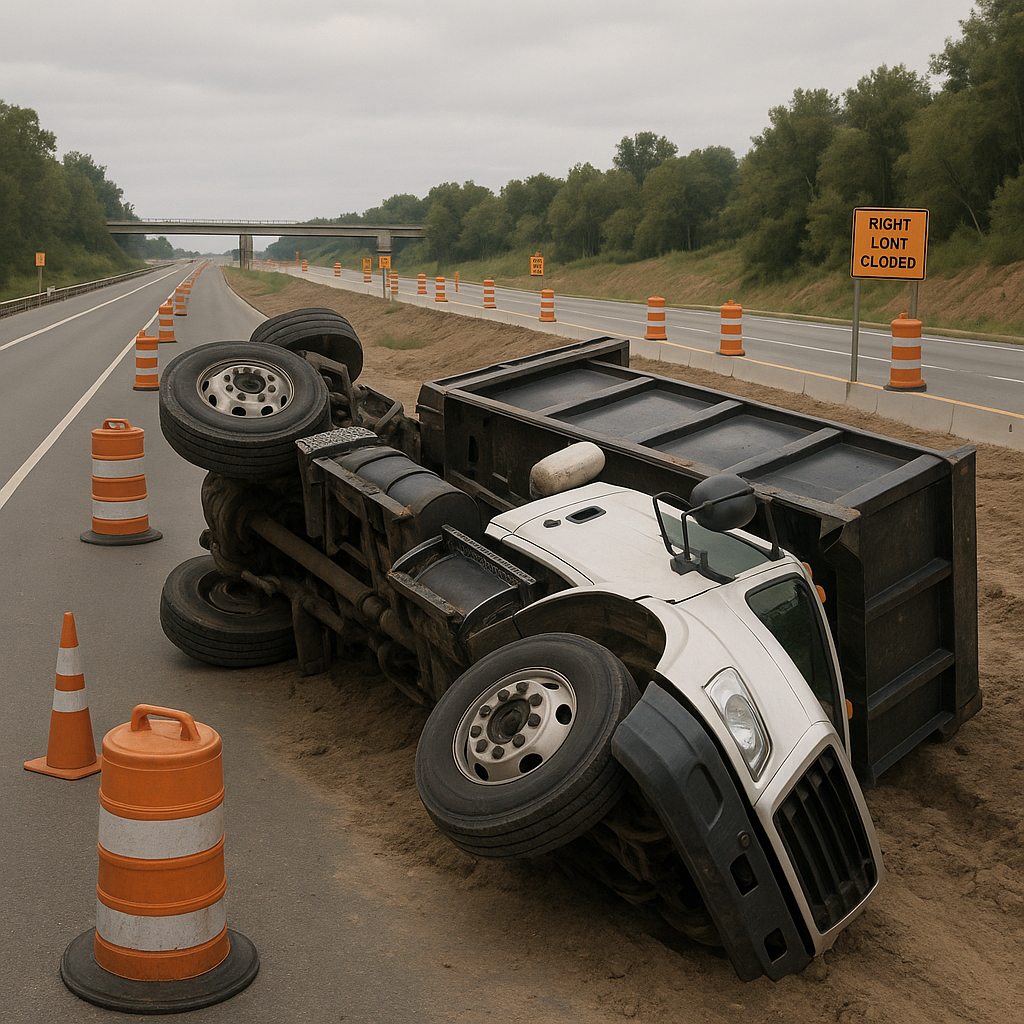
Truck Rollover During Highway Construction
Why This Question Is Often Asked
Concerns about truck rollovers during highway construction are common for several reasons. Drivers passing through work zones often see large trucks maneuvering in constrained spaces, prompting worries about accidents. News reports and social media occasionally highlight rollover incidents, sparking further curiosity and concern. Construction crews, contractors, and transportation professionals also seek to understand why these accidents happen and what factors contribute to their frequency in work zones. This curiosity stems from the visible presence of large vehicles in environments that are inherently riskier than open highways.
Many people also wonder how these accidents impact both traffic flow and safety. Road users regularly navigate construction zones and may witness first-hand the potential hazards. Understanding how and why truck rollovers occur can help people better appreciate the risks associated with highway construction environments.
Understanding Construction Zone Rollovers
Truck rollovers in construction zones typically result from a combination of environmental, vehicle, and human factors. Unlike rollovers in regular traffic, those in work zones are often influenced by unique site conditions. Narrow lanes, abrupt turns, temporary surfaces, and frequent lane changes can all contribute to instability for large vehicles.
Construction trucks are particularly susceptible due to their high centers of gravity and variable loads. Uneven ground or unexpected obstructions can upset a truck’s balance. Partially filled trucks may experience a shift in weight distribution, further increasing the risk. Work zones frequently involve merging traffic, reduced speed limits, and the presence of equipment or workers, all of which contribute to the complexity of safe navigation.
In some cases, rollovers occur when trucks attempt to maneuver around temporary barriers, signage, or machinery. Tight spaces and rapidly changing conditions may force sudden steering corrections, which can amplify the risk of tipping. Driver fatigue, inattention, or lack of familiarity with the construction layout can also play significant roles.
Less Apparent Contributing Factors
There are additional factors that many people may not consider. The condition of the construction site, for instance, is often in flux. Surfaces may be unpaved, wet, or littered with construction debris. These temporary conditions can reduce tire grip and stability, raising the likelihood of a rollover.
Weather also plays an important part. Rain can cause slick surfaces, while wind gusts can affect high-sided vehicles. The design of some construction projects requires temporary bridges or ramps that may not have the same support or grading as permanent roadways. These differences may catch even experienced drivers off guard.
Equipment used in construction zones, including cranes, loaders, and other large vehicles, can also inadvertently contribute to rollovers. The movement or presence of this equipment can force trucks to take unexpected detours or stop quickly, disrupting their momentum.
Construction scheduling is another subtle influence. Work may take place during off-peak hours or at night, resulting in low visibility and fatigue among workers and drivers. In some scenarios, site lighting may not fully illuminate hazards, making it more challenging to judge distances or notice uneven ground.
Key Impacts and Awareness
Truck rollovers in construction zones can cause significant delays for all road users. These incidents typically require lane closures while authorities assess and clear the scene. Disruptions may extend far beyond the immediate area, creating traffic backups and delays.
From a construction perspective, rollovers can interrupt the progress of a project. Equipment may be damaged and schedules set back while the area is made safe again. These disruptions can affect not only road users but also workers and project managers striving to meet deadlines.
While the focus is often on the trucks themselves, it is important to remember the broader system at play. Engineers, construction managers, drivers, and traffic planners all contribute to creating safer work zones. Understanding the multitude of influences behind a construction zone rollover helps foster greater awareness and encourages everyone involved to prioritize safety where possible.
Balanced Understanding of the Risks
Being informed about truck rollover incidents in highway construction settings provides valuable perspective. Rollovers are complex events influenced by many situational factors, ranging from environmental conditions to the layout of a given work zone. Consistent evaluation and adaptation help reduce the risks, though incidents may still occur on occasion.
A clear understanding of the issue highlights the importance of vigilance and adaptability in these dynamic environments. By appreciating the full range of contributing factors, road users and professionals alike can approach construction zones with greater awareness and patience, enhancing safety for everyone involved.