
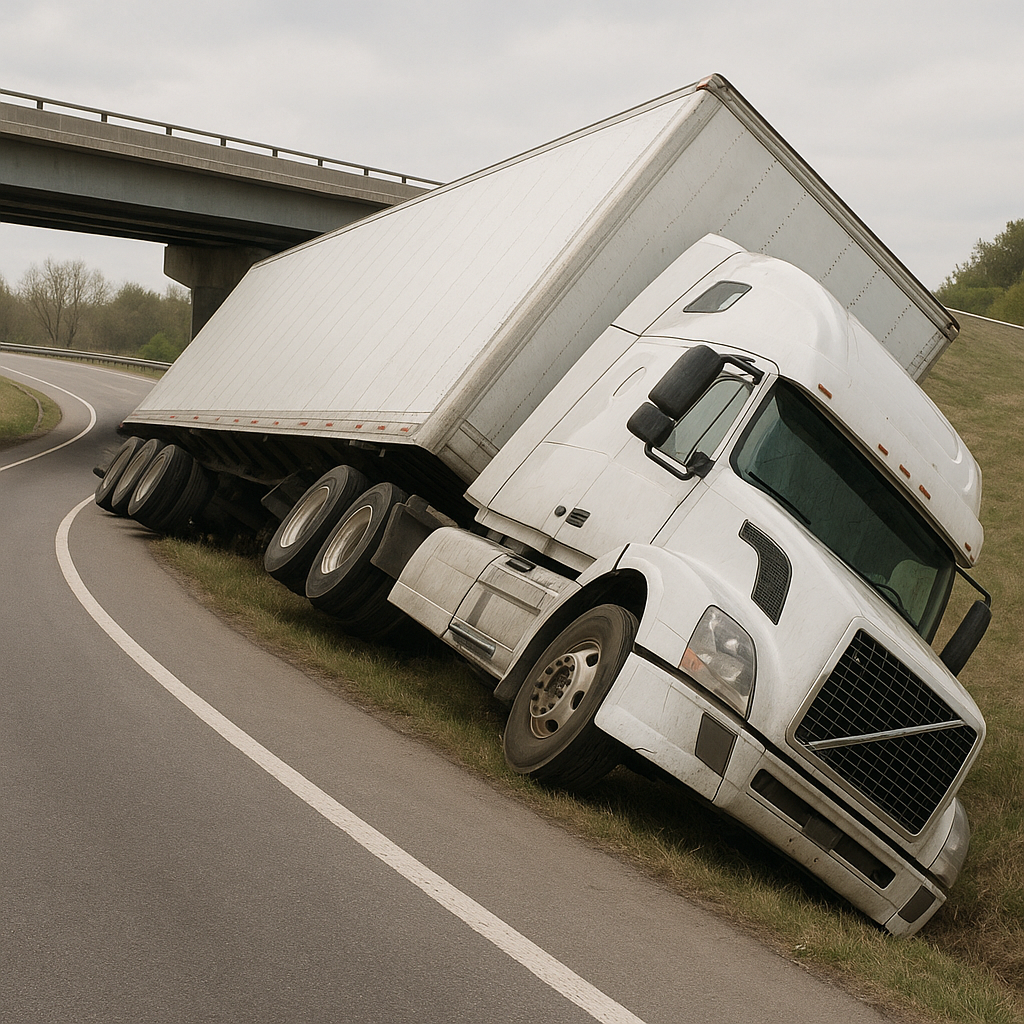
Semi rollover caused by cargo shift on ramp
Understanding the Need for Insight on Cargo Shift Ramp Rollovers
Many readers have asked about scenarios where a semi-truck experiences a partial rollover due to cargo shifting while navigating a ramp. This question often arises because incidents involving large trucks are highly visible and can cause significant disruptions. Situations where a truck tips or leans dangerously on a ramp naturally attract attention, especially from drivers, fleet operators, and those involved in logistics. People also wonder what factors contribute to these events and how they can be better understood, given the specialized nature of heavy vehicle operations.
Curiosity about the mechanics of such incidents is common among new and experienced drivers alike. For professional drivers, understanding the risks associated with cargo movement is a key part of operating safely. For the general public, the unusual sight of a semi rolled onto its side or at an angle on a ramp raises questions about stability, safety protocols, and whether these events can be prevented through routine practice or design improvements.
How Semi Rollovers from Cargo Shifting Happen on Ramps
A semi rollover linked to cargo shift on a ramp typically involves a complex interplay of vehicle dynamics, weight distribution, and roadway design. As a semi-truck enters or exits a curved ramp, it must navigate lateral forces that push the vehicle outward. If the truck’s cargo is not properly secured, these forces can cause the cargo to slide, tilt, or topple within the trailer. The sudden movement changes the center of gravity of the entire truck and trailer.
When this shift coincides with the truck encountering the curve of the ramp, the altered center of gravity may exceed the vehicle’s tipping point. This process results in a semi rollover, often partial or semi-complete, where the vehicle ends up leaning at a sharp angle or coming to rest on its side. Typically, the event unfolds rapidly, leaving little time for corrective action.
Such incidents highlight how critical cargo securement and proper loading practices are for driver safety and roadway stability. The configuration and condition of both the truck and the ramp also play significant roles. Sharp curves, uneven pavement, and sudden changes in grading can increase the likelihood of rollovers, especially when combined with unfavorable cargo dynamics.
Factors Not Always Considered in Cargo Shift Ramp Rollover Events
While the cause might seem straightforward, several aspects of these rollovers are not always immediately apparent. One aspect often overlooked is how subtle changes in load arrangement can impact stability. A load that is balanced in a straight line may become unstable under lateral forces encountered during turning maneuvers, particularly on ramps with high curvature or banking designed for varying speeds.
Another less obvious factor is brake usage and vehicle speed. Braking suddenly while negotiating a ramp can increase the risk of a cargo shift because the abrupt deceleration adds additional forces on the cargo. Variable weather conditions, such as rain or ice, can exacerbate these risks by affecting traction and the responsiveness of both the truck and its load.
The design of the ramp itself is another contextual aspect. Not all ramps are built with the same radii, banking, or surface condition. A steep or tightly curved on-ramp may challenge the stability of even well-secured loads, especially if a driver misjudges speed or approach angle. These conditions may also interact unpredictably with loads that are less stable due to partial unloading or poorly distributed weight.
In the wider context of freight movement, seasonal variations in types of cargo and frequency of loading or unloading can contribute to these events. Certain types of cargo, such as liquids or loose materials, present unique challenges because they are more prone to movement during transport. Drivers regularly hauling these loads must adjust their habits to account for shifting risks that may not affect those carrying more stable or palletized freight.
Reflecting on Cargo Shift-Related Rollovers
Semi rollovers caused by cargo shifting on ramps stem from a combination of physical principles, operational decisions, and environmental influences. Each incident shows the importance of proper load securement and heightened awareness of how cargo and vehicle interact, particularly on curved or elevated sections of roadway. These events also serve as points for further learning and understanding, reinforcing both the complexity of the logistics industry and the constant need for vigilance in freight transportation.
Being aware of the underlying causes and contributing factors helps everyone involved in transportation — from drivers to planners — gain a clearer understanding of what goes into avoiding these incidents and maintaining safe operations on the road.