
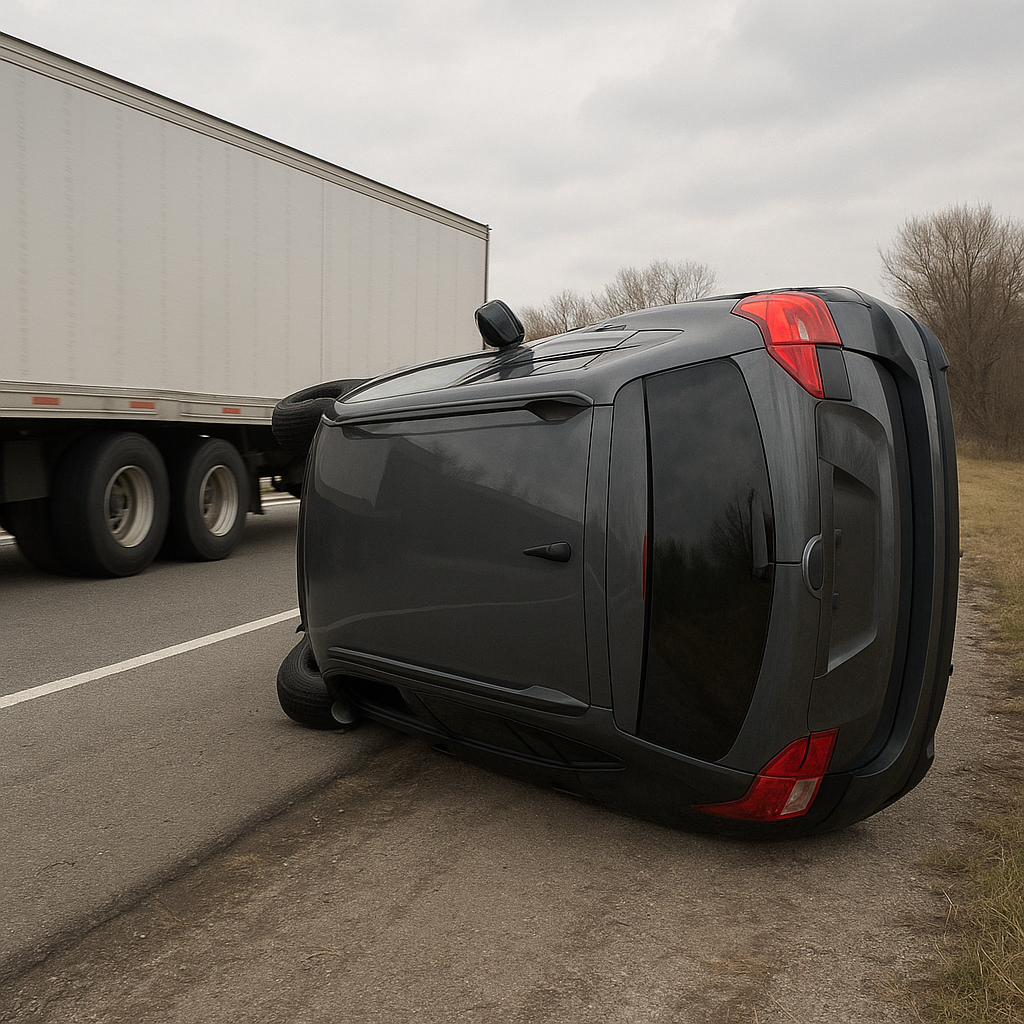
Semi Rolled Over Due to Sudden Deceleration
Interest in Understanding Semi-Truck Rollovers
Questions about how and why a semi-truck might roll over following a sudden deceleration come up frequently, especially among drivers and those sharing the road with these large vehicles. The size and weight of a semi can make its movements during emergency braking or abrupt stops much more dramatic than smaller vehicles. Many people are curious about the dynamics behind a sudden deceleration rollover because these incidents can look alarming, and understanding the underlying causes helps ease concerns and promote better safety awareness.
For commercial drivers, logistics teams, and even everyday motorists, knowing what factors can contribute to a semi losing stability helps to foster safer habits and a general sense of preparedness. This curiosity is not limited to the professional driving world—anyone who has witnessed or heard about such incidents may wonder how modern trucks, designed with numerous safety features, can still become prone to rolling over under certain circumstances.
Mechanics of a Sudden Deceleration Rollover
When a semi-truck, often fully loaded and weighing tens of thousands of pounds, comes to a rapid stop, the forces acting on its high center of gravity can make it vulnerable to rolling over. Sudden deceleration imposes a forward force on the cargo and the whole vehicle structure. If a driver brakes hard, especially if the brakes are unevenly applied or the surface is slick, that force may shift laterally. This lateral shift is what can cause the tires to lose grip and can tip the trailer to one side.
The weight and height of the cargo are significant contributors. A loaded trailer with a high center of gravity is far less stable than a low, evenly distributed load. During sudden deceleration, any slight turn or unevenness in the road can amplify instability, causing the trailer to sway. If the deceleration happens on a curve or during an evasive maneuver, the risks increase because the momentum may carry the trailer over the tipping point.
Semis are articulated vehicles—a separate tractor and trailer—which introduces additional complexity. When the tractor slows faster than the trailer, the forces transferring between the parts of the combination can cause ‘jackknifing,’ where the trailer swings out to the side, sometimes resulting in a rollover if the trailer’s momentum exceeds the ability of the tires and suspension to keep everything grounded.
Contributing Factors Not Always Apparent
While basic physics—weight, momentum, friction—explain much of what happens during a sudden deceleration rollover, other, less obvious factors can play significant roles in these incidents.
Road conditions are a major influence. Wet, icy, or uneven surfaces dramatically reduce a semi’s ability to maintain traction during rapid braking. Unexpected potholes, road debris, or changes in surface material can destabilize a trailer already on the edge of balance during deceleration.
The type and method of cargo loading can make a meaningful difference in rollover risk. Load shift or improper cargo securement leads to sudden redistribution of weight. For example, liquid-filled tanker trucks face a phenomenon known as “slosh effect,” where the liquid moves inside the tank after braking, increasing instability even after the initial deceleration event.
Driver response time and familiarity with the vehicle also matter. New drivers or those unfamiliar with a particular truck’s handling may not anticipate how quickly momentum builds during a stop. Modern trucks have advanced braking systems like anti-lock brakes, but relying solely on technology can sometimes create a false sense of security, leading to riskier stopping behavior.
Finally, traffic and environmental factors can affect outcomes. Stops at high speed, especially in heavy traffic, often lead to more abrupt maneuvers than controlled, slowdowns under ideal conditions. Crosswinds, steep road banks, or sloped shoulders add layers of complexity to how a semi responds in a sudden stop scenario.
Broader Perspective on Sudden Deceleration Rollovers
Sudden deceleration rollover incidents highlight the intricate relationship between vehicle physics, road conditions, and human factors. Each rollover event has its own contributing elements, ranging from cargo placement to real-time driver decisions and environmental influences. While such incidents may seem unpredictable at first glance, understanding what causes a semi to roll over when decelerating suddenly provides clearer context.
Awareness of these dynamics offers valuable insight into the nature of large vehicle operation. Many factors—often out of the driver’s direct control—combine in unique ways during each incident, making it important for anyone sharing the road to appreciate the complexities of semi-truck movement. This perspective fosters a greater understanding of the challenges involved and the importance of proactive safety measures and attentiveness in all driving situations.