
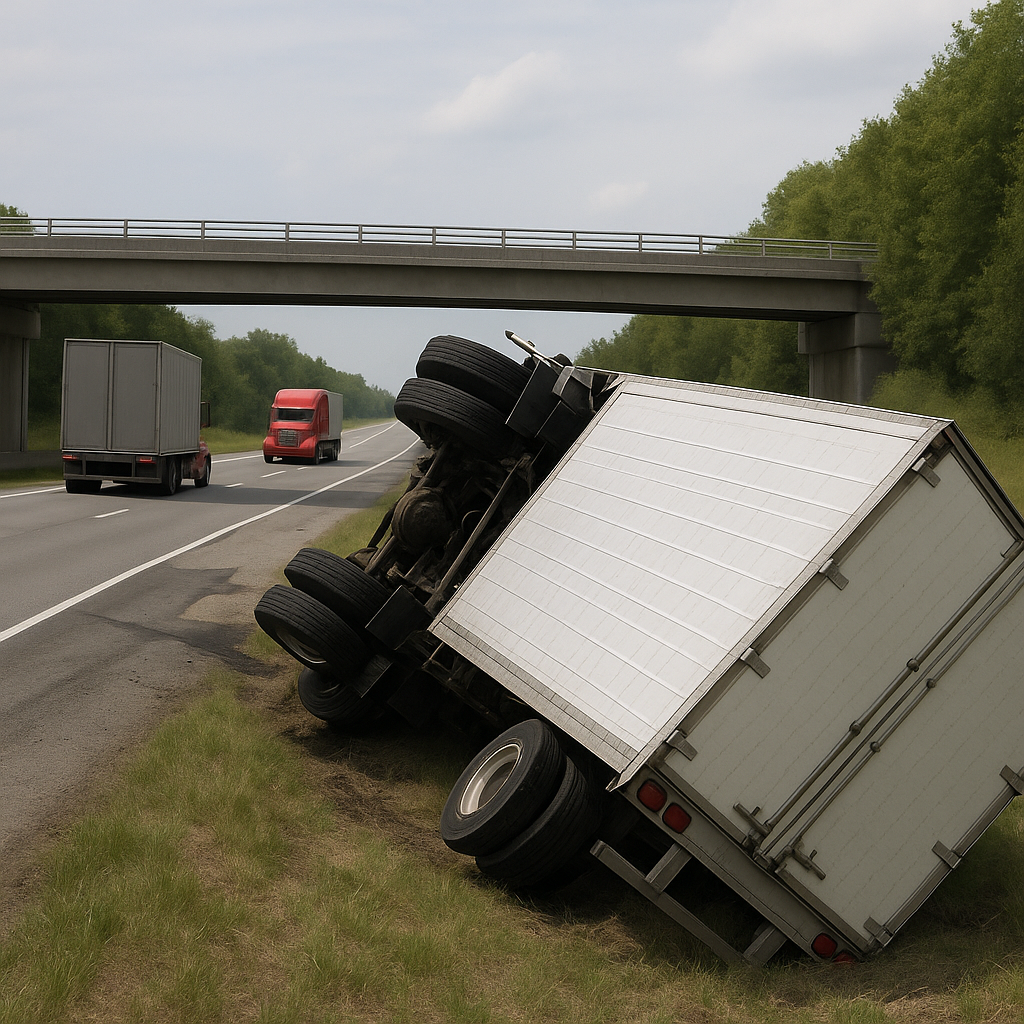
Semi Rollover Caused by Abrupt Lane Change
Understanding Common Curiosity Over Abrupt Lane Change Rollovers
When a semi truck rolls over after making an abrupt lane change, it often makes headlines or sparks intense discussions among drivers and concerned communities. Many people wonder how such a massive, seemingly stable vehicle can tip over during a maneuver that passenger cars make daily. There is widespread curiosity about the mechanics and decision-making involved, especially given the potential consequences of these incidents for everyone sharing the road. This question tends to arise not just among trucking professionals but also among everyday motorists who want to better understand traffic safety.
Trucking is central to everyday life, and highway incidents involving large vehicles amplify concern. Understanding the causes and contributing factors behind a semi rollover due to an abrupt lane change can help put these events into perspective, answering practical questions that people commonly ask after seeing or hearing about such accidents.
Mechanics Behind a Rollover Triggered by Sudden Steering
The dynamics of a loaded semi are entirely different from those of a smaller vehicle. Semis have a much higher center of gravity, especially when loaded fully or when cargo is distributed unevenly. An abrupt lane change, particularly at highway speeds, generates significant lateral (sideways) force on the trailer.
This force can be strong enough to exceed the friction between the tires and the road, or cause the trailer’s center of gravity to shift outside its base of support. Unlike a car, a semi’s long and tall trailer reacts dramatically to rapid steering. When the trailer begins to tip, the entire vehicle can quickly follow, sometimes resulting in a complete rollover. In many cases, the trailer may roll first, dragging the cab with it.
Empty trailers are also vulnerable, despite weighing less, because they’re not anchored by the weight of a heavy load. A light or unbalanced load amplifies instability, making sudden movements even more risky. The condition of the road, tire grip, vehicle speed, and weather can all play significant roles in how a semi responds to abrupt maneuvers.
Unseen Aspects and Overlooked Factors in These Incidents
A common misconception is that rollovers happen only due to driver error, but the reality is often more complex. Traffic conditions sometimes force sudden decisions, such as swift lane changes to avoid a hazard, debris, or another vehicle. Not all abrupt steering is deliberately reckless; sometimes, it may be a split-second reaction to prevent a different type of collision.
Human factors also come into play. Fatigue, distractions, or unfamiliarity with a truck’s handling—especially for newer drivers or when driving a different type of trailer—can affect response and vehicle control. However, even seasoned drivers can be challenged by shifting loads or unpredictable road conditions such as sharp curves, potholes, or wet pavement.
Vehicle design may also influence the risk of an abrupt lane change rollover. The type of trailer, suspension system, and even tire condition can make a subtle but important difference. Some modern trucks are equipped with electronic stability control systems, which can help prevent rollovers by sensing dangerous conditions and applying brakes selectively. However, not all vehicles on the road have these advanced features.
Speed is another element that is sometimes underestimated. The faster a semi is traveling when making a lane change, the more likely it is to experience a rollover, owing to the greater lateral forces that come into play. Even a small increase in speed can dramatically increase risk on a curved or sloped section of highway.
A Clearer Picture of Semi Rollovers Related to Swerving
There are multiple layers to the scenario of a semi rollover caused by an abrupt lane change that deserve careful consideration. The basic scientific explanation involves an awareness of how heavy vehicles respond to sudden inputs, but a broader view includes the array of influences from external conditions, design factors, human elements, and modern technology.
Understanding this issue helps contextualize why such incidents occur and presents a more complete image than simply attributing them to poor driving. It is a combination of physics, environment, situational demands, and the unpredictable elements of daily road use.
Being aware of how and why these rollovers can happen provides valuable insight into both the challenges of operating large vehicles and the ripple effects these events can have on traffic safety as a whole. This more nuanced perspective contributes to ongoing discussions about safety, training, and highway infrastructure, underscoring the complexities of shared travel spaces on modern roads.