
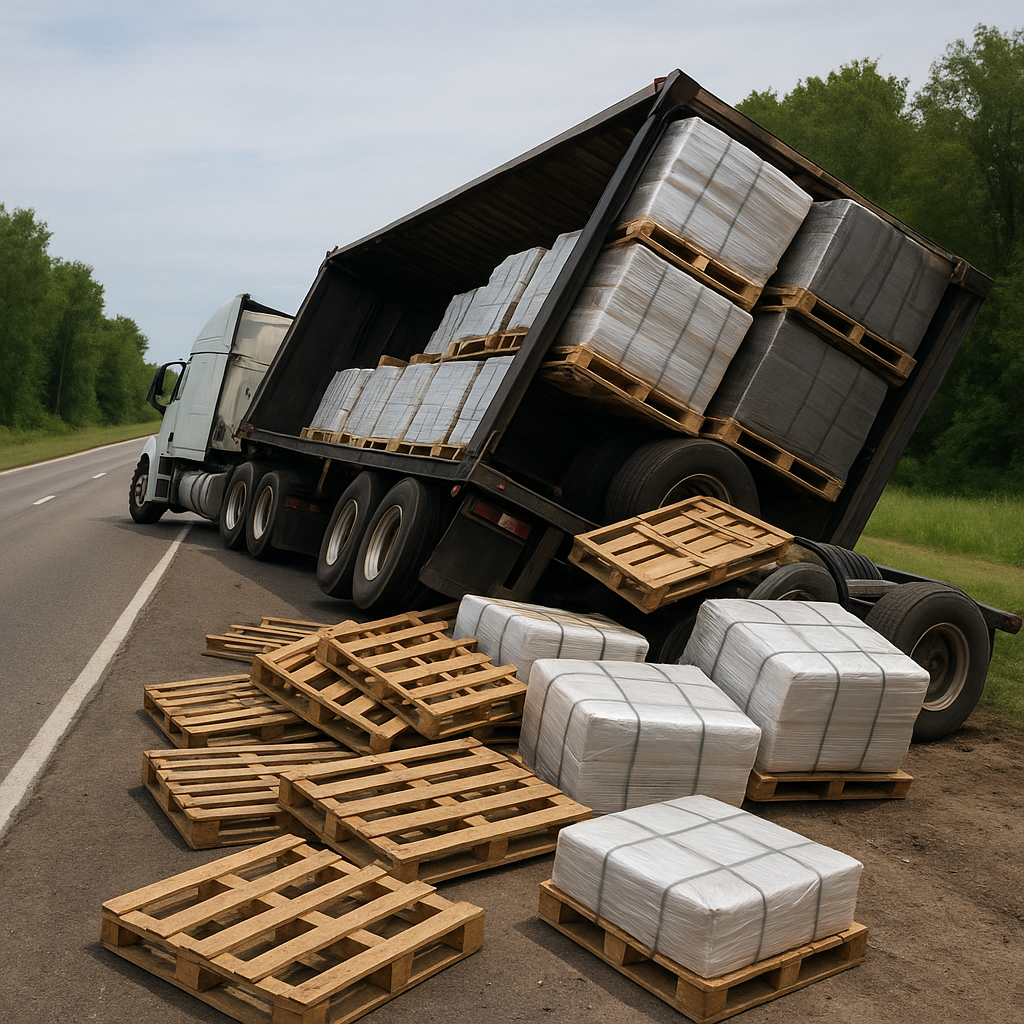
Semi Rolled Over Due to Load Instability
Why Concerns About Load Instability Rollover Are So Common
Questions about a semi rolling over due to load instability come up regularly, especially from those who share the road with large trucks. This concern often grows after witnessing or hearing about high-profile accidents involving semis, which can cause significant disruptions and safety hazards. Many wonder what factors contribute to these incidents and whether they could happen frequently. People who drive trucks or manage logistics operations may be particularly interested, but even everyday commuters often seek clear information to understand what triggers such events.
Understanding How Load Instability Leads to Semi Rollovers
A semi-truck rolling over due to load instability usually refers to the truck tipping onto its side, often caused by movement or shifting of the cargo. The structure of a semi, with its high center of gravity and lengthy trailer, makes it especially vulnerable under certain conditions.
Cargo within a trailer must be balanced and secured to keep the truck steady during turns, acceleration, and sudden stops. If this cargo is unevenly distributed or improperly fastened, the load can move suddenly, altering the truck’s center of gravity. When a driver encounters a sharp curve, abrupt steering movement, or high crosswinds, the extra motion from the shifting load can initiate a rollover.
A fully loaded trailer carries substantial momentum. If the load shifts to one side during a maneuver, it can overwhelm the trailer’s stability. This effect is amplified in tankers or trailers carrying liquids or products that can slosh inside. Even experienced drivers may find a rollover unavoidable if the cargo becomes unstable at a critical moment.
Key Elements Impacting Rollover Events
Weather and road conditions play an important role in load instability rollover scenarios. Wet, icy, or uneven roads reduce tire traction, making it easier for a semi to tip if the cargo starts to move. Ramps, tight curves, and sudden changes in elevation can create environments where even a small shift in the load causes significant instability.
The speed at which a truck is traveling also matters. Sharp turns taken too fast or sudden evasive maneuvers to avoid obstacles can magnify the effect of an unbalanced load. In some cases, a rollover can happen even at low speeds if the instability inside the trailer is severe enough.
Trailer type and cargo characteristics are frequently overlooked. Certain types of cargo, such as gravel, logs, livestock, or liquids, are naturally more prone to shifting. Equipment like bulk tankers or flatbeds require extra attention to how loads are distributed and secured. Industry guidance may specify best practices for load placement and tie-downs, but not every type of cargo presents the same level of risk.
Less Obvious Factors Behind Load Instability in Semis
Not all rollovers are the result of obvious mistakes or reckless driving. Sometimes, cargo appears stable at the start of a trip, only to shift gradually as the journey progresses. Changes in temperature, humidity, or vibration from rough road surfaces can loosen tie-downs or shift boxy or round loads.
Loading procedures also play a hidden role. In busy warehouse environments, time pressure or miscommunication can lead to hurried or uneven loading. Trailers might leave with heavy goods placed far from the axles, or with irregular stacks that become unstable as the vehicle moves. Even highly experienced drivers are reliant on the quality of load securement done before leaving a facility.
It’s also possible for hidden flaws in equipment—such as worn-out straps, damaged anchor points, or faulty bulkheads—to undermine the cargo’s security. Regular inspections are important, but some issues can develop between checks and go unnoticed until a problem occurs.
Safe Road Practices and Industry Awareness
Understanding the various factors that contribute to a load instability rollover helps promote safer road environments for everyone. Most drivers and fleet operators take great care with loading and securement procedures to reduce risk. Over time, advances in cargo restraint systems, training, and vehicle design have lowered rollover rates, but vigilance remains crucial throughout each step of transport—starting from the warehouse and continuing on the road.
Improved awareness among all road users about large truck dynamics and limitations helps maintain safe distances and anticipate hazardous situations. When unusual vehicle movement or signs of an unstable load are present, both truck drivers and other motorists benefit from taking a cautious, patient approach to traffic interactions.
The Value of Understanding Load Instability Concerns
Appreciating the complexities behind a load instability rollover can foster patience and informed decision-making on the road. While such incidents are concerning, they are rarely the result of a single factor. Rather, a combination of cargo characteristics, equipment condition, road and weather conditions, and human factors all play a part. Open discussion and ongoing improvements in loading practices continue to make roads safer for everyone.