
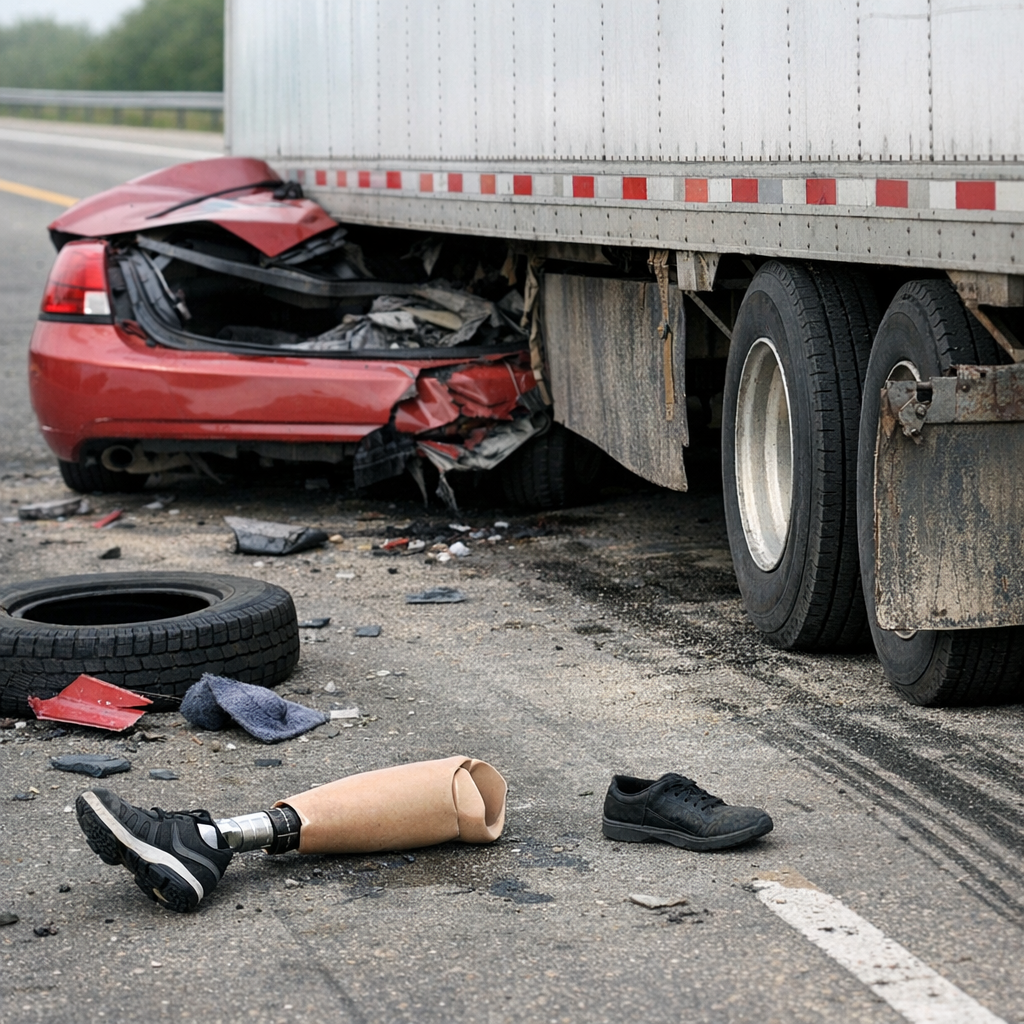
Traumatic Amputations from Underride Accidents
Understanding the Outcome of Underride Amputation
Traumatic amputations resulting from underride accidents are among the most severe consequences of motor vehicle collisions. In an underride accident, a smaller vehicle slides underneath a larger vehicle, such as a tractor-trailer or truck. The impact often results in critical injuries, with traumatic amputation being a particularly devastating outcome. An underride amputation typically occurs when an individual’s limb is forcefully detached due to the severity of the crash. This can happen immediately at the scene, or may require surgical removal later due to irreparable damage.
The nature of underride collisions means that the force is often focused on the lower extremities of the occupants, accounting for a high rate of leg and foot amputations. Upper limb amputations, although less common, can also occur, especially on the side of impact. The difference between traumatic amputation and surgical amputation is the suddenness and violence of the injury, often accompanied by significant blood loss and damage to adjacent tissues.
Following the initial trauma, patients may undergo complex medical interventions to control bleeding, prevent infection, and stabilize other injuries. Healing from an underride amputation involves intricate wound care as well as possible revision surgeries to prepare the injured limb for prosthetic fitting or to further address complications stemming from the accident.
Long-Term Impact on Daily Life
The aftermath of an underride amputation can transform nearly every aspect of daily living. For many individuals, the most immediate and visible change is the altered mode of mobility. The transition from full independence to reliance on wheelchairs, prosthetic limbs, or assistive devices can require ongoing adaptation. Physical rehabilitation becomes a central focus, as regaining function and learning new ways to perform essential activities demand time and effort.
Over time, the process of adjusting to an underride amputation may involve repeated medical appointments and therapy sessions. Simple tasks such as moving around the home, bathing, or preparing food can become more challenging and may require creative problem-solving. Work routines and employment status may also be affected, especially in physically demanding professions.
Social interactions may also change as individuals adapt to new routines and visible differences. Participation in hobbies, recreation, or family traditions might be reconsidered or reshaped. The adaptation process is ongoing, as each new situation or environment can present different demands.
Throughout these changes, the use of prosthetics or adaptive devices is common. The type and complexity of the prosthetic limb can vary depending on the level and location of the amputation. Regular adjustment and maintenance of these devices is necessary to ensure proper function and comfort.
Common Concerns for Individuals with Underride Amputations
Individuals living with the effects of underride amputation frequently encounter a range of concerns in their everyday experience. Phantom limb sensation is a regularly reported phenomenon, where individuals feel sensations, pain, or movement in the limb that has been amputated. This is understood as a neurological response to the trauma and subsequent changes in the body.
Residual limb pain is another reported issue, sometimes linked to nerve injuries sustained during the accident or consequential scarring. Regular monitoring and assessment are often necessary in order to detect and manage any ongoing complications such as infection, skin breakdown, or issues with prosthetic fitting.
Adaptation to prosthetic limbs is an ongoing process. Issues like skin irritation, socket discomfort, and changes in physical activity levels can arise. Prosthetic technology continues to advance, but not all devices provide the same level of mobility, especially for high-impact activities or certain professional requirements.
Access to mobility, transportation, and accessible environments may become central concerns. Navigating public spaces, entering buildings, or using standard vehicles might require special consideration or adaptation. The process for securing accessible housing or vehicle modifications can vary based on location and existing infrastructure.
Another area of focus is long-term health. Individuals with traumatic amputations might experience secondary conditions such as joint concerns in the remaining limb, altered posture, or musculoskeletal pain due to changes in movement and load distribution. Regular follow-up and awareness of these changes form part of ongoing care.
Informational Overview and Perspective
Traumatic amputations from underride accidents represent a complex and enduring outcome for those involved. The consequences begin with immediate, severe injury and continue with a prolonged period of adaptation and adjustment. The process involves medical care, rehabilitation, adaptation to prosthetic or mobility devices, and constant adaptation to evolving personal, social, and employment situations.
Life after an underride amputation often includes ongoing attention to health, accessibility, and well-being. Medical, technological, and social developments continue to influence the landscape for individuals living with limb loss, making each experience unique. The capability to adapt and develop new ways to approach daily living highlights the dynamic nature of recovery and adjustment over time.
An understanding of traumatic amputations from underride accidents offers insight into both the challenges encountered and the long-term considerations. Continuing research and evolving support systems inform practices and perspectives for those affected. The outcome of an underride amputation is layered and multifaceted, with ongoing influence on many aspects of life.