
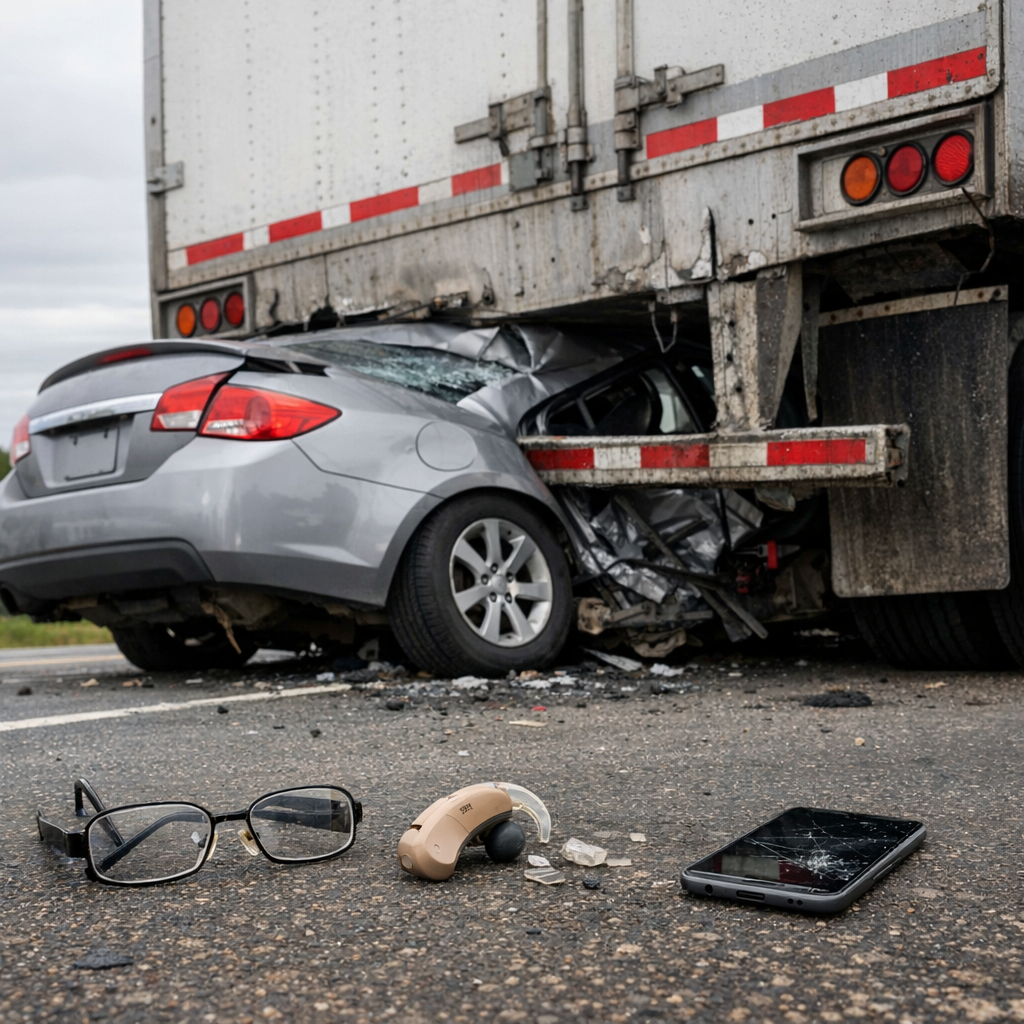
Permanent Sensory Loss After Underride Crashes
The Outcome of Underride Sensory Loss
Permanent sensory loss after underride crashes is a significant and life-altering outcome. An underride crash occurs when a smaller vehicle slides underneath the side or rear of a larger vehicle, such as a trailer or truck. The collision’s nature can result in traumatic injuries, among which permanent loss of senses may occur. This can include a lasting impairment or complete loss of sight, hearing, taste, smell, or touch.
In these crashes, the impact forces can directly damage sensory organs or associated neural pathways. Traumatic brain injuries, facial fractures, and nerve injuries are frequent contributors to loss of sensory function. While survival is possible after such crashes, the sensory deficits often remain irreversible due to the severity of the trauma experienced.
Sensory loss is categorized by which sense is affected and the extent of the deficit. Permanent sensory loss means the function does not return, even with extensive rehabilitation or time. When associated with underride crashes, this outcome often coexists with other physical injuries, presenting additional rehabilitation and adaptation challenges.
Effects on Daily Life Over Time
Adjusting to permanent sensory loss after an underride crash influences nearly all aspects of everyday living. The initial period following the injury often involves substantial changes, requiring the individual to adopt new routines and ways of interacting with their environment.
For individuals experiencing loss of sight, independent navigation can be difficult. They may need to learn alternative orientation and mobility techniques. Loss of hearing can affect communication, necessitating the adoption of visual communication strategies or assistive technology.
Loss of smell or taste may impact appetite, food enjoyment, and even safety, as the ability to detect spoiled food, smoke, or gas leaks is diminished. Diminished touch sensation in parts of the body may reduce awareness of injuries or temperature extremes, creating new personal safety considerations.
Over time, individuals often incorporate adaptations such as assistive devices, modifications to living spaces, and the development of compensatory skills. The degree of impact on work, education, and social life varies with the sensory system involved and the level of persistent deficit. While some can transition to alternative roles or study paths, others may find daily activities require ongoing support.
Psychological and social effects may also persist. Sensory loss can contribute to feelings of isolation or frustration, particularly as the individual redefines routines and relationships. The adaptation process often evolves over several months or years, with support from networks and professionals as appropriate to the context.
Common Concerns After Underride Sensory Loss
One common concern is the uncertainty around long-term adaptation. Many question how best to navigate changes in mobility, communication, and lifestyle following sensory deficits. Individuals frequently express concerns about personal safety and the risk of unrecognized injuries, such as burns or cuts when touch sensation is reduced.
The social impact of sensory loss is often at the forefront of concerns. Challenges in participating in previously enjoyed activities or maintaining independence can generate worries about isolation and diminished quality of life. Concerns about access to assistive technology, public accommodations, and employment opportunities may arise.
Another prevalent topic is the adjustment in relationships. Friends, families, and colleagues may need time to adapt to new communication methods or roles. The adjustment period can include learning new ways to support and interact.
Practical questions about driving, working, and managing a household are often raised. After an underride crash, permanent sensory deficits may restrict the ability to perform certain tasks safely or independently, raising concerns about reliance on others and the need for accommodations.
Access to informational resources, peer support, and professional guidance is a frequent topic. Individuals often seek clarity on what to expect during adaptation and what options exist to facilitate daily living with permanent sensory loss.
Informational Close
Permanent sensory loss after underride crashes represents a complex, lifelong outcome with distinct physical, practical, and social implications. The nature of the sensory deficit, combined with the context in which it occurs, shapes the individual experience. Adaptation is a process influenced by available resources, support, and personal circumstances.
Understanding the challenges associated with sensory loss after underride crashes provides a framework for recognizing the broad impact such injuries can have. The ongoing process of adapting to new routines and environments is unique to each situation, shaped by the type and degree of sensory impairment. Addressing common concerns and being informed about the nature of underride sensory loss can help individuals and their support networks navigate the future with greater awareness and preparedness.