
Severe chest injuries from underride crashes
Outcome of Severe Chest Injuries in Underride Crashes
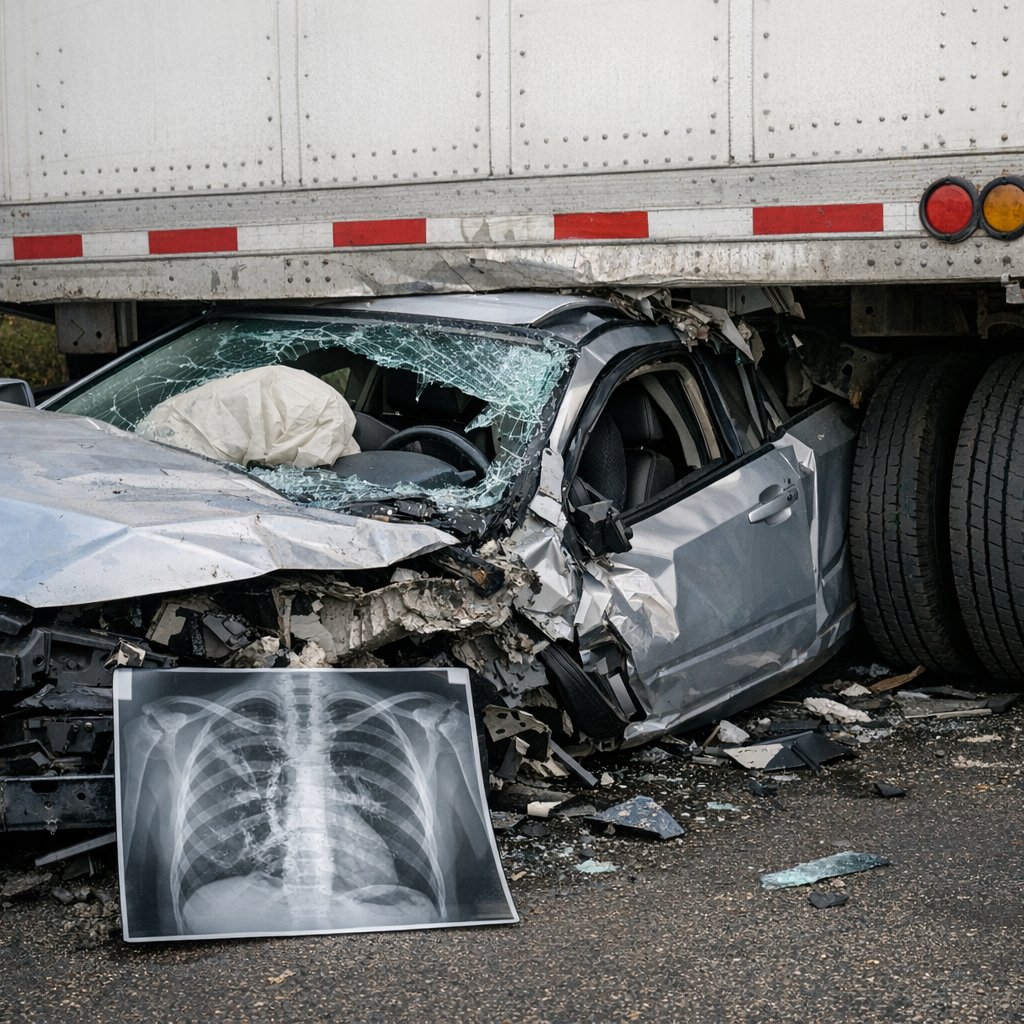
Underride crashes occur when a smaller vehicle slides underneath a larger vehicle, such as a truck or trailer, often resulting in significant structural intrusion into the passenger compartment. When this happens, occupants are at risk for multiple traumatic injuries. Among the most serious are severe chest injuries, which are common in underride scenarios due to the direct force applied to the upper body.
Immediately after an underride crash, severe chest injuries often involve broken ribs, collapsed lungs, and sometimes critical damage to the heart, aorta, or major blood vessels. The sudden compression or intrusion can lead to complex, life-threatening trauma. Internal bleeding is possible, often requiring urgent medical intervention. In many cases, these injuries can coincide with damage to the spine or abdomen, complicating recovery.
Radiological imaging frequently reveals multiple rib fractures, which can destabilize the chest wall. The force involved may also cause lung contusions or lacerations, which interfere with the body’s ability to oxygenate effectively. Damage to the heart or major vessels is less common but has drastic implications if it occurs, often leading to quick onset of shock or other life-threatening complications.
Beyond skeletal and internal organ damage, the physical trauma involved may also lead to secondary health issues, such as pneumonia due to impaired breathing, or long-term chronic pain related to nerve or soft tissue injuries in the chest.
Ongoing Effects on Daily Life
Survivors of underride chest injury often experience long-term effects on daily life, which can vary depending on the severity and specific nature of the injuries. The healing process for rib fractures or internal organ damage is often slow, involving weeks or months of reduced activity.
Chronic pain is a frequent outcome, sometimes persisting long after the initial tissue has healed. This discomfort can limit range of motion, making it difficult to perform movements involving the upper body. Even simple tasks, such as lifting objects, reaching overhead, or twisting, may become challenging or require adaptations.
Many find that breathing remains uncomfortable for an extended period, particularly in cases involving lung contusion or collapse. Exercise tolerance can be reduced, and fatigue is an expected consequence during the recovery phase. If the injury involved major structures such as the heart or large blood vessels, ongoing cardiac or respiratory monitoring may be part of life, sometimes indefinitely.
Work and recreational activities are commonly affected, especially those that require physical exertion or exposure to environments that might exacerbate pain or breathing difficulties. This adjustment often necessitates modifications at work or at home.
Emotional and psychological ramifications also emerge in many cases. Anxiety, sleep disturbances, and concerns about physical vulnerability or pain recurrence are not uncommon. The visible scarring or need for ongoing medical care may also impact social interactions and self-image.
Common Concerns Related to Underride Chest Injury
A prominent concern is the risk of long-term disability or chronic health problems following severe underride chest injury. Survivors often express uncertainty about the timeline of recovery and whether full function will return. They may wonder about ongoing pain, residual weakness, or the likelihood of complications like pneumonia or pleural effusion.
Breathing difficulties and limited physical performance are central worries, as these can impact routine activities and overall quality of life. Some individuals remain concerned about the structural integrity of the rib cage, the risk of re-injury, or how new aches and pains should be interpreted.
Financial questions often arise, particularly regarding the cost of ongoing care, potential loss of income, or the ability to participate fully in work or family activities. Uncertainty around the need for future surgeries, physical therapy, or special supports can sometimes be stressful.
Concerns regarding independence are common, especially if mobility is restricted in any way or if activities involving physical exertion are limited by pain or weakness. The prospect of requiring assistance, either temporarily or on a longer-term basis, may weigh heavily for some, prompting questions about accessibility at home or in public spaces.
The psychological component of recovery can also be a source of concern. Feelings of fear or anxiety about future vehicular travel or lingering symptoms can persist, along with questions about how to cope with such experiences.
Informational Summary
Severe chest injuries from underride crashes represent a significant outcome with far-reaching implications. Physical recovery typically involves healing from bone and soft tissue injuries, alongside adaptations to new limitations in breathing and movement. Many individuals experience extended periods of pain or discomfort, and adjustments to daily routines are common.
Concerns often center on physical healing, potential complications, and the impact on daily life and independence. Recovery timelines are individual and frequently uncertain, dependent on the specifics of each injury and the broader context of personal health.
Awareness of the range of outcomes associated with underride chest injury provides an important perspective. Honoring the complexity of the recovery process acknowledges that daily life and future planning may be shaped by the aftereffects of such trauma. The enduring nature of physical and psychological change following these injuries is a fundamental aspect of living with their consequences.