
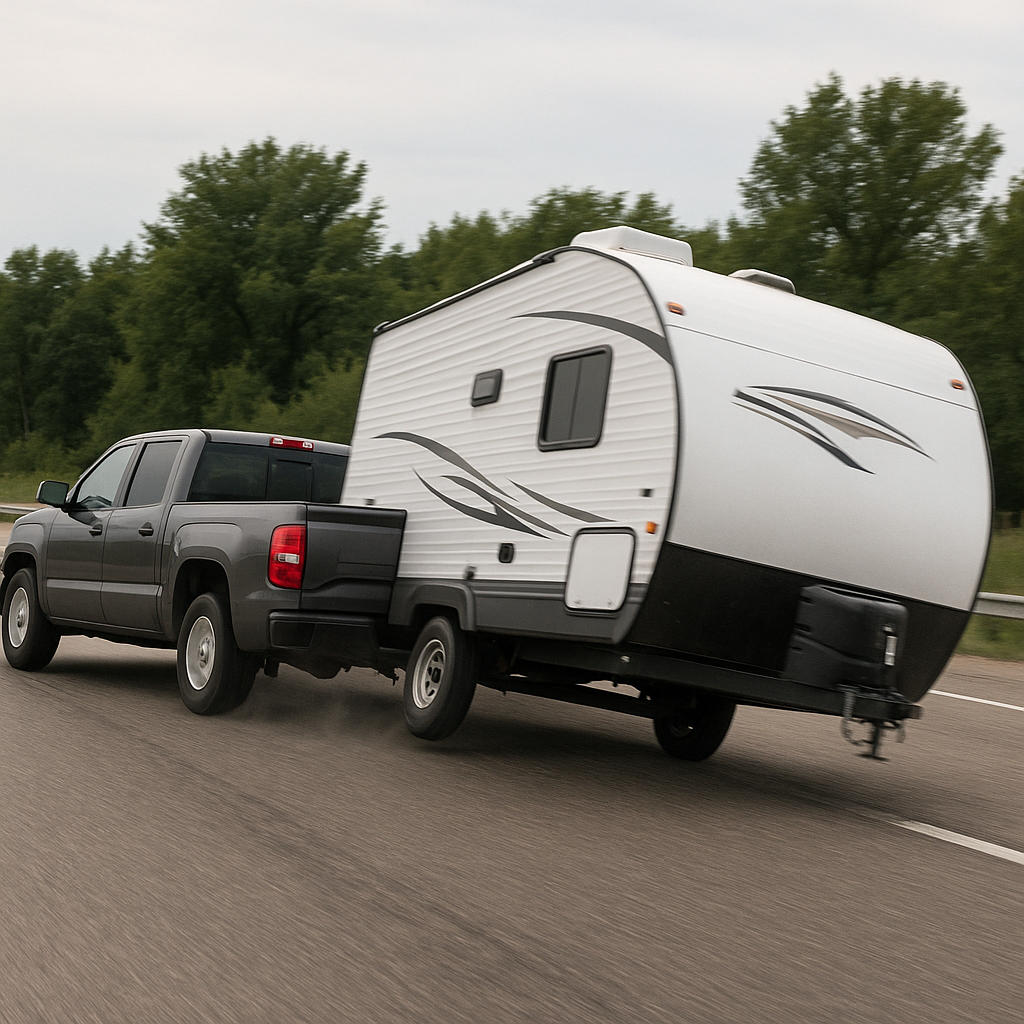
Why Trailer Coupling Issues Cause Instability
Understanding Trailer Coupling Instability
Trailer coupling refers to the mechanism connecting a towing vehicle and its trailer, ensuring both move together as a stable unit. This connection—often made via hitches, fifth wheels, or other coupling devices—is foundational to safe towing. When the integrity of this coupling is compromised, a phenomenon known as trailer coupling instability can arise. Such instability doesn’t just feel unnerving to drivers; it can transform an otherwise routine journey into a hazardous ordeal. The problem goes deeper than just a loose connection, encompassing alignment, wear, mechanical compatibility, and dynamic physical forces at play.
The Mechanics of Coupling Systems
The primary role of a trailer coupling is to seamlessly transfer forces—both static and dynamic—between the towing vehicle and the trailer. Coupling devices are engineered to bear not just the weight but also the pushing, pulling, twisting, and turning forces that result from acceleration, braking, and cornering. These devices are typically made up of precisely machined components designed to lock together with minimal play, securing the trailer while allowing necessary movement for steering and road undulations.
Even within robust systems, there is an expectation of a small amount of permitted movement to absorb shocks and allow articulation. However, issues arise when the connection exceeds design tolerances. Worn pins, excessive slack, improper alignment, or mismatched components can all introduce unwanted movement at the coupling point. These problems result from gradual material fatigue or improper installation and can be invisible until signs of instability appear under stress.
How Coupling Issues Lead to Instability
When a coupling is not operating as intended, forces transmitted from the road and towing vehicle aren’t distributed smoothly. Instead, gaps, loosened fasteners, or deformations in the coupling create “play”—a technical term for unintended lateral or vertical motion at the joint. This play disrupts the synchronization between the two units. Instead of moving as one, the trailer may start reacting with a delay, exaggerating every input from the road or steering. As the trailer oscillates or sways, this movement exerts unexpected forces back onto the tow vehicle, creating a feedback loop.
A misaligned or slack coupling can also shift the trailer’s pivot point. Even small misalignments alter how forces are transferred, which can cause the trailer to “push” or “pull” off-line in relation to the towing vehicle. The result is not just instability felt as swaying or snaking but also overload on vehicle suspension, tires, and frames. This instability is amplified at higher speeds, on uneven surfaces, or when sudden maneuvers are required. The dynamic amplification means that minor issues grow more serious with every mile or bump, leading to situations where control is progressively lost.
Physical Effects on Vehicle Dynamics
Once instability is introduced by a compromised coupling, vehicle dynamics change dramatically. When the coupling does not firmly unite the vehicle and trailer, the transfer of energy from the towing vehicle’s brakes or steering inputs becomes erratic. The trailer may start to oscillate horizontally, known as trailer sway. This is caused by energy bouncing back and forth between the towing vehicle and the unstable coupling point. In severe cases, this oscillation is self-perpetuating and grows with each cycle.
Vertical instability may also occur. Loose couplings can allow the trailer tongue to rise and fall excessively, especially when traversing bumps or dips. This can unload the rear suspension of the tow vehicle, decreasing its grip on the road and worsening handling. Similarly, abrupt braking with an unstable coupling can cause jackknifing, where the trailer swings violently to the side, potentially leading to a loss of vehicle control.
The propagation of vibration and shock is another important physical consequence. Stable couplings dampen road vibrations and distribute impact loads across the vehicle and trailer evenly. When loose or damaged, the coupling acts as a pivot and amplifies impacts, increasing wear on joints, axles, and cargo restraints.
Instability and Real-World Crashes
On public roads, the effects of trailer coupling instability come into sharp relief. Highways, with their speed and variable surfaces, are particularly unforgiving. Instability caused by coupling issues often first appears as mild swaying, most noticeable on curves or during overtaking. What begins as a gentle oscillation can lead to abrupt trailer whip or fishtailing. In busy traffic, these unpredictable motions can surprise other drivers, leading to evasive maneuvers and multi-vehicle collisions.
In severe events, a trailer may become fully detached. Even when it does not, a compromised coupling might allow the trailer to yaw dramatically, resulting in a rollover. Heavily laden or high-center trailers are particularly vulnerable. Instability also complicates emergency responses, as sudden steering corrections intended to regain control can instead intensify the oscillation, increasing the chance of crash involvement. The phenomenon isn’t confined to speeding. Wind gusts, uneven road surfaces, or rapid directional changes can all provoke instability in a compromised system, illustrating how pervasive the risk is.
Post-incident investigations often trace the root cause of instability not to driving behavior, but to the coupling system itself. Evidence shows that small initial defects or misadjustments can cascade into critical failures. These findings underscore a fundamental aspect of crash causation where mechanical deficiencies in coupling mechanisms act as the trigger for instability, with potentially severe outcomes for both occupants and bystanders.
Broader Implications for Road Safety
Trailer coupling instability illustrates how vehicle technology, road design, and crash dynamics intersect. It is a problem that transcends driver skill or intent, residing in the realm of engineering and system reliability. Larger trends such as increasing vehicle payloads, complex cargo shapes, and growing trailer sizes place even more demands on coupling systems. As such, the potential for instability grows where engineering limitations are tested.
The broader implications extend to infrastructure design. Bridges, expansion joints, curved ramps, and varying road gradients all test the resilience of coupling integrity. Where coupling issues are prevalent, these features can amplify the risk of loss of control.
A Neutral View on the Problem
Trailer coupling instability arises from a complex interplay of mechanical, dynamic, and environmental factors centered on the coupling point between vehicle and trailer. Although the symptoms may manifest as weaving, vibration, or full loss of control, the underlying cause often traces back to the integrity of this pivotal connection. This underscores the importance of understanding the coupling system’s operational boundaries and vulnerabilities. In the context of real-world transportation, such instability remains a critical consideration, shaping how safety is understood and managed on the road.