
Why Trailer Lighting Failures Increase Underride Risk
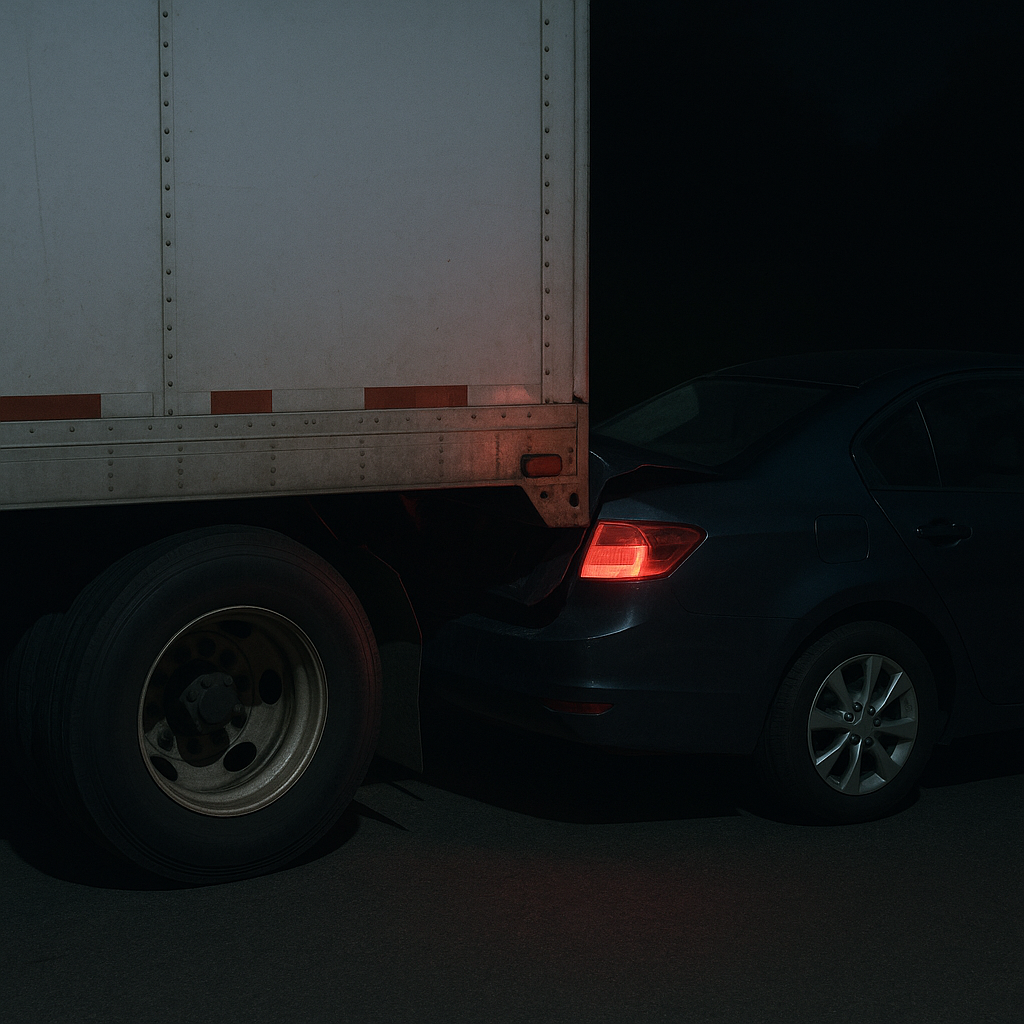
Trailer underride crashes rank among the most catastrophic incidents on the road, leading to devastating outcomes for motorists. An underride occurs when a passenger vehicle collides with the rear or side of a large truck or trailer and slides underneath the higher chassis. One key factor contributing to these tragic events is trailer lighting failure. This article explores why trailer lighting failures increase underride risk, explains the mechanisms by which inadequate lighting leads to these crashes, and examines the real-world consequences when lighting systems do not function as intended.
Trailer Lighting Systems and Their Role in Preventing Underride
The Function and Design of Trailer Lights
Trailer lighting systems serve a critical set of functions beyond simple illumination. They make a trailer’s dimensions visible in low-light or poor weather conditions and signal key vehicle actions like braking or turning. Federal regulations require specific lighting configurations on trailers, including tail lights, brake lights, turn signals, clearance lamps, and reflectors, to maximize visibility from every angle.
Modern trailer lighting systems are generally powered by a connection with the tractor’s electrical circuit. Lamps may be traditional bulbs or LEDs, wired to illuminate whenever the corresponding controls in the cab are activated. Placement of lights is dictated by geometry, height, and width, ensuring they outline the trailer’s size for other road users.
Typical Points of Failure in Trailer Lighting
Lighting components are exposed to challenging operating environments. Water ingress, vibration, corrosion, worn connectors, broken bulbs, or damaged wiring can all cause a light to fail. Sometimes, multiple points along the system may fail simultaneously, leaving portions or even all trailer lighting inoperative.
Usually, the driver has limited ability to observe individual lamp outages, especially at night or in inclement weather. Malfunctions are therefore not always detected or repaired immediately, leading to prolonged periods when trailers travel with compromised visibility.
How Lighting Failure Leads to Elevated Underride Risk
Reduced Visibility in Night and Low-Light Conditions
Properly functioning trailer lights instantly signal the presence, width, and movement of a trailer, especially at night. When critical lights are dark—due to malfunction or damage—an approaching driver may not perceive the trailer in time. Long, unlit surfaces blend into the roadway or horizon, especially on rural highways or poorly lit roads.
Without illuminated taillights or side marker lamps, a dark-colored or dirty trailer can appear almost invisible under specific lighting or weather conditions. Even a few seconds’ delay in detection drastically reduces the distance available for a following driver to react and avoid a collision.
Brake, Turn, and Hazard Signal Failures
Brake lights and turn indicators give essential clues about a trailer’s next movements. When these lights fail, following drivers lose important contextual information. For example, a driver approaching a stopped or slowing trailer with no brake lights has far less warning to decelerate. Similarly, if turn indicators are dark, nearby motorists may not anticipate a trailer’s lane change or turn, increasing the odds of a side or rear collision.
Any failure in these active signaling lights renders the intentions and alignment of the trailer ambiguous, increasing the chance of misjudgment and inadvertent closeness to the trailer’s rear end.
Lack of Reflective Function
Some lighting failures involve both powered lights and the reflective tape required by law. If this tape is covered, damaged, or otherwise not reflective, even minimal lighting from other sources (like headlights) may not outline the trailer. In combination with non-functioning lamps, the risk is further compounded, especially in fog, rain, or snowy conditions.
Why Lighting Failure Underride Risk Is Severe in Real-World Crashes
Mechanisms of Underride in Actual Collisions
When a passenger car strikes a poorly illuminated trailer, several factors make underride catastrophic. The main risk comes from the structural mismatch: the front end of the car is lower than the trailer deck. If the driver does not perceive or react to the trailer in time, instead of the vehicle’s energy-absorbing front zones taking the impact, the car’s windshield or roof strikes the trailer’s edge directly.
Crash dynamics reveal that at highway speeds, even a one- or two-second reduction in warning time due to invisible trailers can produce an unavoidable situation. Stopping distances are slashed, and swerving or braking maneuvers that could have prevented a severe crash are no longer viable.
Common Circumstances and Contributing Conditions
Research and crash investigations consistently find that lighting failures are implicated in fatal underride crashes at night, dawn, dusk, or during rain and snow events. Many of these accidents happen on highways, at intersections, or on-ramp or off-ramp locations where changing lanes and merging are common.
The size and location of trailers, combined with their often dull or dirt-covered exteriors, mean that when lights are not present or functional, even attentive drivers may simply miss seeing the trailer until it is too late. Investigations regularly reveal scenarios in which a vehicle passes underneath a trailer without any significant attempt at braking—a telltale sign that the trailer was not detected in time.
Severity of Outcome
The result of an underride crash is usually far more severe than a conventional vehicle-to-vehicle collision. The passenger compartment is directly compromised when a car underrides the trailer, leaving occupants vulnerable to catastrophic roof intrusion and high risk of fatalities and grievous injury.
Crash data reveals that fatalities in underride events are especially common at the point of impact with trailers that had inadequate or non-functioning lights. Survivors and witnesses often describe difficulty seeing the trailer until the very last moment. Forensic analysis shows that many drivers maintained speed or made minimal steering corrections, indicating that the absence of lighting provided virtually no time for defensive driving actions.
Conclusion
Lighting system failures on trailers play a significant role in the elevated risk and severity of underride crashes. The intricate relationship between visible trailer outlines, active signaling, and time-to-react underpins the gravity of lighting failure underride risks. A non-illuminated trailer, especially at night or in adverse weather, becomes a nearly invisible obstacle—one that even attentive drivers may not see in time to avoid. Trailer lighting integrity, therefore, is central to the outcome of many underride-involved crash scenarios, highlighting the critical safety function these systems fulfill in the roadway environment.