
Why Underride Crashes Often Result in Fatalities
Understanding Underride Crashes
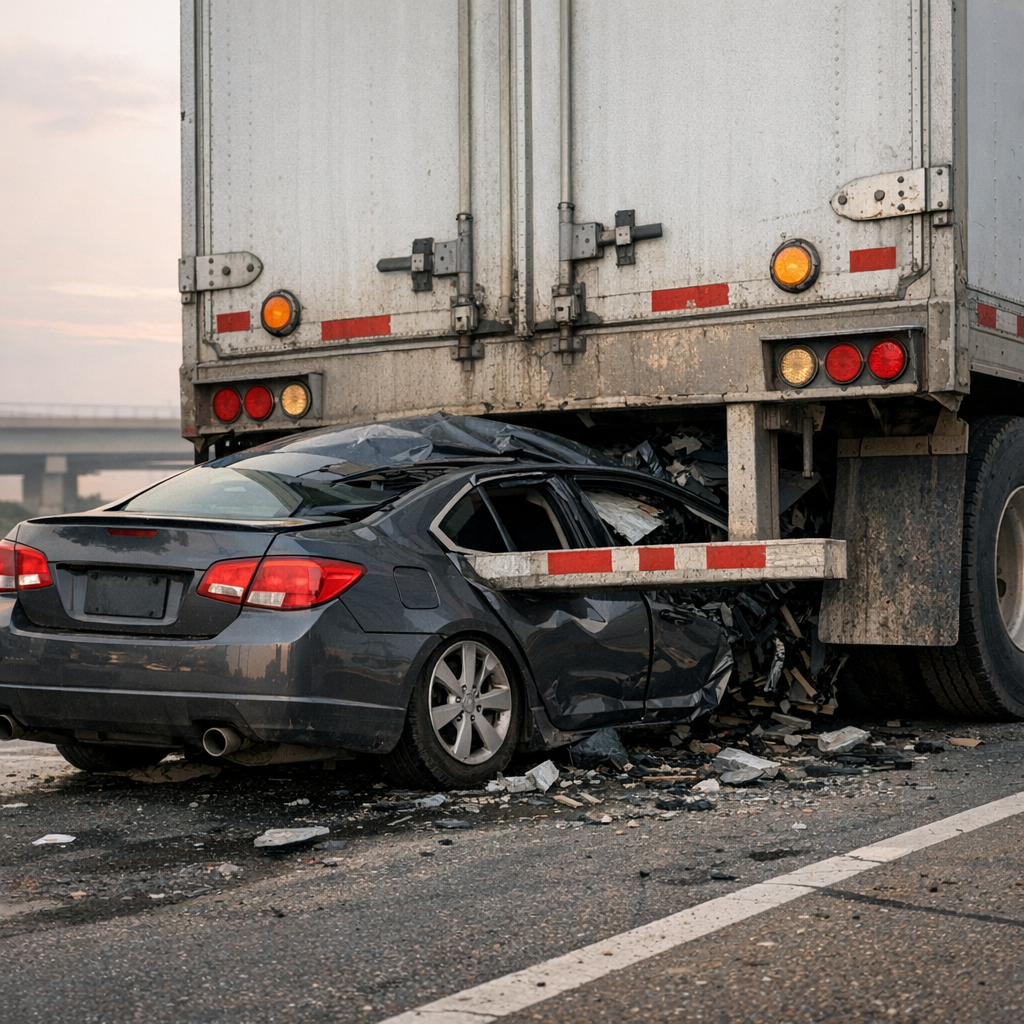
Underride crashes occur when a smaller vehicle, such as a passenger car, collides with a large truck and slides partially or fully underneath the truck’s trailer. These incidents are typically the result of rear-end or side-impact collisions involving semi-trailers, box trucks, or other large commercial vehicles. Unlike standard collisions where vehicle bumpers absorb most of the impact, underride crashes involve a car bypassing those protective zones and instead coming into contact with the much higher frame of a trailer.
These situations frequently happen at night or in low-visibility conditions. Sudden stops, poor roadside visibility, and insufficient markings or lighting on trailers are contributing factors. Safety features such as underride guards—structures designed to prevent cars from going under trucks—are not always strong enough or universally present, amplifying the risk in certain scenarios.
Why Underride Crashes Carry High Fatality Risk
The Design Challenge of Vehicle Structures
Most passenger vehicles are engineered with crumple zones and airbags that work together to protect occupants during a crash. These safety systems are calibrated for impacts with objects and vehicles of similar height and structure. In an underride event, the point of impact is well above the car’s primary protective areas, often at window or windshield level. As a result, the protective mechanisms built into cars are bypassed, and the passenger compartment itself can experience direct intrusion.
Dangerous Intrusion Into Occupied Space
When an underride occurs, the force of the crash is directed into the most vulnerable sections of a vehicle—usually where occupants are seated. Standard crash energy-absorbing structures, such as bumpers, grilles, and hoods, provide limited protection when a truck trailer essentially overrides these components. This direct intrusion substantially increases the likelihood of catastrophic injuries.
Limited Time for Protective Response
Even with modern crash prevention technology, the sudden nature of most underride crashes allows little time for active safety systems to react. Features like automatic emergency braking require a specific range of scenarios to activate effectively, which may not align with the unique dynamics of an underride crash. As a result, intervention that might otherwise save lives is often unavailable.
Disproportionate Outcomes for Families and Daily Life
The Ripple Effect Following an Underride Event
The consequences of underride crashes reach far beyond the scene of the incident. Families are confronted with the sudden, unexpected loss or severe injury of loved ones. This disruption affects household routines, emotional well-being, and financial stability. Unlike more survivable vehicle collisions, underride crashes often leave less time for families to prepare or respond, increasing emotional hardship.
Strain on Survivors and Support Systems
Those who survive an underride collision may face a lengthy and complicated recovery process. The nature of injuries sustained in these accidents frequently necessitates intensive medical care and long-term rehabilitation, placing strain on caregivers and support systems within families. Day-to-day life may be permanently altered, requiring adaptations to living spaces, transportation, and responsibilities.
Community and Workplace Impact
Beyond the family, underride fatality risk can have a broader community impact. Colleagues, classmates, and neighbors may all feel the effects when someone is lost or seriously injured. Workplaces might experience loss of skilled personnel or the need to accommodate different work arrangements for surviving workers. In some cases, communities respond by advocating for improved safety standards, seeking to reduce the risk through awareness or support for safety regulations.
Gradual Steps Toward Prevention
Engineering and Safety Developments
Efforts to reduce underride fatality risk include engineering advances in both truck and passenger vehicle design. Stronger and more effective underride guards address the primary hazard by providing an added layer of protection. Enhanced visibility features such as reflective tape, improved lighting, and better signage on trailers also contribute to increased awareness and reduced likelihood of these accidents.
The Role of Education and Awareness
Awareness campaigns directed at both commercial drivers and passenger vehicle operators can help reduce underride incident rates. Understanding the limitations associated with sharing the road with large trucks, especially in conditions of low visibility or heavy traffic, informs safer driving behaviors.
A Measured Outlook On Underride Crashes
Underride crashes represent a particularly severe hazard on highways due to design limitations and the nature of the impacts involved. The unique characteristics of these incidents significantly increase the risk of serious injury or loss of life, with lasting effects on families and communities. Ongoing improvements in vehicle engineering, infrastructure, and public awareness remain key to reducing the risk and severity of underride events over time.