
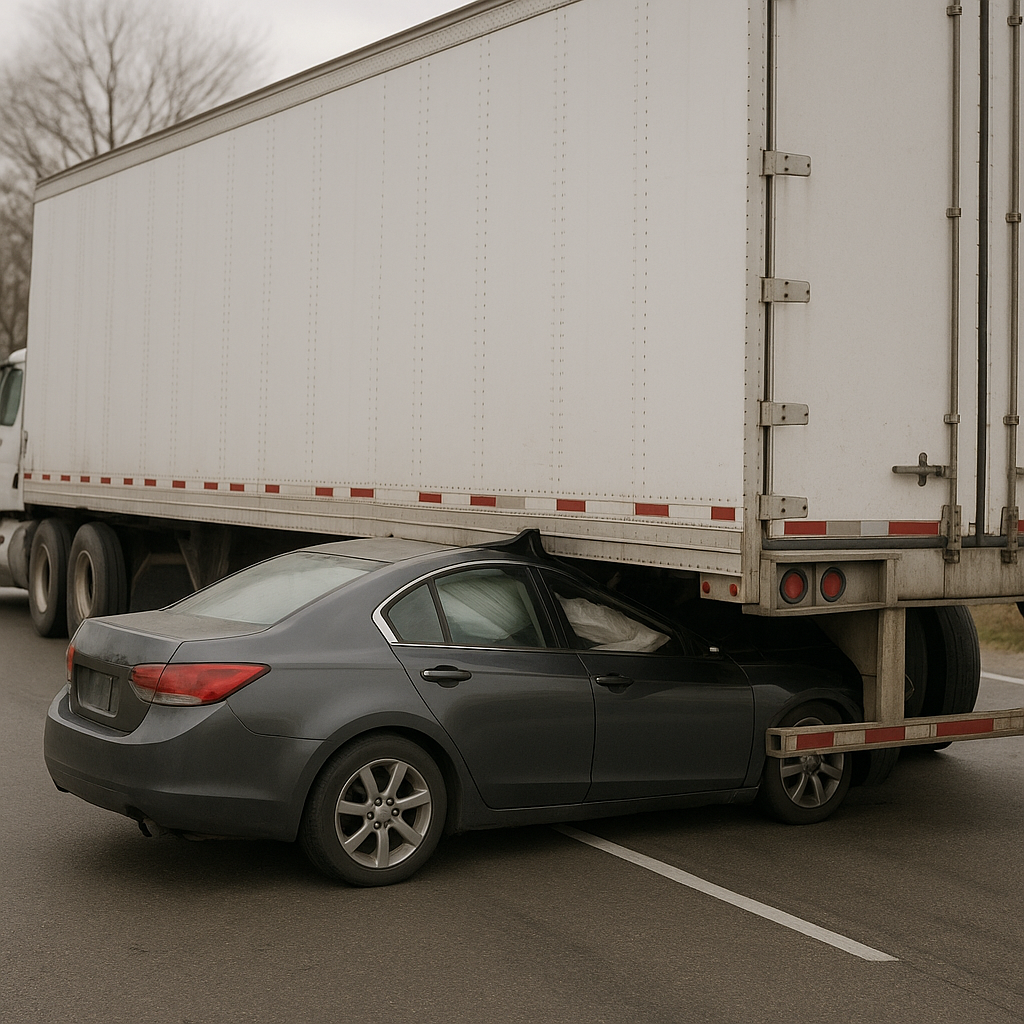
Car Slid Beneath a Trailer During Slowdown
During periods of traffic slowdown, certain collision types become more likely due to changes in speed, reduced following distances, and unexpected driver actions. One significant scenario involves a car sliding beneath a trailer—commonly referred to as a slowdown underride incident. This article examines how such events unfold, what commonly happens during these situations, and the factors that may come into play afterward.
In a slowdown underride incident, a car traveling behind a large truck or trailer cannot stop in time and ends up sliding underneath the trailer. This type of occurrence often arises during abrupt reductions in speed, slippery road conditions, or when a vehicle is following too closely to react appropriately.
Why Underride Occurs During Slowdowns
When traffic begins to reduce speed unexpectedly, the risk of rear-end collisions increases. In cases involving large trucks or trailers, the difference in vehicle height between the car and the rear of the trailer can make a typical rear-end situation much more severe.
Factors Contributing to Slowdown Underrides
A variety of elements can play a role in these incidents. Surface conditions such as rain, ice, or snow often decrease traction, making it harder for cars to come to a full stop. Additionally, reduced visibility, inattentive driving, or sudden braking by the vehicle ahead can reduce the available reaction time for drivers behind semi-trailers or haulage trucks.
Trailer and Car Design Considerations
Vehicle design also plays a role. Standard trailer frames are raised in such a way that, in the event of a collision, a sedan’s front end can pass underneath. Many modern trailers are equipped with underride guards, yet these do not always prevent every instance, particularly if impact forces are high or if the guard is absent or compromised.
Immediate Aftermath of a Slowdown Underride
Once a car has slid underneath a trailer, the situation becomes complex for those involved. The severity of the event largely depends on the speed and angle of the impact, as well as safety features present in the car and trailer.
Vehicle and Traffic Outcomes
Traffic flow is often disrupted following an underride incident. The affected lanes may be blocked due to the involved vehicles and emergency response activity. Road users behind the site may experience additional delays as incidents are assessed and cleared.
Potential for Secondary Incidents
Sometimes, the initial event can lead to other minor collisions or near-misses. Drivers approaching the crash site might apply brakes abruptly or swerve, increasing the risk of further disturbances.
Common Concerns Following the Incident
After a slowdown underride collision, several questions may arise for bystanders, other drivers, and individuals indirectly impacted.
What Typically Happens Next?
Emergency services usually arrive to assess the situation, provide aid where necessary, and work to restore normal traffic flow. Safety checks and scene investigations are often conducted to determine contributing factors and prevent similar occurrences in the future.
Vehicle Assessments and Recovery
Once the initial scene is addressed, both the car and trailer are evaluated for structural damage. Recovery specialists may use specialized equipment to separate the vehicles, with considerations given to both safety and minimizing further traffic impacts.
##### Roadway Restoration Steps
Clearing debris and spilled fluids from the road is a necessary part of the recovery. Road crews also inspect for any secondary damage to the surface or highway barriers before allowing traffic to resume as normal.
General Observations on Slowdown Underride Events
Underride collisions during traffic slowdowns highlight the importance of maintaining safe following distances, particularly in mixed traffic with large trucks. Awareness and anticipation can help reduce the risk of such occurrences, but a combination of driver attentiveness, environmental awareness, and the presence of safety features are all crucial factors. Each incident serves as a reminder of the complexities present during sudden changes in traffic flow.