
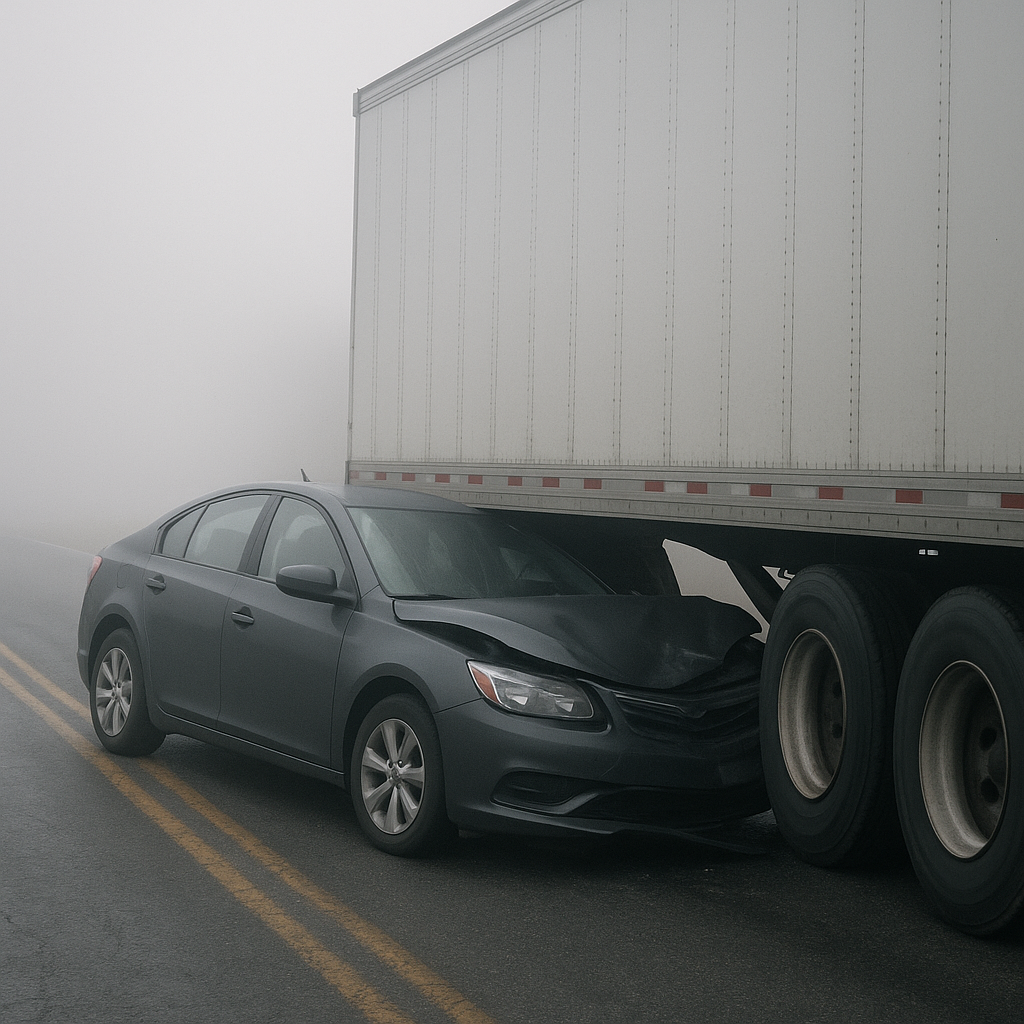
Car Slid Under Semi During Fog
Dense fog often creates sudden and hazardous road conditions, especially for drivers on highways. When visibility drops quickly, incidents such as a car sliding under a semi-truck’s trailer—known as a fog underride accident—can occur. These accidents typically happen without warning and can involve several contributing factors, from visibility limitations to road conditions.
Encountering a situation where a passenger vehicle ends up beneath a large truck’s trailer is unexpected. Understanding what happens in these scenarios can be useful for anyone who encounters foggy road conditions.
How a Fog Underride Accident Can Happen
Fog reduces the visible distance available to drivers, impacting reaction times and perception. A dense layer of fog can develop within minutes, turning a routine drive into a challenging situation. Drivers may not see vehicles ahead until it is too late to react safely.
The Moments Leading Up to the Incident
When fog is present, cars may approach slower-moving or stopped vehicles much faster than anticipated. If a semi-truck is ahead—especially one traveling slowly or stopped on the highway—a driver might not perceive its presence until it is directly in front of them. If the driver cannot brake in time or road surfaces are slick due to condensation, the car may slide beneath the raised trailer of the semi.
Role of Road Surface and Speed
Wet or cold pavement often accompanies fog, reducing tire traction. Even at moderate speeds, stopping distances increase significantly. Limitations in anti-lock braking systems and other driver-assist technologies are often exposed during these incidents.
Immediate Outcomes and Common Concerns
After such a crash, the physical consequences to those involved can be substantial. The structural differences between cars and semi-trucks play a significant role in the aftermath.
Vehicle Damage and Safety Features
Fog underride accidents often lead to considerable damage to the passenger vehicle, especially to the front compartment. The impact level largely depends on the car’s speed and specific collision point. Modern vehicles have improved crumple zones and airbags that may offer some protection, but the low clearance of a trailer can affect how these systems respond.
Emergency Response Measures
Once an incident has occurred, emergency services typically arrive quickly, especially on major highways. Their focus is on assisting those in need and managing the safety of other road users. Clearing the area and initiating an investigation are standard procedures.
Questions After a Fog-Related Underride Collision
Many people have questions about what follows an accident of this type. Concerns range from how incidents are handled to what can be done to improve safety.
Typical Inquiries After the Event
Individuals often want to know how frequently these accidents occur and what steps are taken to prevent them. Authorities may analyze the incident for contributing factors such as weather, speed, and vehicle condition. Vehicle manufacturers and regulators sometimes review such incidents for potential improvements.
Technological and Preventative Developments
Efforts to reduce the occurrence of underride accidents include reflective markings on truck trailers, enhanced rear and side underride guards, and advancements in vehicle sensing systems. Awareness campaigns often stress the importance of lowering speeds and increasing following distance in fog.
Moving Forward in Fog-Prone Areas
While fog is a natural phenomenon that cannot be controlled, understanding how fog underride accidents happen can encourage safer decisions when driving in poor visibility. Recognizing the importance of speed adjustment, maintaining safe distances, and staying alert to changing conditions are central points highlighted by safety authorities. With increased awareness and ongoing improvements in vehicle and roadway technology, the risks associated with such incidents can be better managed.