
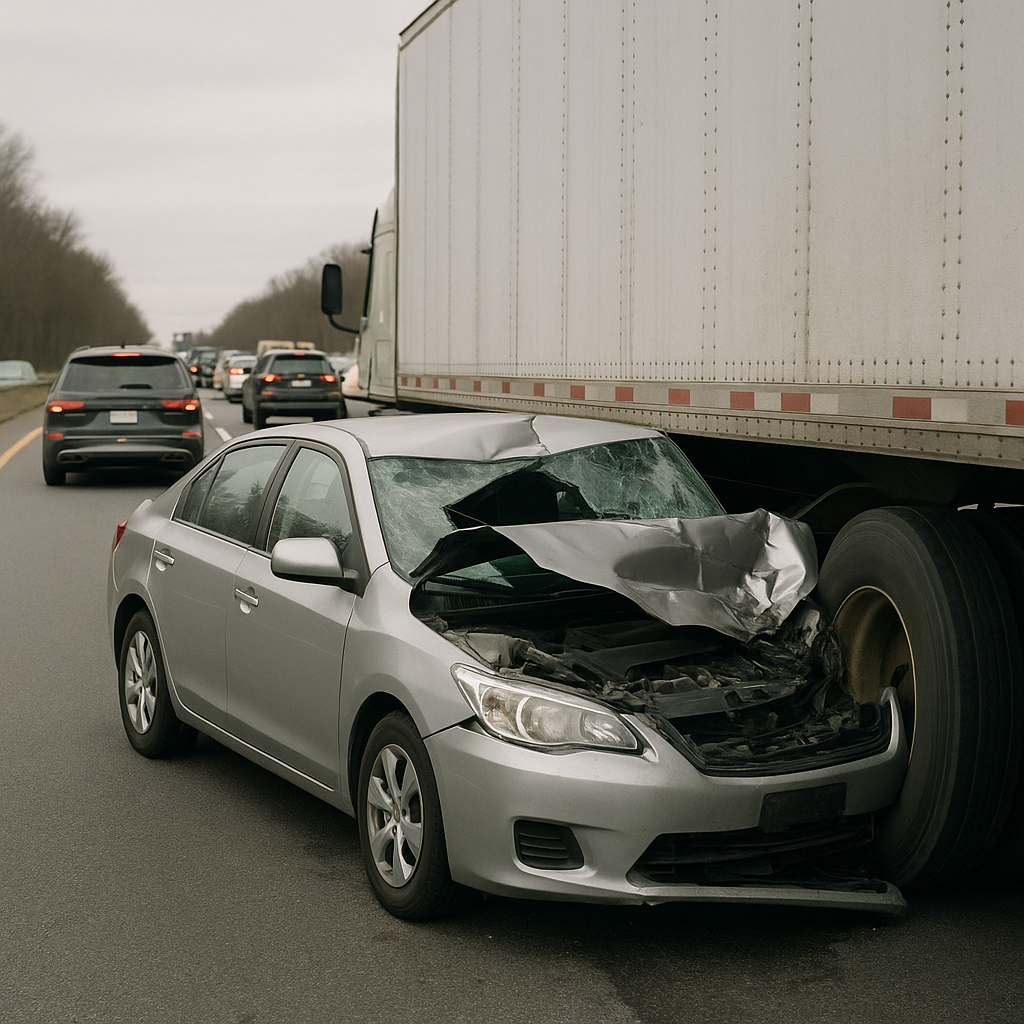
Car Underride Crash After Traffic Stopped
When traffic comes to an unexpected halt, drivers must react quickly. In certain cases, a serious occurrence called a “stopped traffic underride” crash can take place. This scenario involves a passenger vehicle sliding or driving under the rear or side of a larger truck or trailer that has stopped ahead.
Short periods of heavy congestion, vehicle breakdowns, or sudden slowdowns can lead to these types of incidents. Understanding how and why they happen can shed light on safety measures and what follows such events.
Understanding How Underride Crashes Occur
A stopped traffic underride collision most often happens when a larger vehicle, like a semi-truck or trailer, comes to a stop in moving traffic. If a car approaches from behind, the driver may not notice the stopped vehicle in time to avoid it. This can result in the smaller vehicle ending up underneath the higher platform of the truck’s trailer or cargo compartment.
Typical Sequence of Events
Drivers encounter stopped traffic in various settings such as highways, city streets, or intersections. In the seconds before an underride crash, several factors might be involved: reduced visibility, low lighting, heavy weather, distracted driving, or insufficient following distance. If the approaching driver cannot react in time, the front of the car slides beneath the higher frame of the stopped truck, resulting in a hazardous collision.
Impact of Vehicle Design
Underride incidents highlight certain challenges related to vehicle design. Passenger cars are typically lower than the bottom edge of most large trucks. Without specific barriers in place, this height difference can cause the car to wedge underneath the trailer, sometimes compromising the safety features built into the car’s front end.
Aftermath and Physical Consequences
The results following a stopped traffic underride crash can be significant. The structure of the car may absorb much of the impact, but the intrusion into the passenger area can increase the risk of severe outcomes. Traffic flow is often disrupted as emergency responders work to address the situation and clear the roadway.
Common Scene Responses
Authorities usually respond quickly to secure the area and direct other drivers safely around the crash site. Emergency personnel may assess the scene for hazards such as fuel leaks or fire risks. Traffic may be rerouted until the vehicles are removed and the road is cleared.
Roadway Effects and Delays
Depending on location and time of day, these incidents can lead to back-ups for miles. Delays may persist until the site is fully managed and any required investigation is complete. This often causes ripple effects across busy routes.
Considerations and Safety Questions
A collision involving underride raises common concerns among drivers and transportation professionals. Understanding the mechanics behind such incidents encourages ongoing discussions about road safety and vehicle equipment.
How Visibility and Weather Play a Role
One aspect frequently discussed is the role of visibility. Nighttime conditions, rain, fog, or glare from sun angles can all affect how soon a stopped truck is noticed. The sooner approaching drivers observe a hazard, the more time they have to react.
Exploring Safety Equipment on Trucks
An additional topic is the use and design of underride guards. These barriers are required on many trailers, aiming to prevent a car from sliding under during a rear collision. Advances in this equipment are an ongoing focus within the transportation industry.
Awareness and Driving Practices
Safe following distances and attentive driving remain key factors in reducing the occurrence of these incidents. Awareness of larger vehicles’ stopping capabilities and limitations in visibility can also help decrease risk on the road.
Summary and Forward Look
Stopped traffic underride crashes are complex events influenced by multiple factors, from road conditions to vehicle design. While emergency responses and safety discussions continue to evolve, these incidents highlight the importance of vigilance and improvements in road safety technology for all drivers.