
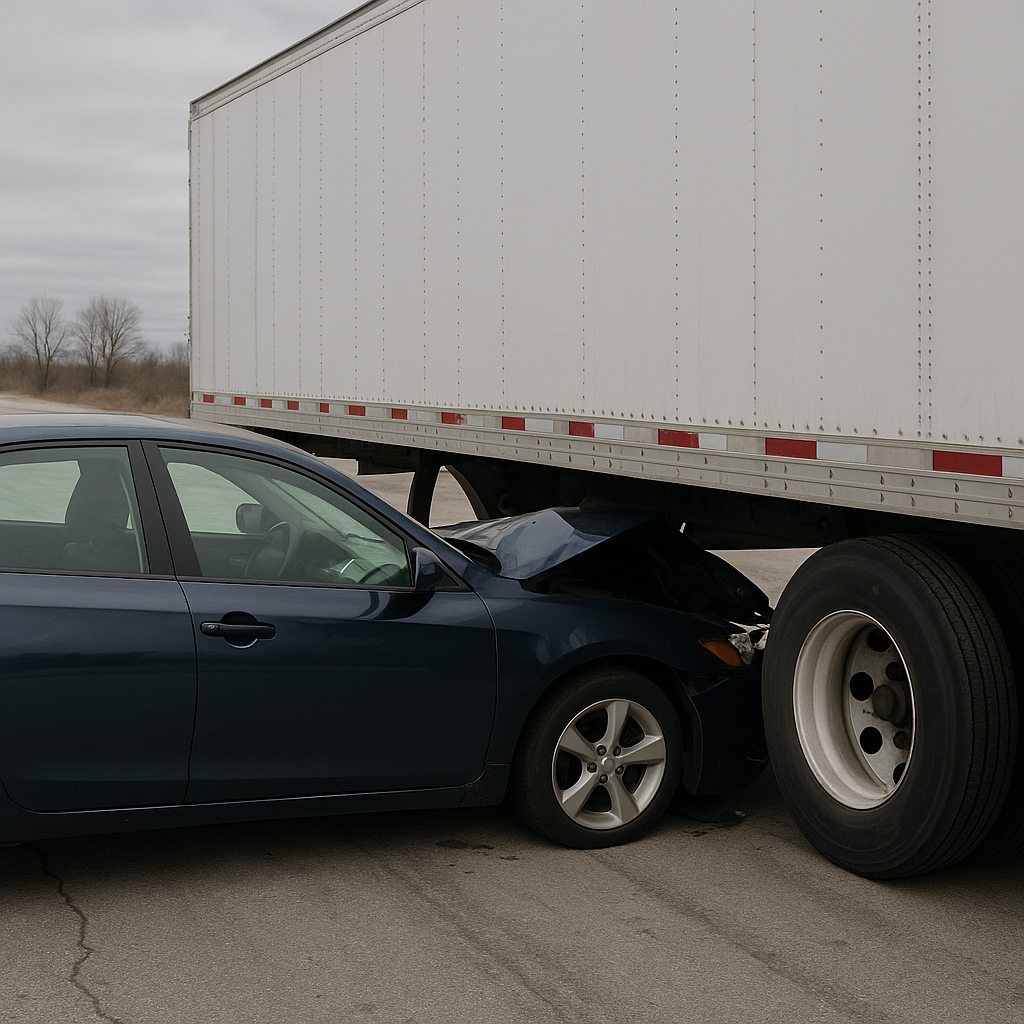
Car Went Under Semi During Sudden Stop
A sudden stop involving a passenger car and a semi-truck can lead to particularly severe outcomes. One such situation, often described as a “sudden stop underride,” occurs when a car slides or is forced under the rear or side of a semi-trailer during abrupt braking. This type of incident raises various physical and practical questions regarding what typically happens and what may be expected in the aftermath.
What Happens During Sudden Stop Underride
When a passenger car collides with the rear of a stopped or slowing semi-truck, the height difference between the car’s hood and the trailer floor can create a situation where the car partially or fully travels underneath the trailer. This scenario is commonly referred to as an “underride accident.” Despite modern efforts to prevent these incidents, such collisions remain a risk on highways, especially in high-traffic or poor-visibility conditions.
The Dynamics of the Collision
The typical dynamics involve a rapid deceleration of the semi-truck, either due to traffic, an obstacle, or an emergency situation. The car, following either too closely or unable to stop in time, approaches with enough momentum to slide under the much higher trailer. Braking distances, tire conditions, and road surfaces can all influence the severity of the underride.
Impact and Vehicle Damage
The initial impact usually crushes the front of the car, sometimes shearing off the upper portion of the passenger compartment. Safety features in vehicles such as crumple zones and airbags may not be as effective during underride events because the trailer can intrude into the cabin space. The semi-truck, owing to its mass and construction, often sustains minimal visible damage in comparison.
Common Outcomes Following the Incident
A sudden stop underride can result in significant disruption at the scene, extending beyond just vehicle damage. Traffic flow may be interrupted, and emergency responders are typically required to assess the situation and ensure the safety of those involved.
Immediate Scene Management
First responders carefully evaluate the structural state of both vehicles. Due to the potential for entrapment, specialized tools might be brought in to stabilize or separate vehicles. Authorities manage the surrounding traffic to prevent secondary incidents and maintain safety in the area.
Roadway Cleanup and Vehicle Removal
Once the immediate risk is managed, focus shifts to the safe clearing of the scene. Car and truck recovery often takes additional time compared to standard collisions, as the vehicles may be heavily entwined or the passenger car structurally compromised from the underride.
Questions That Often Arise After Sudden Stop Underride
In the aftermath of such an incident, individuals commonly have many questions regarding safety, road conditions, and prevention.
Understanding Contributing Factors
People often wonder what led to the sudden stop underride. These factors may include weather conditions, vehicle speeds, visibility, and the distance maintained between the car and the semi. Semi-trucks are equipped with underride guards to help prevent these outcomes, but not all guards are equally effective.
Exploring Safety Measures
Discussions may arise about the role of safety technologies such as collision avoidance systems and automatic braking. The design and effectiveness of rear and side underride guards on trucks are also frequent points of consideration.
##### Preventing Future Occurrences
Roadway engineers and vehicle manufacturers continually evaluate and implement measures to reduce the likelihood of underride accidents. Adjusting speeds, improving following distances, and maintaining vehicle equipment can all be topics of interest in conversations following an incident.
Final Thoughts on Sudden Stop Underride Situations
Sudden stop underride accidents represent a complex interaction between vehicle design, road conditions, and driver behavior. They can cause substantial challenges during and after the incident, affecting not only those directly involved but also the broader traffic environment. Ongoing advances in safety features and awareness continue to play roles in minimizing such events and their impact.