
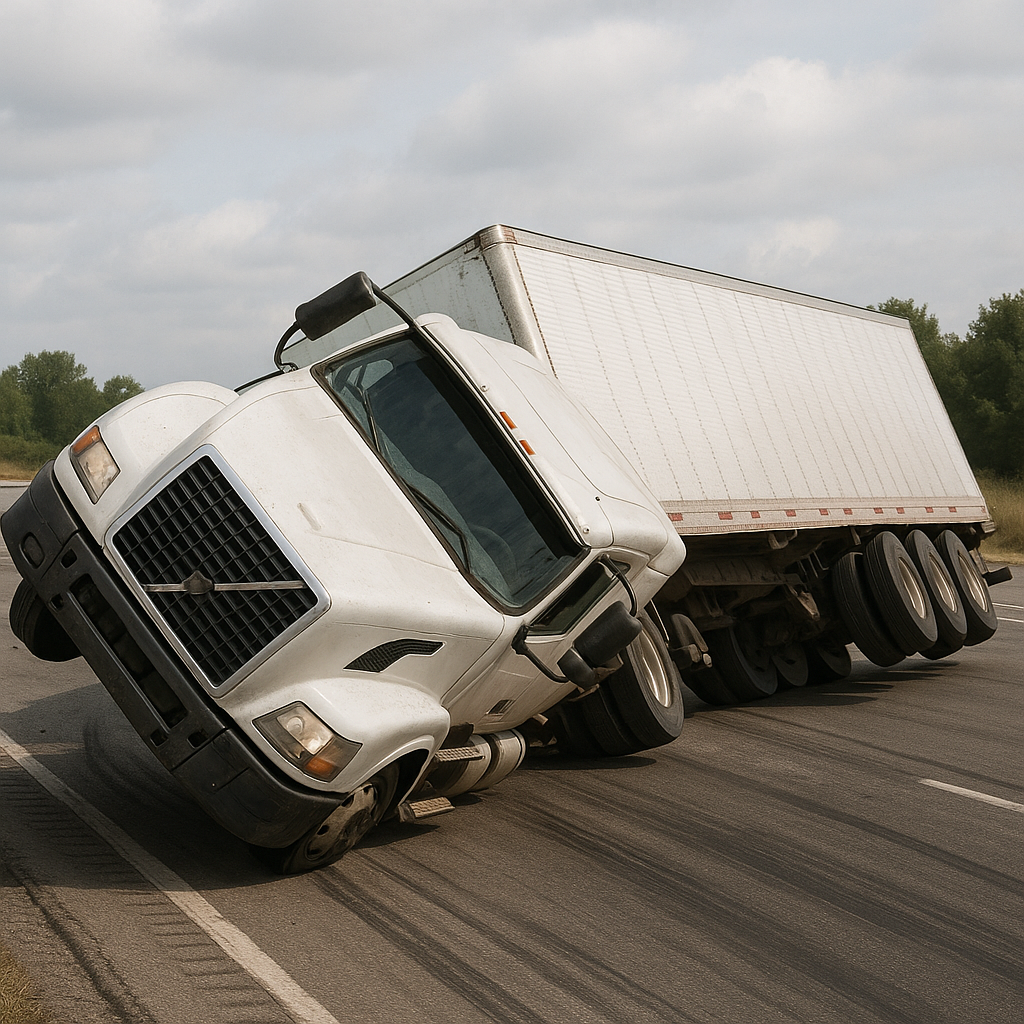
High Speed Rollover Involving Tractor Trailer
Understanding Public Curiosity About High Speed Truck Rollover Incidents
Whenever a high speed rollover involving a tractor trailer occurs, public interest and concern often rise. People want to know what causes these incidents, how common they are, and what risks they present for both truck drivers and other motorists. Given the size and weight of tractor trailers, these events can appear dramatic and raise questions about highway safety. Additionally, such accidents frequently make news headlines, prompting increased curiosity about the underlying factors and possible preventative measures.
What Happens During a High Speed Rollover
A high speed truck rollover generally involves a tractor trailer tipping onto its side or roof while moving quickly, often on highways. These vehicles have a high center of gravity and, when traveling at substantial speeds, are susceptible to imbalance, especially during sharp turns, evasive maneuvers, or when sudden obstacles appear.
The dynamics of a rollover begin when lateral forces—often from swerving, changing lanes abruptly, or entering a curve too quickly—overwhelm the truck’s stability. If a driver cannot correct the motion, the trailer may start to tip, ultimately causing the entire vehicle to roll. When a truck rolls at high speed, the consequences can include spilled cargo, roadway blockages, and potential impacts with other vehicles. The momentum and mass of a fully loaded tractor trailer can amplify property damage and create complex recovery operations.
Key Factors Behind These Rollover Events
Several elements contribute to high speed rollover events with large trucks. Driver actions are a major factor, especially decisions made in response to traffic patterns, weather, and road conditions. High travel speeds reduce reaction time and make it harder to safely maneuver, particularly when shifting lanes or negotiating curves.
Another consideration is the distribution and weight of the cargo. Improperly loaded or unbalanced trailers are more likely to become unstable during quick movements. Weather plays a significant role as well, with factors like rain, snow, or wind reducing tire grip and increasing the chances of a skid or loss of control. Mechanical issues, such as worn out brakes or tires, can further limit a truck’s ability to handle sudden changes in direction or speed.
Road design also has an impact. Sharp curves or exits with limited banking, as well as construction zones, present additional challenges for tractor trailers moving at high speeds. Reduced visibility, poor signage, and unfamiliar routes can make these hazards harder for drivers to anticipate.
Additional Considerations Often Overlooked
Tractor trailer rollovers at high speed are sometimes considered freak events, but more often they can be traced back to a complex mix of preventable factors. It is important to realize that the design of the vehicle itself prioritizes maximum cargo capacity, resulting in a naturally higher center of gravity than most passenger cars. As a result, even professional and experienced drivers can encounter situations that push a truck beyond its physical limits.
Commercial vehicles are also governed by strict operational guidelines. However, schedules, delivery pressures, and extended driving hours sometimes influence driver decisions. This context is not always apparent to outside observers but can play a role in how these incidents develop.
Another point often missed is the aftermath on roadways. Cleanup and investigations may take hours, affecting not just those directly involved but also disrupting traffic flows for miles. The logistics of righting an overturned semi and clearing spilled cargo are far more complex than for smaller vehicles.
In addition, vehicle technology continues to evolve, introducing features such as electronic stability controls designed to help prevent rollovers. Yet, not all trucks currently in service are equipped with these advancements, and human factors remain an essential part of the safety equation.
Balanced Perspective on Tractor Trailer Rollovers
High speed truck rollovers are relatively rare compared to other types of roadway accidents, but their impact tends to be significant due to the size and power of tractor trailers. Gaining awareness of the unique dynamics, challenges, and contributing factors helps demystify these events.
Improved infrastructure, advances in vehicle design, and ongoing driver training continue to reduce the likelihood of these rollovers. Understanding the many variables at play encourages a thoughtful approach to sharing the road with large commercial vehicles and highlights the value of continued learning for everyone involved in highway transportation.