
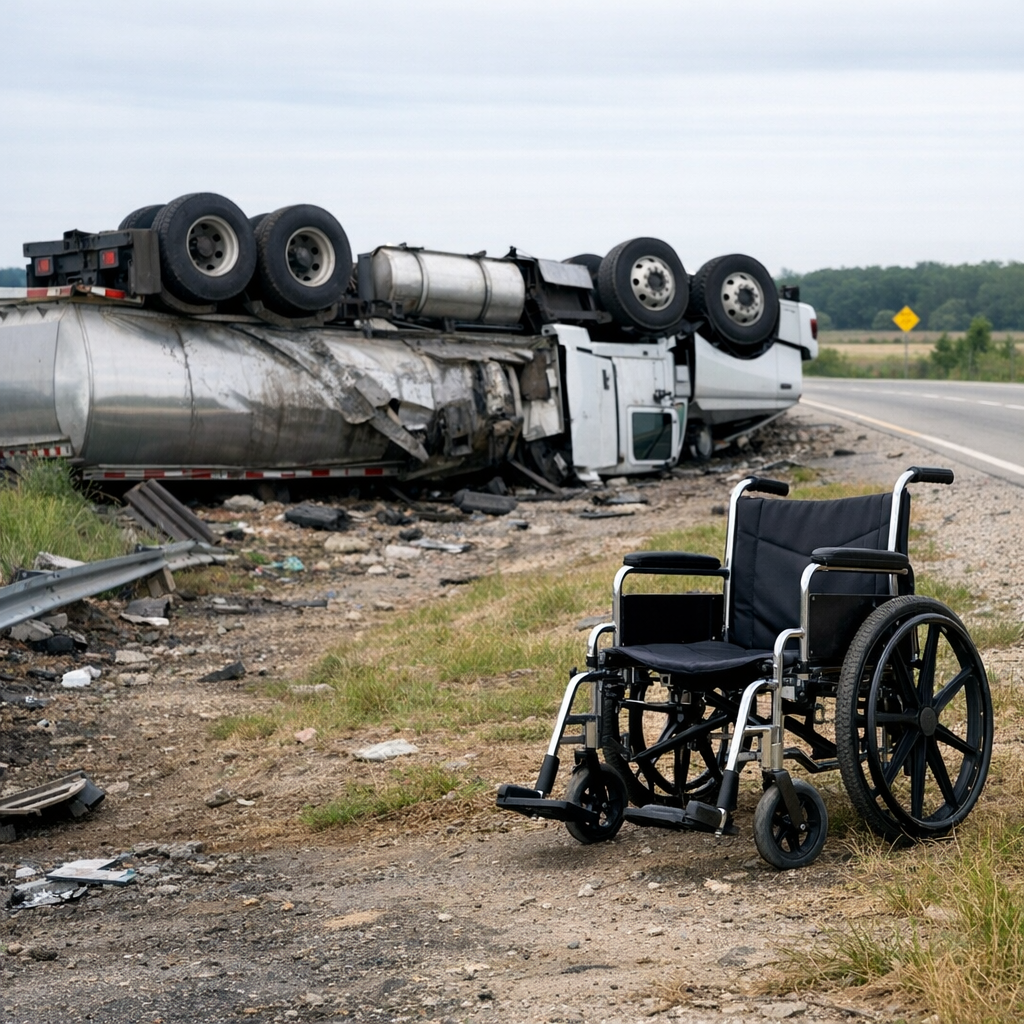
Paralysis Caused by Truck Rollover Accidents
Understanding the Outcome of Rollover Paralysis
Paralysis caused by truck rollover accidents, often referred to as “rollover paralysis,” is a life-changing outcome that can occur when the spinal cord is damaged during a vehicle overturn. These accidents may result in partial or complete loss of movement and sensation below the site of the injury. The severity of paralysis varies depending on which part of the spinal cord is affected and the force of the trauma involved in the accident.
The direct outcome of rollover paralysis is generally categorized as either paraplegia, which affects the lower body, or quadriplegia, which impacts all four limbs and the torso. The loss of voluntary muscle function stems from the disruption between the brain and the parts of the body controlled by the nerves below the damaged section of the spine. In some cases, sensation may also be lost. Sensory and motor function changes often appear immediately following the accident.
Other physical outcomes may include loss of bladder and bowel control, decreased respiratory function, and changes in skin sensitivity. The extent of these changes depends on the specific spinal vertebrae and nerve pathways involved in the rollover. Following the incident, medical investigation typically confirms the type, location, and degree of spinal cord injury responsible for the paralysis.
Effects of Rollover Paralysis on Daily Life Over Time
Rollover paralysis can lead to broad and long-lasting changes in personal independence, mobility, and day-to-day routines. Immediately after a truck rollover accident, adjustments often occur in basic activities, such as moving from one place to another, getting dressed, and managing hygiene. For individuals experiencing quadriplegia, assistance may be required with nearly every activity. Those with paraplegia often experience restrictions in lower-body movement, which can affect walking, climbing stairs, and using standard vehicles.
Over the longer term, the adaptation often involves incorporating mobility aids like wheelchairs or other supportive technologies into daily life. Home and workplace environments may need modifications for accessibility. Arrangements for transportation can shift, as operating standard cars may no longer be possible. Even travels outside the home frequently require accessible routes and planning for ramps, elevators, or other adaptive supports.
Ongoing management of secondary health concerns, such as risk of pressure ulcers, urinary tract infections, or respiratory complications, forms an additional part of daily life. Adaptation to altered sensory feedback adds another layer to everyday routines, where careful attention to body position and skin health is required. Some individuals with rollover paralysis also manage muscle spasms or chronic pain, which may necessitate incorporating new routines for comfort and health.
Changes in social interaction and participation in community activities may emerge, as barriers—both physical and logistical—can increase. Individuals may engage differently in recreational pursuits, work, and other meaningful activities. Developing new strategies for communication, leisure, or household management often occurs over time as people adjust to their new life circumstances.
Common Concerns Related to Rollover Paralysis
Many people living with rollover paralysis have questions and concerns about their immediate and long-term future. A frequent area of uncertainty involves health management. Concerns about secondary complications, such as infections, circulation problems, or respiratory challenges, are commonly explored with healthcare professionals. Understanding the signs of these complications and their potential to affect quality of life is usually a priority.
Questions surrounding mobility and independence arise as people consider how best to navigate their environment with the available support and technology. Choices related to the kind of wheelchair, vehicle adaptations, or the possibility of using assistive devices are relevant. Accessibility in public and private spaces remains a practical concern, as does the need to plan for emergencies where specialized evacuation procedures may be needed.
Employment and financial stability are also important considerations. Individuals may think about their ability to continue working, retrain for a new occupation, or navigate workplace accommodations. The prospect of long-term changes in earning power or the need for support services can bring logistical and financial questions.
Social participation is another area of focus. Relationships with family, friends, coworkers, and others may shift, and people may wonder about the accessibility of community events or the potential for social isolation. Planning for the future, including possible relocation or changes in household composition, is another common topic of consideration.
Lastly, personal identity and psychological well-being may come to the forefront. Adjusting to new capabilities and limitations can take time, and many individuals reflect on how life goals, hobbies, and self-concept are influenced by new realities. Questions about mental health support, access to counseling, and peer-to-peer connections are part of the broader adjustment process.
Neutral Overview of Future Understanding
Rollover paralysis resulting from truck rollover accidents is a profound outcome with significant implications for daily living. The physical effects are immediate, but the adjustment and adaptation process continues over time, touching every aspect of daily routines, relationships, and life planning. Concerns around health management, mobility options, employment, social participation, and self-identity commonly arise as affected individuals and their families navigate new circumstances.
The evolving nature of health care, assistive technology, and accessibility design continues to influence how people with rollover paralysis interact with their environments and communities. As awareness of spinal cord injury grows, so do resources and support systems available to those living with these outcomes. The experience of paralysis following a rollover accident often involves ongoing learning and adaptation, responding to a combination of biological, practical, and social factors that shape everyday life.