
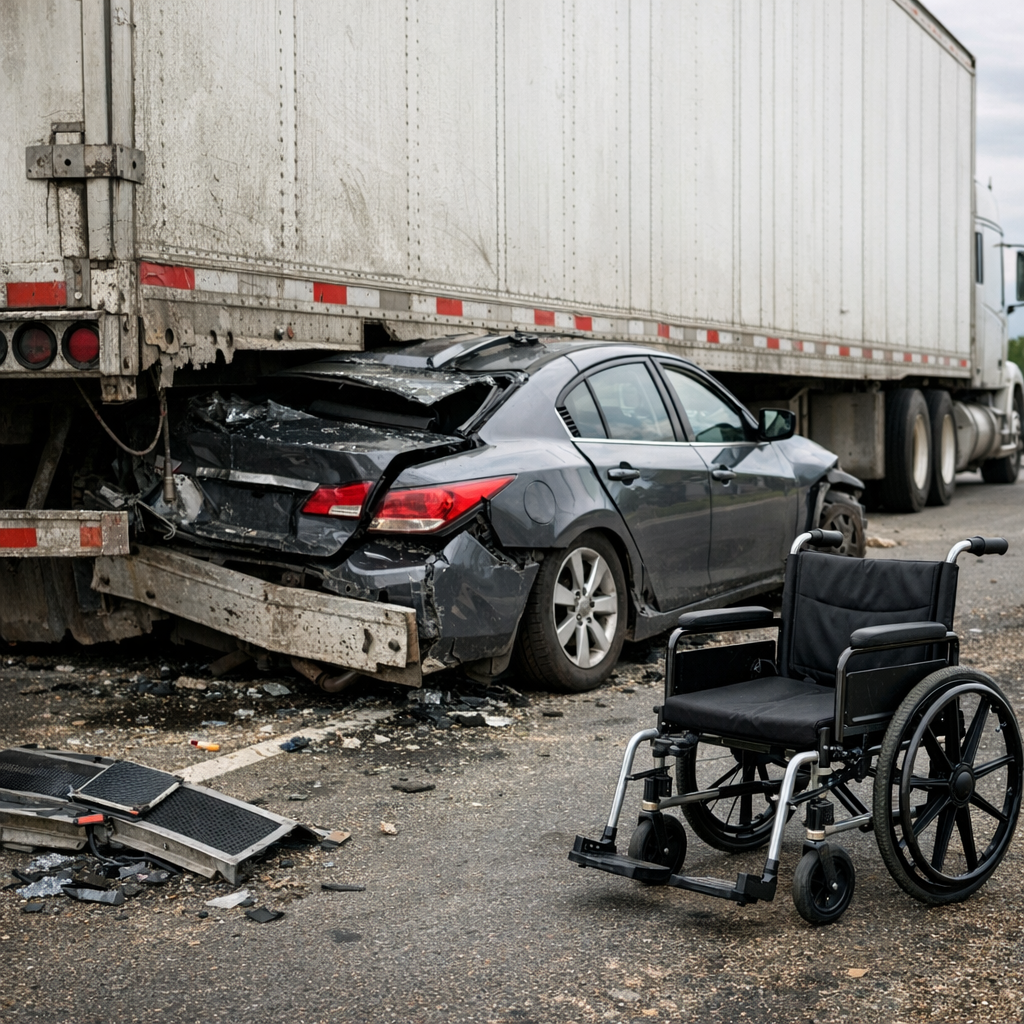
Permanent Mobility Limitations After Underride Crash
Understanding Permanent Mobility Limitations
Underride collisions, in which a smaller vehicle slides partially or completely underneath a larger vehicle such as a truck or trailer, can lead to severe injuries. When an underride crash occurs, occupants are at high risk for lower limb trauma, spinal injuries, and pelvis fractures, among other injuries that may impair movement permanently. “Underride mobility limitation” describes enduring difficulties with physical movement resulting from such incidents.
Permanent mobility limitations refer to ongoing physical constraints that affect walking, standing, or general bodily movement. In many underride crash cases, the violent force of the collision can sever nerves, damage spinal tissue, or shatter bones in ways that may never fully heal. While some individuals regain partial function, others may require mobility aids such as wheelchairs or walkers for the rest of their lives.
Loss of mobility might be partial, involving difficulty with certain motions, or total, necessitating complete assistance for even the most basic daily activities. The extent and location of the injuries sustained during the collision largely determine the specific physical outcomes and the length of recovery, if any recovery is possible.
Long-Term Impact on Daily Life
A life altered by permanent mobility limitation following an underride crash often requires fundamental adjustments in daily routines. Immediately after the incident, hospitalization and initial recovery periods are frequently followed by ongoing rehabilitation, though these processes may yield only limited improvement.
Over time, participation in former hobbies, recreational activities, or exercise routines may become challenging or unattainable. Actions that were once routine, such as navigating different surfaces, ascending stairs, or transferring in and out of vehicles, can become significant obstacles. Individuals may also experience fatigue more easily due to the increased effort needed to perform everyday tasks.
Living spaces often need adaptation to accommodate reduced mobility. This might include the installation of ramps, widening of doorways, or rearrangement of furniture to allow for the safe use of mobility aids. Transportation options may also change, with reliance on accessible vehicles or public transit systems that support mobility devices.
Family and social interactions sometimes shift as well. Friends and relatives might need to provide physical support or help with daily activities, prompting adjustments in relationships and roles within households. Attending social events, traveling, or engaging with community activities may require additional planning and consideration, sometimes leading to feelings of isolation or frustration.
Employment prospects may also be influenced by mobility limitations. Certain occupations may become unfeasible, prompting career changes or adjustments to work environments. For others, remote work or flexible schedules may better accommodate new physical realities. Access to continued education or vocational training might be necessary to transition to roles compatible with mobility needs.
Common Concerns Associated with Underride Mobility Limitation
Individuals experiencing permanent mobility impairment following an underride crash often face a variety of practical and psychosocial concerns. Accessibility becomes a central focus, with questions regarding the suitability of homes, workplaces, and public spaces.
Physical health issues, including chronic pain, muscle atrophy, or secondary conditions such as pressure sores and circulatory complications, can emerge over time. The use of mobility aids may introduce ergonomic challenges or require adaptation to new types of physical movement. Pain management and ongoing medical oversight commonly form part of daily life.
Emotional health is another area of concern. Adjusting to new personal limitations may bring about feelings such as grief, frustration, or anxiety. Maintaining social connections and participating in valued activities may become more complex, potentially resulting in changes to an individual’s sense of independence or self-esteem.
Financial considerations frequently arise, given the potential need for long-term medical care, adaptive equipment, or home modifications. Employment transitions may have implications for income and financial planning.
Family members and caregivers may also encounter challenges. The responsibility of providing physical assistance or navigating emotional changes can sometimes impact relationships or lead to caregiver fatigue.
Access to resources and support networks—whether from rehabilitation professionals, community organizations, or peer groups—can play a role in managing the ongoing effects of mobility limitation. Navigating regional and national support systems, insurance frameworks, and legal considerations may add to the complexity of post-crash life.
Informational Overview of Permanent Outcomes
The consequences of permanent mobility limitations after an underride crash are multifaceted and persist over time. Adjustments in daily routines, living environments, employment, and social participation are typical as individuals respond to new physical realities. Ongoing medical needs and emotional considerations often shape the experience of living with mobility impairment.
A wide range of factors, including the extent of injury, available resources, and personal circumstances, combine to influence long-term outcomes. Each individual’s experience with underride mobility limitation is shaped by unique physical, emotional, and social elements.
Adaptation and management strategies vary, reflecting differences in environment, support, and preferences. While the daily realities of permanent mobility impairment require significant changes, many individuals find paths to continued engagement in personal and community life within their new parameters.