
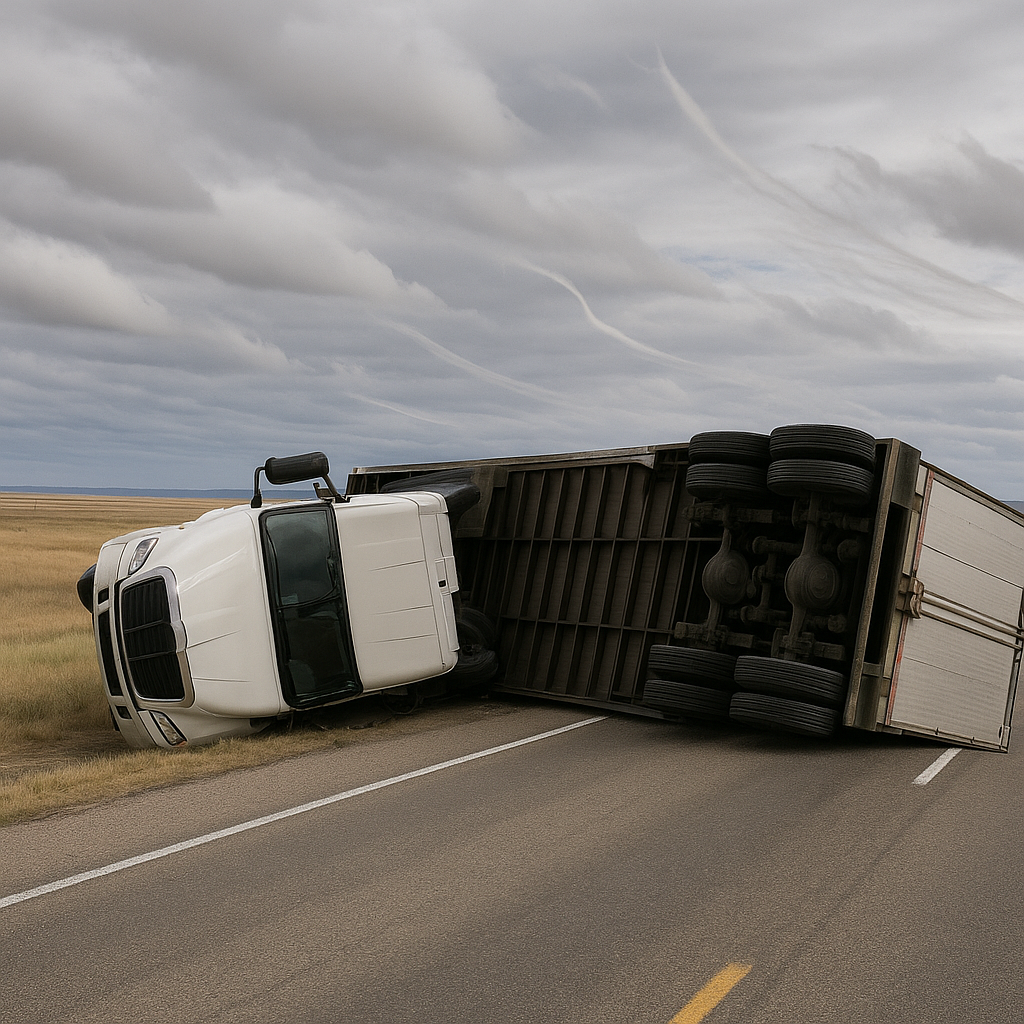
Semi Rolled Over Due to Crosswinds
Understanding Why Crosswind Rollovers Are a Common Question
Questions about why a semi rolled over due to crosswinds come up frequently, especially after dramatic incidents are seen in the news or on highways. Many people see large trucks and wonder how such massive and heavy vehicles can tip over, seemingly due to just the wind. This curiosity is natural, as it challenges assumptions about vehicle stability and road safety.
Curiosity is also fueled by the fact that crosswind rollover can strike unexpectedly. Professional drivers and the general public alike may be interested in what causes these incidents, how often they happen, and whether anything can be done to prevent them. For travelers sharing the road with semi-trailers, the understanding of risks posed by wind is important for peace of mind.
Explaining the Mechanics of a Crosswind Rollover
A crosswind rollover occurs when strong winds blow from the side of a moving semi, generating enough lateral force to tip the trailer and, at times, the entire rig. Large trucks are particularly susceptible due to their tall and flat-sided shapes. As wind pushes against the side, the force acts high above the ground, creating torque that can overpower the vehicle’s grip on the road.
Even heavy loads may not guarantee stability. The distribution of cargo inside the trailer, the design of the trailer itself, and the specific speed and direction of wind all play major roles. Empty or light trailers are especially vulnerable because they offer less resistance to lateral forces. Tractor-trailers traveling at highway speeds face increased risk because aerodynamic forces are compounded by their movement.
In addition, crosswinds can be unpredictable and sudden. Gusts may appear in open stretches, on bridges, or when emerging from areas shielded by trees or buildings. Often, drivers do not realize the full intensity of an approaching crosswind until it hits, leaving little time to react.
Lesser-Known Factors Behind Semi Rollovers
There are technical and environmental factors that many people may not consider regarding crosswind rollover incidents. The shape of the trailer matters greatly; trailers with high, flat sides present a greater “sail” area for winds to push against. Different models and manufacturers may respond differently to the same wind force.
Route geography is another important aspect. High plains, mountain passes, and elevated roadways without windbreaks dramatically increase risk. In these areas, local weather patterns, including funneled gusts and vortices, may create especially hazardous conditions. Forecasts may warn of high winds, but localized gusts can still surprise even experienced operators.
Driving behavior matters as much as environmental factors. If a driver steers too sharply in response to a gust, the risk of losing control increases. Speed amplifies this danger: the faster the rig travels, the more force the wind can exert on its side. Inexperienced drivers may also underestimate the risk of crosswind rollover, especially if they have not yet faced severe wind events on the open road.
Technology designed to help, such as stability control systems, does not always prevent rollover if the forces are great enough. In some regions, warning signs and variable message boards alert drivers to wind risk, but these preventive measures are not universal.
Putting Crosswind Rollover in Perspective
Crosswind rollover is a phenomenon that combines elements of vehicle physics, meteorology, and road design. While news stories of dramatic semi rollovers may paint a picture of constant danger, it is important to remember that most professional drivers are trained to recognize high-wind hazards and adjust their driving accordingly.
Understanding why crosswinds can tip over such large vehicles helps demystify these incidents and underscores the importance of driver awareness and safe operating practices. Advances in vehicle design, improved weather forecasting, and the sharing of up-to-date information all play roles in reducing the frequency of such events.
The relationship between wind and heavy vehicles is complex but well-understood in the trucking industry. For those on the road, awareness and understanding remain key to sharing highways safely with semi-trailers, even on days when the wind is strong.