
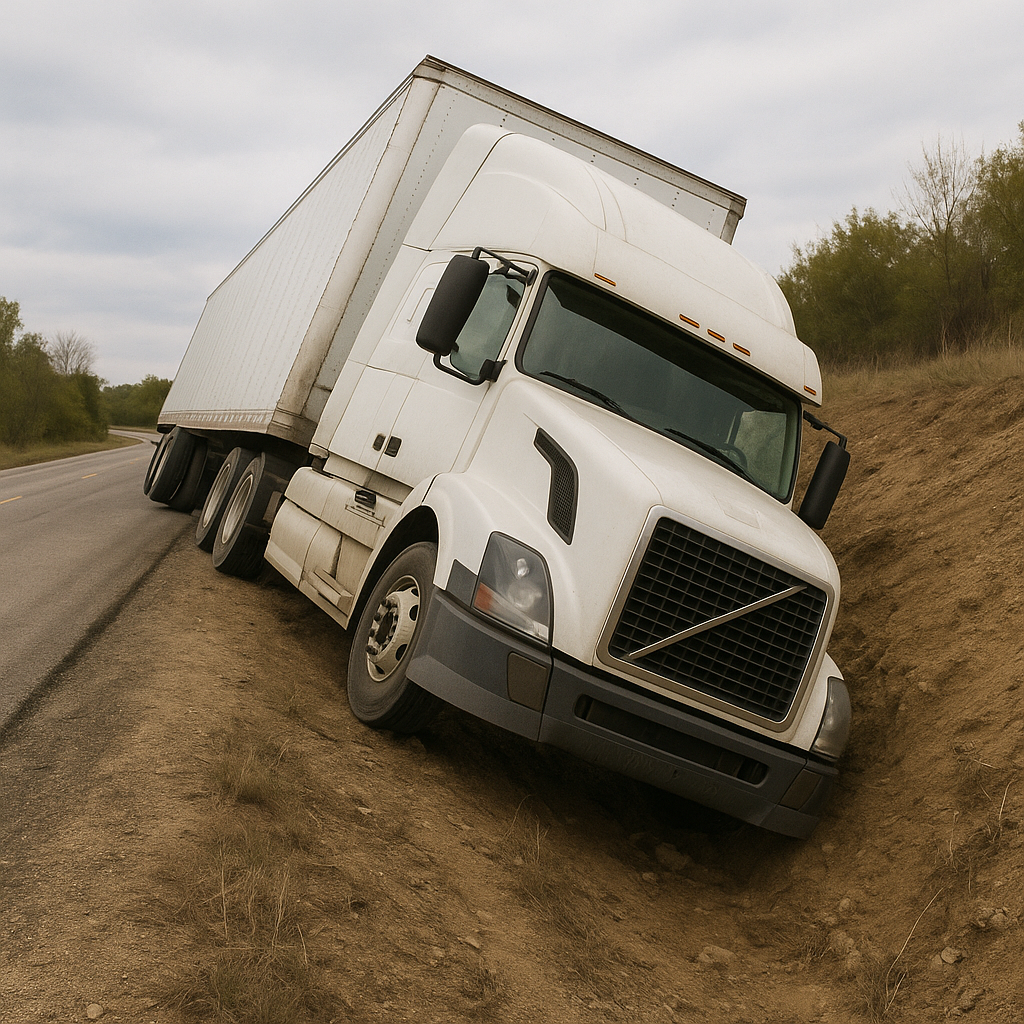
Semi Rolled Over Due to Uneven Road Grade
Why Are People Interested in Uneven Grade Rollovers?
Many people inquire about incidents involving semi-trucks that roll over on highways and rural roads. This specific concern often arises because such events can seem sudden and hard to explain, especially when road conditions are a major factor. Drivers, passengers, and transportation professionals want to understand what causes these rollovers and how uneven road grades contribute. There is significant curiosity about the underlying mechanics and environmental circumstances. The interest often extends beyond safety professionals to include the general public who regularly share the roadways with large commercial vehicles.
How Uneven Road Grades Cause Semi Rollovers
Uneven grade rollover refers to a semi-truck tipping onto its side due to inconsistencies in the road surface. These rollovers can happen when a truck travels across a sloped or bumpy patch of road that disrupts the vehicle’s balance. Semi-trucks, because of their height and load distribution, are more sensitive to changes in elevation or abrupt transitions between surfaces.
The weight of the cargo can also add to the challenge. A loaded trailer has a higher center of gravity, making it easier for the vehicle to tip if one set of tires rides over a dip or a ridge. When a semi moves quickly through an area where the road surface is not even, sudden forces can shift the truck’s balance. Drivers may not have enough time to correct this shift, especially if the uneven grade takes them by surprise.
Curves and sloped shoulders make these risks worse. When a truck rounds a corner with an uneven surface, the combination of centrifugal force and the tilt from the road can overcome the trailer’s stability. The risk rises further if the road is wet, loose, or covered with debris, all of which reduce traction and increase the chances of a rollover.
Important Factors and Overlooked Elements
Many people do not realize how routine road conditions can heighten rollover risks. Road maintenance work, resurfacing projects, or temporary detours can leave patches of uneven asphalt or gravel. In rural and hilly areas, roads may have natural dips and ridges that are less noticeable at highway speeds. Even newly constructed routes can settle over time, forming gradual yet significant grades.
Load securing practices play a quiet but critical role. If cargo is not evenly distributed or properly fastened, the internal movement of goods can contribute to instability, particularly when encountering a change in grade. However, even a perfectly packed load is no guarantee against the physical effects of abrupt elevation changes.
Vehicle speed is another less-recognized factor. Speed limits for commercial vehicles often account for optimal road conditions. When drivers encounter uneven ground at higher speeds, the potential for overturning increases significantly. Some drivers familiar with a route may underestimate temporary changes, such as construction or damage from weather, that introduce new grade differences.
Another detail is the design of modern semi-trucks. Advances in suspension and stability control systems can help, but not all vehicles on the road are equipped with the latest technology. The effectiveness of these systems depends on both vehicle maintenance and driver awareness.
Final Thoughts on Uneven Grade Rollovers
Incidents involving a semi that rolled over due to uneven road grade typically result from a combination of vehicle dynamics and unexpected road features. Understanding the nuances of both road construction and truck loading can provide added clarity. Recognizing the part that weather, maintenance, and temporary changes play helps build a fuller picture of what leads to these occurrences. Through ongoing improvements in roadway engineering, vehicle design, and operational practices, the risk of uneven grade rollover can be further reduced, ultimately contributing to safer travel for everyone.