
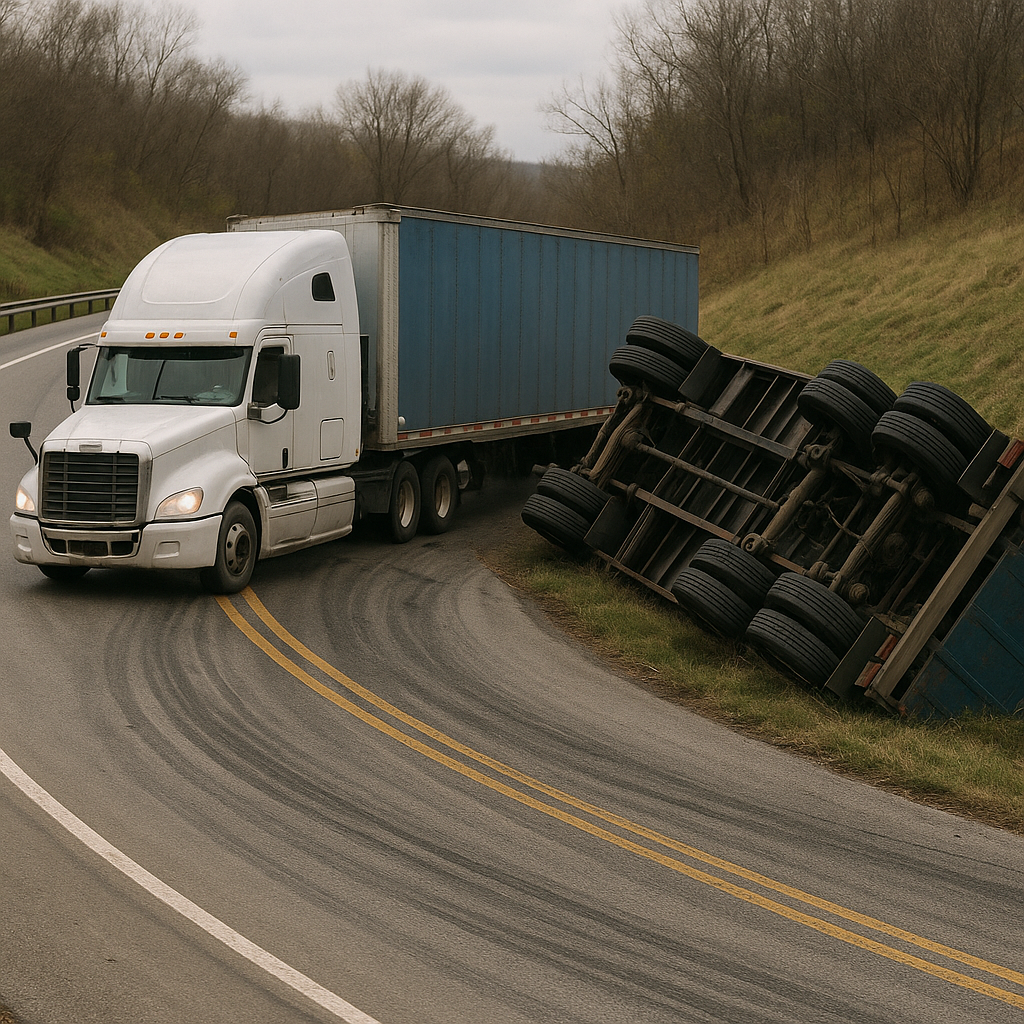
Semi rollover caused by sudden braking on curve
Common Reasons for Interest in Rollovers During Curves
Questions about semi rollover caused by sudden braking on curve frequently arise, especially among truck drivers, fleet managers, and individuals interested in road safety. Many want to understand the risks associated with commercial truck operation, particularly when navigating curves. Major trucking routes often include winding roads or off-ramps with sharp curves, making this topic relevant for those who regularly encounter these conditions in their daily operations or for motorists who share the road with large vehicles.
The curiosity often stems from an awareness of how dangerous rollover incidents can be. Since rollovers can lead to significant disruptions, property damage, and pose risks to all road users, people seek to understand the contributing factors. There is also growing public interest due to widely circulated dashcam and traffic footage of such incidents, which can prompt questions about their causes and prevention.
Understanding the Role of Sudden Braking in Rollover Events
Rollover accidents involving semi-trucks are particularly concerning due to the vehicle’s size and weight. When a semi is navigating a curve, forces act upon the truck that can affect its stability. The center of gravity in a loaded trailer is usually much higher than in passenger vehicles. This height increases the risk of tipping under unstable conditions. Sudden braking on curve rollover incidents occur because braking rapidly while turning can disrupt the truck’s already fragile balance.
During a turn, centrifugal force pushes the vehicle outward, away from the center of the curve. If a driver brakes suddenly within the curve, the weight of the cargo shifts rapidly. This abrupt traction change places extra load on the tires opposite the direction of the turn. The high center of gravity amplifies this effect, and the semi’s weight can shift enough to lift the inside tires off the pavement. If this force exceeds a certain limit, the truck can roll over. Traction loss or uneven pavement can further aggravate this risk.
Important Factors Not Always Considered
Many people may not realize that cargo type and how it is loaded play a significant role in the risk of a rollover. Even when cargo is secured, if it is stacked high or rolls easily, it can shift dramatically during abrupt braking. Liquids in tankers are particularly problematic, as the movement of the liquid (called “slosh”) can dramatically change the truck’s center of mass. Vehicle speed before entering the curve, road camber, surface conditions, and even tire quality or inflation state also contribute. Weather-related factors such as rain or ice further reduce grip, increasing the chance that sudden braking on curve rollover can occur.
Beyond mechanical and road factors, human elements are major contributors. Driver distraction, unfamiliarity with local road geometry, or misjudgment of speed all influence how a driver might respond in a curve. Anticipating a curve’s sharpness and adjusting speed before entering is critical. Many newer drivers, or those under pressure from tight delivery schedules, may attempt to correct speed too late, making sudden braking necessary.
Vehicle technology plays an evolving role as well. While some modern trucks are equipped with electronic stability control systems and anti-lock braking systems, these can only do so much when physical forces are at odds with safe maneuvering. Technology supplements good judgment but does not entirely eliminate rollover risk under poor conditions.
Broader Implications for Road Users
Semi rollovers on curves disrupt not only users of the affected vehicle but can also block traffic, damage road infrastructure, and result in spilled cargo or hazardous materials. Even at relatively low speeds, a fully loaded trailer can lose balance quickly when subjected to sudden deceleration in a curve. Motorists nearby need to be aware that large vehicles require more time and space to maneuver safely and that sudden actions by such vehicles during curves can create unpredictable hazards.
Understanding the mechanics and risk factors of braking on curve rollover helps both truck operators and the general public recognize the importance of maintaining appropriate speeds, being aware of cargo characteristics, and respecting the natural limitations of large vehicles on the road.
Conclusion: Reducing the Risk of Semi Rollover on Curves
Sudden braking while in a curve creates a situation in which physics, vehicle dynamics, and operational decisions all intersect. Recognizing that large, heavy vehicles operate under different principles than passenger cars can foster safer road behavior from all drivers. Awareness of the multiple factors contributing to semi rollovers—ranging from vehicle design to loading practices and environmental conditions—encourages a more thoughtful approach to both driving and sharing the road. Staying informed can lead to more secure travels for everyone.