
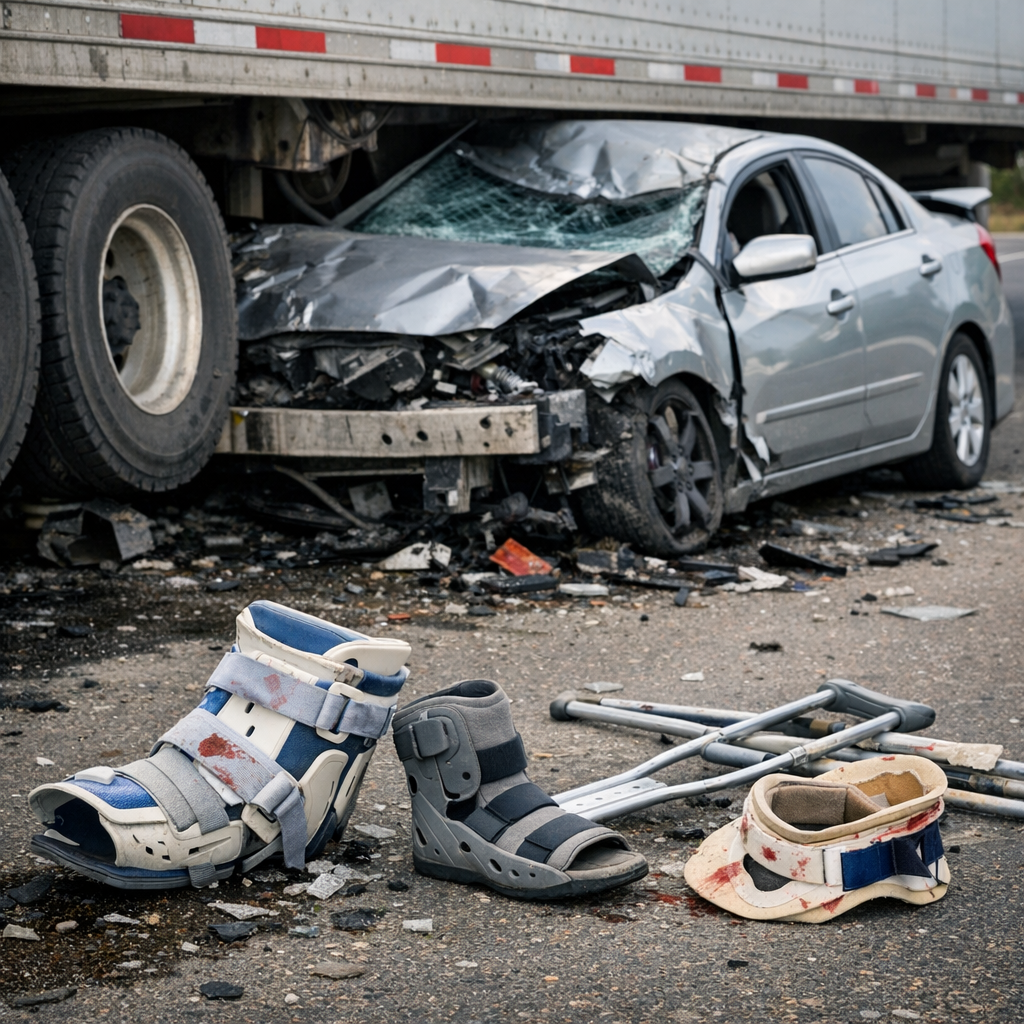
Severe Orthopedic Injuries from Underride Crashes
Outcome of Underride Orthopedic Injury
Underride crashes, where a smaller vehicle slides beneath a larger one such as a commercial truck or trailer, often result in severe orthopedic injuries. The forces at play in these collisions can cause extensive damage to the musculoskeletal system, including multiple fractures, joint dislocations, and crush injuries. Bone breaks in the pelvis, legs, hips, and arms are common, as are complex injuries involving ligaments, tendons, and even nerves.
The acute phase immediately after an underride crash typically focuses on stabilizing the patient and addressing life-threatening conditions. Severe orthopedic injuries frequently require surgical intervention, sometimes with multiple procedures to repair or reconstruct damaged bones and soft tissues. External fixation devices, internal plates, or rods may be necessary to align and stabilize fractures. The initial hospital stay is often extended, followed by specialized orthopedic rehabilitation.
In many underride orthopedic injury cases, the combination of high-energy trauma and complex fracture patterns leads to long-term or even permanent changes in mobility and physical function. Joint damage can result in stiffness, limited range of motion, or post-traumatic arthritis. Some injuries, such as severe crush syndromes or open fractures with nerve involvement, may carry a risk of partial or complete limb loss.
Impact on Daily Life Over Time
The lasting effects of an underride orthopedic injury can be far-reaching. After the immediate recovery phase, individuals may face prolonged periods of limited mobility. Use of mobility aids—such as crutches, canes, walkers, or wheelchairs—may be required for months, and in some situations, longer. Everyday activities such as walking, climbing stairs, driving, or even standing for extended periods may be altered or restricted.
Chronic discomfort is another potential outcome. Persistent pain or stiffness in damaged joints is common, especially where the cartilage has been affected or where surgical metalwork remains in place. Sensory changes, tingling, or weakness can develop if nerves were compressed or injured during the crash.
Adjusting to life after a major underride orthopedic injury often means revisiting routines and habits. Work and recreational pursuits may require modification, with certain professions or activities becoming more difficult to perform. In some situations, occupational retraining or vocational adjustments may be considered, depending on the nature and extent of residual physical limitations.
Long-term rehabilitation is usually part of the recovery process. Physical therapy programs are frequently needed to restore flexibility, muscle strength, and functional mobility. These programs can span months, and full restoration of pre-injury function is not always achievable, especially with joint surface injuries or extensive soft-tissue damage.
Common Concerns Following Severe Orthopedic Injury
A range of concerns routinely arises after an underride orthopedic injury. One frequent question relates to ongoing pain and the potential for chronic symptoms. The development of post-traumatic arthritis, for instance, can lead to joint pain and stiffness in the years following the initial injury. Some individuals experience intermittent flare-ups related to weather changes or physical activity.
Another common consideration is the durability of any implants or fixation devices used during surgery. Orthopedic hardware may remain in the body indefinitely or sometimes be removed later, depending on factors such as bone healing and discomfort. Concerns over hardware becoming loose, causing irritation, or failing over time are not uncommon and may warrant periodic medical imaging.
Changes in physical appearance can be another point of concern. Scarring, asymmetry, or alteration in limb length after complex fractures can affect body image. Some experience visible muscle wasting or altered gait as a result of altered biomechanics. Rehabilitation efforts can help with adaptation, but some differences may persist.
Return to driving or participation in physical work may come into question during recovery. The timeline and capacity for these activities depend heavily on the location and extent of orthopedic injury, the pace of healing, and the presence of pain or weakness. Fear of re-injury or anxiety about mobility is also a consideration for some after traumatic accidents.
The risk of secondary complications is another focus. Blood clots, infection in surgical wounds, or delayed bone healing may become a concern in both the hospital setting and during outpatient follow-up. Preventative measures and monitoring are often a standard part of post-injury care.
Overview and Informational Close
Severe orthopedic injuries sustained in underride crashes represent some of the most complex and life-altering trauma scenarios encountered. The intensity of these injuries is shaped by the mechanisms of high-velocity impact and the degree of force distribution across the body. The medical and functional consequences can extend long after the crash itself, touching on every aspect of daily existence—from movement and comfort to personal independence and career.
The recovery process from an underride orthopedic injury often blends acute medical intervention, ongoing rehabilitation, and adaptation to new physical realities. While each experience is unique, common themes include addressing chronic symptoms, navigating changes in routine, and managing concerns regarding physical capability and appearance.
Information, support, and tailored medical care are central to managing the long-term outcomes after such injuries. As with any significant trauma, individuals may take various paths in adapting to orthopedic changes, with the understanding that recovery can be a gradual and multi-faceted process. Understanding the nature of these injuries, their likely effects over time, and the factors that influence recovery can provide clarity and set reasonable expectations for adjustment ahead.