
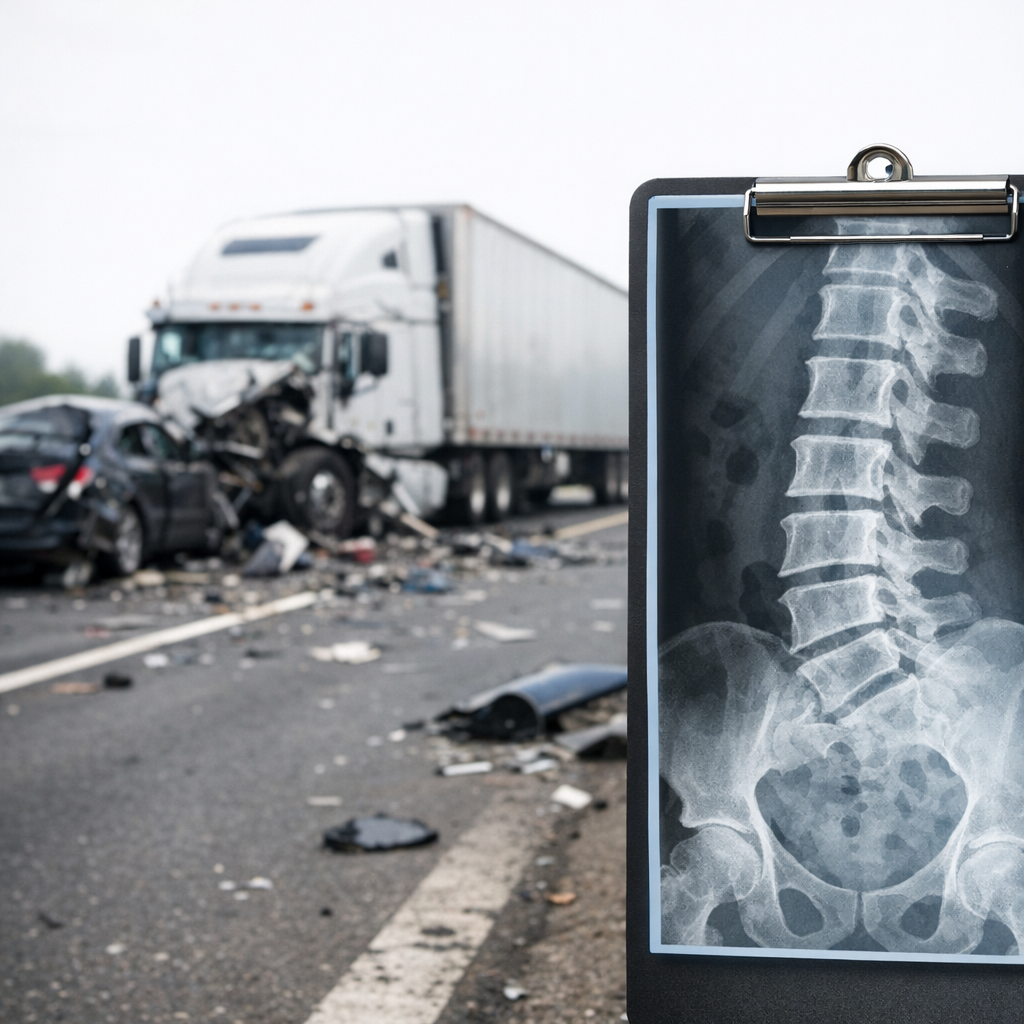
Spinal Damage After Highway Truck Crashes
Overview of Spinal Damage Following Highway Truck Crashes
Highway truck crashes are severe incidents that often result in significant injuries, including spinal damage. Spinal injuries can range from minor disc strains to catastrophic damage that alters bodily functions. In the context of highway accidents involving trucks, the forces involved are substantial, contributing to both the frequency and severity of spinal trauma.
A highway spinal injury commonly occurs due to rapid deceleration, crushing impacts, or ejection from vehicles. In these environments, the spine may experience high-velocity twists, compressions, or direct impacts. Such injuries frequently involve the cervical, thoracic, or lumbar regions, affecting nerve signals and musculoskeletal stability.
Immediate outcomes after a major highway truck accident may involve pain, loss of mobility, and in some cases, partial or complete paralysis. Emergency medical intervention often focuses on stabilizing the spine, but long-term effects persist well after the initial incident.
Effects on Daily Life Over Time
Spinal injuries from highway truck crashes can significantly alter patterns of daily living. Changes may appear immediately following the accident, but the full impact often emerges gradually.
For some, mobility becomes severely restricted. This change may require the use of wheelchairs, walkers, or other aids, affecting how individuals navigate home, work, or public spaces. Simple tasks, such as getting dressed or preparing meals, may require significant adaptations. In moderate cases, lingering pain and stiffness can limit the ability to sit, stand, or walk for extended periods.
Beyond movement, spinal damage can alter bodily functions. Injuries at various spinal levels may influence bladder control, digestive processes, or sexual function. These changes can introduce new routines to daily self-care and hygiene practices.
Daily life often includes ongoing rehabilitation. Physical therapy, occupational therapy, and routine medical appointments may become a regular part of the week. These interventions aim to maximize function and prevent secondary complications, although progress and adaptation rates can vary.
Transportation practices may also change substantially. Driving might require vehicle modifications or could become impossible, depending on the extent of impairment. Public transportation or specially adapted vehicles are sometimes necessary for continued independence.
For individuals who are able to work, returning to previous job responsibilities may not be possible. Vocational changes, reduced hours, or remote work arrangements can become a part of the new norm. For others, pursuing education or retraining may take precedence over immediate return to employment.
Common Concerns Associated With Highway Spinal Injury
Spinal injuries from highway truck crashes elicit a range of common concerns. Medical, practical, and emotional questions often accompany the process of adjusting to life after spinal trauma.
Medical uncertainties frequently arise as individuals, families, and healthcare providers monitor symptoms and function over time. The possibility of secondary complications, such as pressure sores, infections, or spasticity, may come into consideration. Ongoing pain and the need for medication management can add layers of complexity to recovery.
Economic impacts are another area of concern. The costs associated with hospitalization, rehabilitation, equipment, and ongoing care can be significant. Insurance coverage, eligibility for financial support, and navigating compensation processes often require detailed attention.
Social relationships may also experience shifts. Friends, family members, and colleagues sometimes need to adapt roles or provide additional support. The process of asking for or accepting help, as well as changes in participation in social activities, can influence perceptions of independence and self-esteem.
Access to the built environment is another point of concern. Many individuals encounter barriers related to housing or community infrastructure. Modifying living spaces for accessibility, securing appropriate transportation, and locating resources can all factor into daily logistics.
Educational access and participation may present special considerations, particularly for individuals who sustained spinal injury at a younger age. Accommodations, assistive technology, and support personnel may influence continuing education.
Emotional adaptation, while varying from person to person, is a frequent feature after highway spinal injury. The process of adjusting to new physical realities, altered roles, or uncertain futures can prompt questions regarding identity, purpose, and personal relationships.
Informational Summary on Spinal Damage After Highway Truck Crashes
Spinal damage after highway truck crashes represents a complex and often life-changing outcome. Injuries range widely in severity and consequence, affecting both physical function and participation in various life domains. Over time, individuals may experience shifts in daily routines, personal independence, and social engagement.
The recovery and adaptation process touches on a wide array of practical, medical, and social questions. Concerns commonly arise around medical needs, financial matters, accessibility, and ongoing personal adjustment. While spinal injuries from these types of collisions present significant challenges, ongoing support, healthcare, and community resources contribute to navigating the realities that follow.
Highway spinal injury reflects the broader impact of high-energy trauma in modern transportation contexts and underscores the need for continued study and awareness of outcomes stemming from truck-involved accidents.