
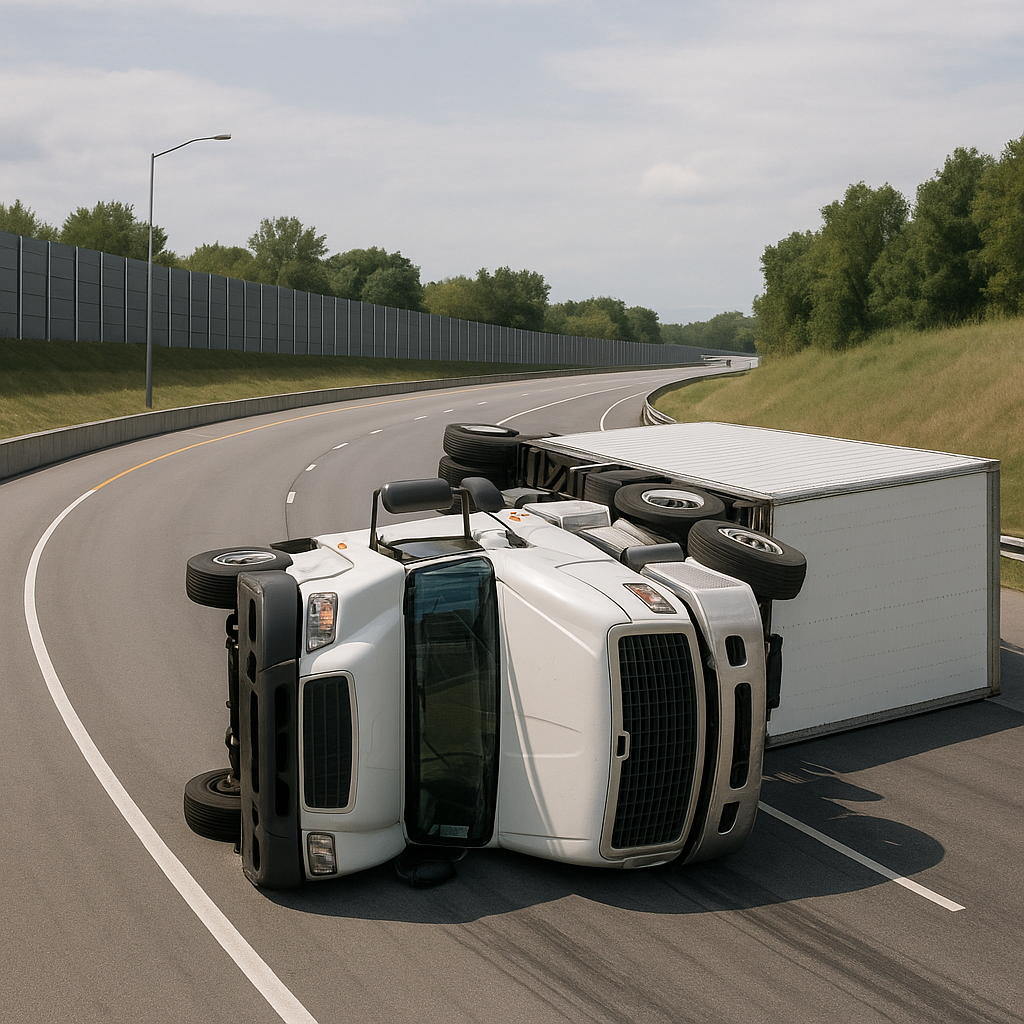
Truck Rollover During Freeway Curve
Understanding Public Curiosity About Truck Rollover Incidents
Truck rollovers during freeway curves are a topic of significant interest and concern for both everyday drivers and those in the trucking industry. Many people wonder how such incidents happen and why these large vehicles, often seen as stable and robust, end up on their sides. The curiosity often stems from seeing an overturned truck on the roadside and questioning what could have gone wrong, especially when conditions appear normal. In some cases, the dramatic nature of a freeway curve rollover—disrupted traffic, emergency response, and visible cargo spills—sparks questions about road safety and the factors leading to such events.
The size and weight of trucks add another layer to public interest. When passenger vehicles round the same curve safely, it can be difficult for onlookers to understand how a much heavier and seemingly sturdier truck might not manage the same maneuver. As news stories and social media posts featuring these incidents circulate, public concern and curiosity naturally increase, motivating people to seek answers about causes and prevention.
Exploring the Factors Behind Rollovers During Curves
A truck rollover on a freeway curve often begins with a simple principle of physics: centrifugal force. When a heavy vehicle enters a curve, especially at speeds unsuitable for its load or road conditions, lateral forces push it outward. Trucks have a higher center of gravity than passenger vehicles, making them more susceptible to tipping. If the outward force exceeds a critical threshold, the truck can lose balance and overturn.
Cargo type and how it is loaded play an important role in these scenarios. Unevenly distributed, unsecured, or shifting loads shift the center of gravity even further off-center, increasing instability. In addition, certain types of freight, such as liquids in partially filled tanks, can slosh during a turn, causing abrupt shifts in weight distribution. The combination of an already high center of gravity, a curving path, and any sudden cargo movement makes rollovers much more likely.
Driver behavior also contributes significantly. Taking curves too quickly, misjudging the road, or failing to account for the size and handling characteristics of the truck can all raise the risk of a rollover. Additionally, environmental factors like wet pavement, high winds, and poor visibility may compound these challenges, making it difficult for even experienced drivers to maintain control.
Key Context Surrounding Freeway Curve Rollover Events
Several contextual details often go unrecognized when discussing truck rollovers on freeway curves. One such reality is that roads and highways are designed with specific trucks—and their unique needs—in mind. Engineers consider factors like curve radius, banking angle (how much the road tilts), and signage when designing and maintaining freeway curves. Even so, not all situations can be controlled, and sometimes real-world conditions differ significantly from engineering assumptions.
Trucks themselves are built to handle heavy loads, but when maintenance is deferred, tires are worn out, or suspension systems are faulty, the risk of a rollover can increase. Monitoring and maintaining these vehicles is a continuous process that plays a critical role in road safety.
The human element is also significant. Fatigue, distractions, or miscommunication between team members can lead to moments of inattention. Even highly trained drivers must remain vigilant, especially on long hauls where monotony and tiredness can cause mistakes at crucial moments, such as when approaching a curve.
It may also be surprising that rollover risks are not limited to steep or sharp curves. Even gentle bends can be hazardous under the right (or wrong) circumstances. For example, a drizzle making the road just slick enough, a cargo load that has shifted after hours of driving, or an unexpected gust of wind can all contribute to a rollover on what would otherwise seem like a routine turn.
Perspectives on Ongoing Improvements and Safety Measures
Industry standards, advances in vehicle design, and continuous driver education have all contributed to reducing the frequency of freeway curve rollover events. Modern trucks come equipped with electronic stability control systems and other technologies aimed at maintaining balance and providing feedback to drivers. Additionally, ongoing research into road design and cargo securement practices offers hope for further risk reduction.
Understanding these dynamics is helpful for anyone sharing the roads with large vehicles, as heightened awareness can support better decision-making and foster a safer driving culture. By appreciating the complexity of truck rollovers during freeway curves, all road users become better equipped to anticipate and respond to challenging traffic situations.
This broader context demonstrates that freeway curve rollovers result from a combination of physical forces, vehicle mechanics, human factors, and environmental conditions. With continued attention from industry professionals, regulatory bodies, and drivers themselves, the likelihood and impact of such events are expected to decrease over time.