
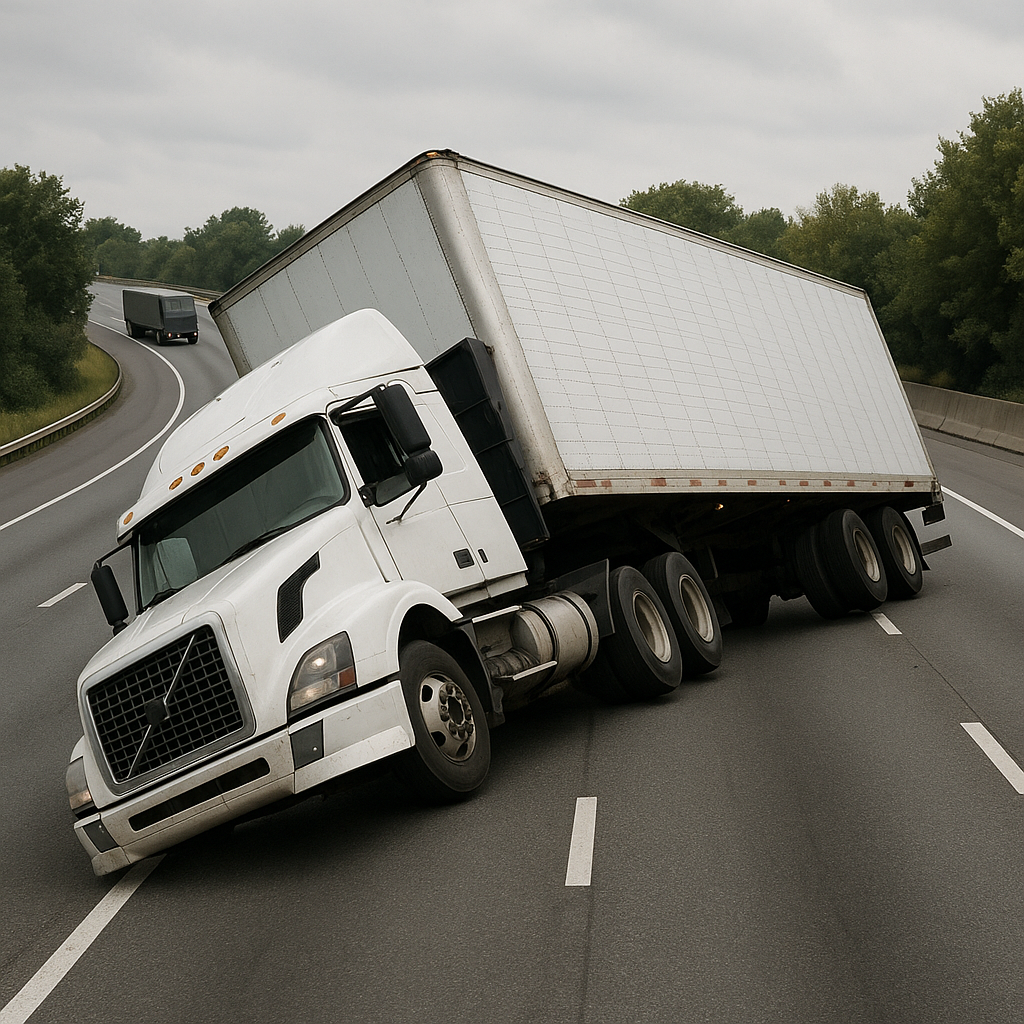
Truck Rollover During Lane Change
Interest in Understanding Truck Rollover During Lane Changes
Truck drivers, fleet managers, and motorists often search for information about rollovers during lane changes. This curiosity arises from the complexity of handling large vehicles and the potential consequences of rollover incidents. Understanding why trucks experience these events is especially important for those sharing the road with them, as well as for operators aiming to ensure cargo safety and reliable deliveries. The subject receives even greater attention after high-profile accidents are reported, raising public awareness and prompting questions about prevention and response measures.
How a Lane Change Rollover Occurs With Trucks
The physical dynamics behind a lane change rollover are grounded in the interaction between a truck’s high center of gravity, its loaded weight, and swift lateral movement. Trucks, unlike passenger vehicles, are much taller relative to their width. When a truck driver attempts a lane change, especially at highway speeds, the combination of turning force and speed can increase the risk of instability.
If a driver makes a rapid or sharp steering correction while changing lanes, the truck’s upper structure and cargo may shift to one side. This sudden shifting can cause the center of gravity to move outside the base of the truck’s tires. When this happens, the forces can overwhelm the vehicle’s ability to grip the road, resulting in a lane change rollover.
Additional factors such as heavily loaded or uneven cargo, poor road conditions, and unexpected maneuvers play significant roles in these scenarios. The dynamics of a lane change require a significant adjustment of balance, and any miscalculation—either in steering angle or in gauging traffic—can tip the delicate balance.
Underlying Factors Not Always Recognized
Many people may not realize how subtle a lane change maneuver needs to be for heavy trucks. Even a moderate adjustment at highway speeds can put considerable stress on the truck’s stability. Furthermore, the design and load condition of the trailer can influence the outcome. For instance, liquid cargo in partially filled tanks can surge and shift, intensifying rollover risk even if the lane change appears routine.
Tire condition and inflation also make an important difference. Uneven or underinflated tires can reduce the friction necessary to counteract lateral motion, diminishing the truck’s capacity to withstand sudden side forces. Weather plays its part, too; wet or icy roads lower the coefficient of friction and can transform a minor swerve into a major incident.
Another lesser-known aspect is the role of advanced driver assistance technologies. While modern trucks are sometimes equipped with systems to warn drivers of instability, these features are not universal. Many trucks on the road today depend entirely on driver skill and experience, and even a well-trained operator can be surprised by a sudden obstacle or an urgent need to change lanes.
Broader Implications and Safe Practices
Lane change rollovers don’t exclusively stem from driver error. They are often the result of complex circumstances, including unfavorable traffic patterns, hurried driving schedules, or unpredictable behavior from nearby motorists. A thorough appreciation for truck mechanics and thoughtful vehicle handling reduces these risks but cannot completely eliminate them.
It is also valuable to consider the ongoing development of safety regulations and training programs that address the real-world causes of lane change rollovers. Industry improvements, such as better cargo securing methods and vehicle stability systems, continue to play a part in mitigating the likelihood and severity of such incidents.
Concluding Thoughts on Lane Change Rollover Situations
Grasping the reasons behind truck rollovers during lane changes can contribute to greater awareness and improved safety for all road users. These accidents are often rooted in multiple interacting factors, from vehicle design and load distribution to environmental and situational elements. Ongoing improvements in trucking technology and road safety education help foster a more secure environment, as understanding of the dynamics involved becomes more widespread.