
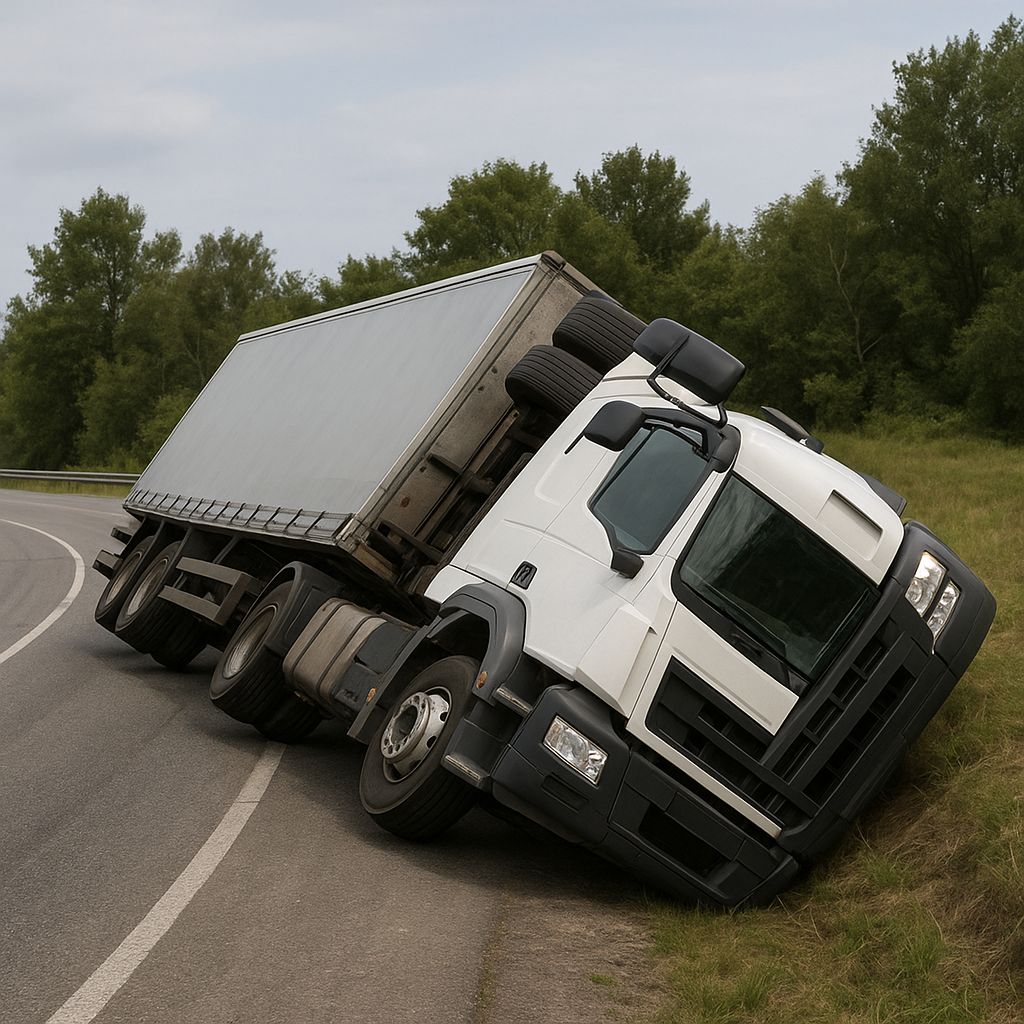
Truck Rollover During Sudden Maneuver
Why the Risk of Rollover During Sudden Truck Maneuvers Sparks Curiosity
Many individuals search for information about truck rollovers during sudden maneuvers because of the visibility and impact of such incidents. People often witness shocking footage or traffic updates involving overturned trucks, leading to curiosity about the mechanics and risks behind these events. Commercial trucks are a daily presence on highways, and their size suggests stability, yet they can tip over in scenarios that seem avoidable. Drivers—both professional and general motorists—seek to understand what conditions make large vehicles susceptible to rolling over with abrupt steering or swerving.
The frequency of rollovers involving heavy trucks also means questions arise about safety measures, prevention, and what missteps may contribute to a loss of balance. Observers may be surprised or concerned about how a professional driver or a seemingly stable vehicle ends up on its side due to what may appear to be a minor steering correction. Gaining clarity about why these accidents occur helps all road users to better anticipate, recognize, and respond to potential risks around large trucks.
Mechanisms Leading to Rollover When a Truck Makes a Sudden Move
A sudden maneuver rollover refers to a situation in which a truck overturns as a result of abrupt driver input, typically steering sharply, swerving, or making an evasive move. Trucks differ from smaller vehicles due to their high center of gravity, long wheelbase, and often variable load distribution. This combination makes them particularly vulnerable to instability when subjected to rapid changes in direction.
When a truck performs a sudden movement—such as veering to avoid an obstacle or reacting to a traffic situation—the shift in momentum creates strong lateral forces. Because of the truck’s weight and height, its upper part starts to lean away from the direction of the turn. If these forces exceed what the tires can grip, or if the load inside the truck shifts, the entire vehicle may tip over.
With trailers, the risk increases, especially if the cargo is not evenly distributed or properly secured. Tanker trucks and those carrying liquids face additional risks from a “slosh” or movement of the contents, which can amplify the imbalance during abrupt drives. The suspension and tires may also contribute to instability, particularly if they are underinflated or worn.
Lesser-Known Factors Behind Truck Rollovers in Swift Maneuvers
Many people may not realize the extent to which roadway conditions, weather, and truck design influence rollover risk during sudden maneuvers. Surface traction is crucial; wet, icy, or uneven pavement can dramatically reduce the tire’s ability to grip, lowering the threshold for a rollover. Rural roads or highway ramps with sharp curves are common locations for these incidents.
The speed of travel also plays a critical role, but it is not only excessive speed that matters. Even at moderate speeds, a swift change in direction can produce enough force to overcome a truck’s natural stability. Vehicle load is another major factor. Trucks that are partially loaded may experience more severe shifts in weight, particularly if the cargo is able to move within the trailer.
Driver reactions are unpredictable variables. Sometimes, a driver’s instinctive response to an unexpected road hazard is to jerk the steering wheel—a move that destabilizes a heavy vehicle much more than a regular car.
Technology, such as electronic stability control systems, is an emerging factor. Despite these advances, they can only do so much to mitigate risks, especially in the face of physical limitations like cargo weight and distribution.
Awareness and Prevention: Understanding the Full Picture
Truck rollovers during sudden maneuvers represent a complex interaction of physics, vehicle characteristics, cargo properties, road conditions, and human behavior. The large mass and height of trucks, combined with the need to sometimes react quickly to changing traffic events, create a unique set of safety concerns. While modern vehicles are equipped with design features and technologies aimed at maintaining stability, fundamental physics still present ever-present limits.
Awareness of what causes these accidents provides a clearer perspective not only for truck operators but for all who share the road with large vehicles. Careful driving, realistic expectations for what trucks can safely do during emergencies, and vigilance in challenging conditions help reduce the chance of such incidents occurring.
Knowledge of sudden maneuver rollovers and their causes contributes to safer roads and a greater respect for the intricacies of large vehicle operation. Leveraging this understanding can lead to more informed driving habits and improved appreciation for the skills involved in truck transportation.