
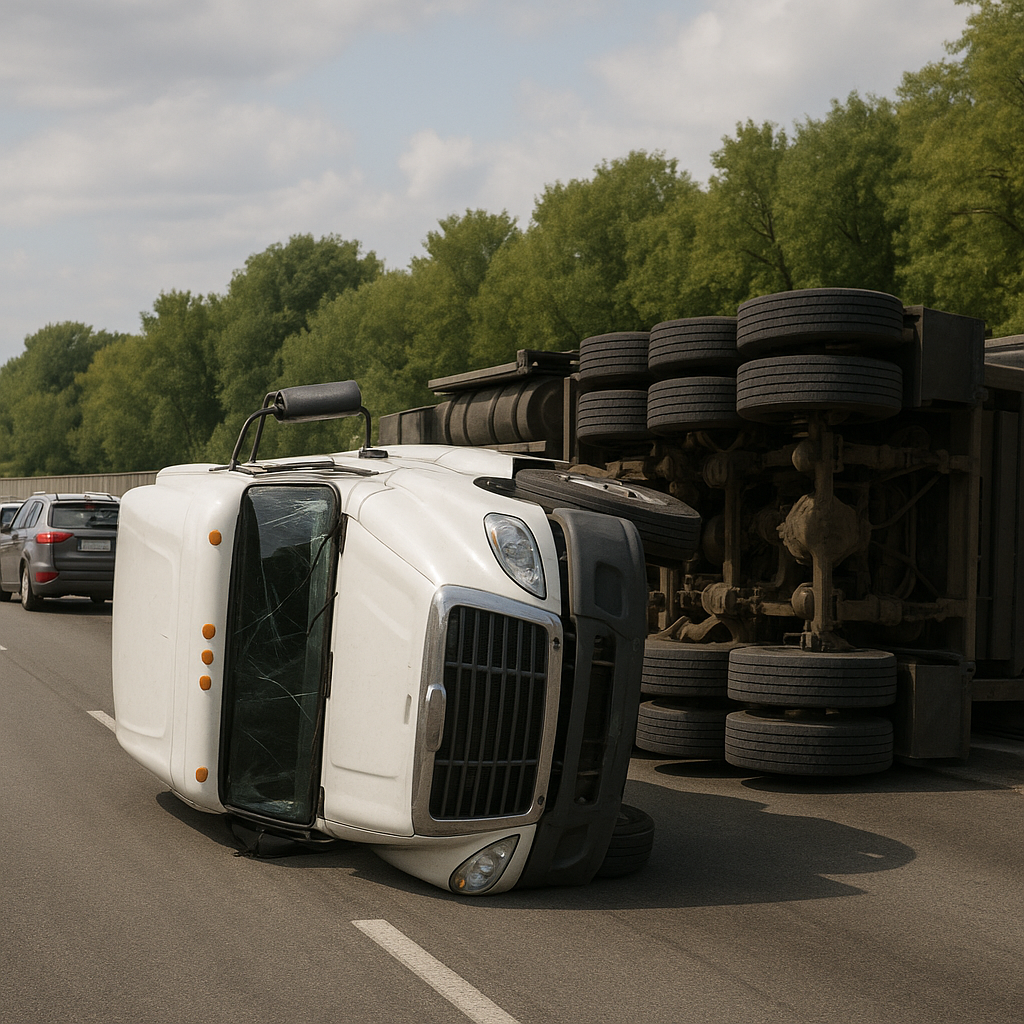
Truck Rollover During Traffic Avoidance
Concern About Rollovers and Sudden Maneuvers
Questions surrounding “truck rollover during traffic avoidance” are frequently asked due to the alarming nature of such incidents. Many drivers witness or hear about large trucks overturning when trying to avoid a collision on busy roads. The sight of a massive vehicle losing control draws attention because these events can disrupt traffic, present serious safety hazards, and highlight the challenges of operating large vehicles. Curiosity also stems from personal safety concerns, either as a motorist sharing the road with large trucks or as someone interested in transportation safety. People want to understand how and why these rollovers happen, especially as they consider how to react in similar traffic situations.
How Truck Rollovers Occur During Avoidance Maneuvers
Trucks are susceptible to rollovers due to their size, weight distribution, and high center of gravity. During abrupt traffic avoidance actions, such as swerving to prevent a collision with another vehicle or unexpected road obstruction, these factors become even more critical. When a truck driver makes a rapid steering movement, the force transfers quickly through the vehicle’s frame. The shifting load and the tall, heavy structure can cause the wheels on one side to lift off the ground, leading to a potential rollover.
Unlike passenger cars, trucks carry more mass—often with cargo stowed in trailers that may not always be perfectly balanced or secured. During a sudden maneuver, this cargo can shift and intensify the rollover risk. In split-second decisions, even the most experienced truck drivers may not overcome the physics involved. Moreover, the longer wheelbase and articulated connections on tractor-trailer trucks introduce additional instability during sharp turns or swerves.
Less Obvious Factors Impacting Rollover Risk
What many people may not realize is that several less visible factors contribute to rollovers during traffic avoidance. Road conditions play a role. Wet, icy, or uneven surfaces can diminish tire grip and increase the chance of a rollover. The type of cargo and how it is loaded affects how a truck responds when swerving. Liquid loads, such as those found in tankers, move in response to abrupt maneuvers, amplifying instability in ways that rigid cargo does not.
Another contextual consideration is that driver decisions are made in fractions of a second. Large trucks take longer to respond to steering and braking inputs due to their size and momentum. Maneuvering room on the road is often limited, with trucks sometimes boxed in by smaller vehicles or physical barriers. This constrains escape routes, making traffic avoidance riskier and sometimes forcing sharper steering actions than would be ideal.
Driver fatigue, long hours, and inexperience with emergency procedures can also play subtle roles. Training helps, but unexpected real-world situations differ from controlled environments. Understanding the physics and best practices is important, but real avoidance situations test both knowledge and reflexes under pressure.
Traffic flow patterns contribute as well. Congestion or unexpected lane closures, for instance, prompt sudden braking or lane changes. Trucks may have little time or space to react, leading to hurried decisions that elevate rollover risk. Limited visibility, both from inside the truck cab and due to environmental factors like darkness or bad weather, adds another layer of complexity to avoidance maneuvers.
Advancing Safer Outcomes for All Road Users
Greater awareness of what happens during a truck rollover in traffic avoidance helps inform both truck operators and everyday drivers. When drivers of all vehicle types understand why trucks have limitations during rapid maneuvers, road sharing can become more considerate and predictable. Slower lane changes, leaving more distance, and avoiding sudden stops in front of trucks are small steps that contribute to safer roads.
Efforts in technology, training, and roadway design continue to address these challenges. It’s important to recognize that even the most skilled and prepared drivers sometimes confront situations where a rollover cannot be avoided. Knowing how trucks behave in emergency avoidance scenarios provides context for these rare but highly consequential incidents, fostering an environment of mutual caution and respect among all who use the road.